
24/7 Customer Support

Free returns

Same-day & Next-day Delivery

Quality Guaranteed

Unlock Your Welcome Offers: FREE Delivery | Up to 80% OFF | Free 30-day JoyPlus trial
Download the APP
Choosing a baby cot can look straightforward until you compare cot beds, travel cots, bedside cribs and newborn cribs. Product descriptions often focus on multiple functions, soft fabrics or attractive nursery finishes, while the details that affect everyday use are easier to miss.
The main risks are not always obvious. A cot may be too large for your room, a mattress may not fit securely, or a travel cot may be unsuitable as a permanent sleeping arrangement. Use the following checks to compare products more confidently and avoid paying for features that do not match your family’s needs.
A label such as “birth to toddler” does not mean every function is suitable throughout that period. A bedside crib may be intended only for the first few months, while a toddler cot bed can continue after the child outgrows the cot configuration.
Always check:
For example, a baby bassinet designed for 0–6 months cannot replace a full-size wooden baby cot once your child becomes more mobile.
“Cot with mattress” can be convenient, but the mattress still needs to fit the frame correctly and be used as instructed. Check the exact mattress dimensions, firmness, cover care instructions and whether the mattress is removable.
Do not add extra padding, pillows or a second mattress unless the manufacturer specifically permits it. Gaps between the mattress and cot sides can create an entrapment risk. One product specification advises keeping gaps no larger than 30 mm, but always follow the instructions supplied with your chosen model.
A foldable baby cot with a changing table, rocking mode, storage and playpen may sound economical, but its size, weight and cleaning requirements could make it less practical in a small UK bedroom. Similarly, a wooden cot bed with an integrated drawer may be useful in a nursery but difficult to move upstairs or through narrow doorways.
Before buying, measure the available floor space, doorways and storage area. Consider whether you need a fixed sleep space, a portable travel cot or a bedside option for the newborn stage.
A cot mattress should sit securely within the frame with no hazardous gaps. Adjustable mattress bases are useful because the higher setting can make it easier to place down a young baby, while the lower setting helps reduce the risk of climbing as your child develops.
Look for a clearly stated number of positions. Several adjustable baby cot models in this selection offer three mattress base heights. Follow the instruction manual about when to lower the base; do not wait until your child is already attempting to climb.
For a wooden baby cot, inspect the frame material, fixed side rails, rounded edges and recessed fittings. A smooth, snag-free interior is preferable for routine use. If the product includes a painted finish, check the stated material and finish information rather than relying only on phrases such as “premium” or “non-toxic”.
For a travel cot, mesh panels can improve visibility and airflow, while a steel frame may support repeated folding and unfolding. Check that all locking mechanisms engage fully before use. Travel cots should not be modified with additional mattresses or accessories unless expressly approved.
UK buyers should also look for the relevant product safety information and the applicable standard stated by the seller or manufacturer, such as BS EN 716 for many cots and travel cots or BS EN 1130 for certain bedside cribs. A standards reference is useful, but you should still read the warnings, dimensions and usage limits for the specific product.
If you visit grandparents, travel by car or need to store the cot between uses, compare the folded dimensions, carry bag and product weight. Lockable wheels may help with repositioning, but they should be secured whenever the cot is stationary.
For hygiene, check whether the mattress cover is removable, whether the fabric can be wiped clean and how the wooden frame should be maintained. Water-repellent fabric can help with spills, but it does not remove the need for regular cleaning or correct bedding.
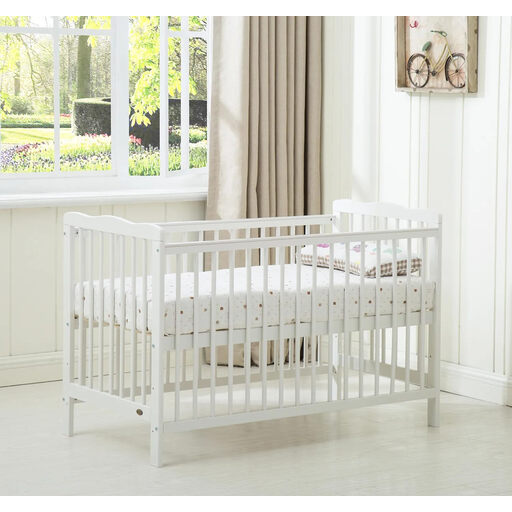
Why This Fits Their Persona: A straightforward fixed cot for families setting up a nursery without paying for travel or multi-function features.
The product lists a three-position adjustable mattress base and includes a water-repellent mattress, making the key specifications easier to verify.
Solid wood and composite frame; cream white finish; mattress included.

Why This Fits Their Persona: Suitable for parents who want a wooden cot bed that can continue into the toddler stage.
Its stated three base heights and toddler-bed conversion rails give a clearer route beyond the newborn stage.
Solid wood frame; included water-repellent mattress; conversion rails supplied.

Why This Fits Their Persona: Designed for families needing one portable unit for travel, changing and supervised play at home or away.
Its listing specifies the functions, carry bag, lockable wheels, two safety straps and separate weight limits, allowing buyers to assess each use rather than rely on a generic “multi-use” label.
Suitable age listed as 0–3 years; changing table and playpen functions; folds into a carry bag.
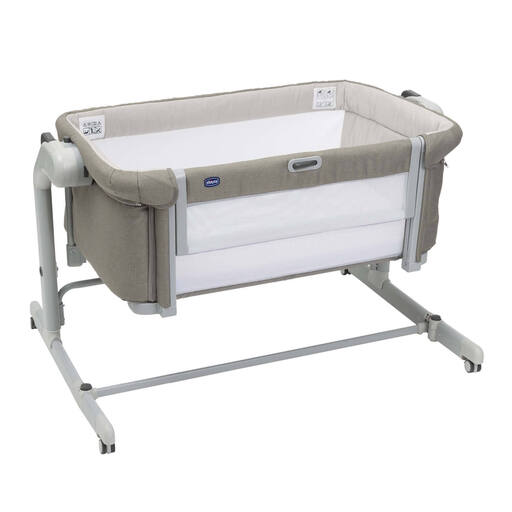
Why This Fits Their Persona: A focused newborn crib option for parents who want a bedside setup during the early months.
The stated 0–6 month and 9 kg limits make its shorter service period clear, reducing the risk of expecting it to replace a cot bed.
Eleven height levels; one-hand side opening; mesh mattress and side windows.
We have compiled a complete, real-time list of products that fully satisfy these strict selection criteria and UK safety regulations.
Before placing your baby inside:
Inspect the cot regularly, particularly after moving it, folding it or converting it into a toddler cot bed. Stop using it if any part is broken, loose, torn or missing.
Use the manufacturer’s age, weight and height guidance. In practice, a cot should no longer be used when a child can climb out, reaches the stated limit or becomes too tall for the product. A cot bed with toddler conversion rails may last longer than a bedside crib or baby bassinet, but the conversion must be completed according to the instructions.
A travel cot can be suitable for sleep when used exactly as directed, with its supplied mattress and correctly locked frame. It should not automatically be treated as a permanent substitute for a fixed cot. Check the product’s intended use, age range, weight limit and warnings before using it overnight.
A washable, correctly fitted protector may help manage spills, but it must be suitable for the mattress and should not make the sleeping surface excessively soft or loose. Never place additional mattresses, thick padding or unsuitable bedding inside the cot. Follow the cot and mattress manufacturer’s instructions.