
24/7 Customer Support

Free returns

Same-day & Next-day Delivery

Quality Guaranteed

Unlock Your Welcome Offers: FREE Delivery | Up to 80% OFF | Free 30-day JoyPlus trial
Download the APP
By Joybuy Product Recommendation Officer
Choosing between baby cots and bassinets is not simply a matter of colour or nursery style. UK parents also need to consider mattress fit, safe-sleep guidance, age limits, portability and how quickly a baby’s needs can change.
Some products look versatile on a sales page but may become unsuitable within months. Others include a mattress, storage drawer or changing table, yet still require careful checking before use. This guide explains the key details to review and matches different products to common household needs.
A bedside crib, rocking cradle or 6-in-1 travel cot may offer several modes, but each mode can have its own weight, age or developmental limit. A baby bassinet intended for newborn use will usually have a shorter usable period than a full-size baby cot bed.
Always check the specific stopping points, such as when your child can sit, pull up, roll over or climb out. Do not assume that a product labelled “0–3 years” can be used in every configuration for that entire period.
A cot with mattress can be convenient, but replacing the supplied mattress with a thicker or differently sized model may create dangerous gaps. Pillows, cot bumpers, loose blankets, sleep positioners and large soft toys can also increase the risk of suffocation.
A breathable cot mattress or waterproof cot mattress should still be firm, flat and correctly fitted. A mattress topper must be tightly secured, fully dry and free from damage before use.
Foldable products are useful for smaller UK homes, visits to relatives and holidays, but check the folded dimensions against your car boot and storage space. Wooden cot beds also require careful assembly. Loose fixings, an incorrectly installed base or an unlocked travel cot can compromise stability.
Look beyond the product photograph and check the instructions, included components, maximum weight and maintenance requirements.
The mattress should fit the cot or bedside crib without noticeable gaps. Several wooden cot products in this range list a 120 x 60 cm mattress, while smaller bedside models may use dimensions such as 76 x 43 cm. Never use a mattress based only on appearance or a general “standard” label.
For a replacement baby mattress, check:
A waterproof cover can help with everyday spills, but it is not a substitute for regular cleaning and complete drying.
An adjustable baby cot with multiple base positions can make it easier to lift a newborn during the early months. The base should be lowered as soon as the child can sit up, pull up or otherwise become more mobile, following the manufacturer’s instructions.
A convertible cot bed may offer longer-term value by changing into a toddler bed. However, conversion should only take place when the child can safely enter and leave the bed, and all rails and fixings must be installed as instructed.
Look for clear manufacturer information covering:
Painted wooden cots should have a stated child-safe finish. Mesh-sided products should have intact panels, secure seams and fully working locks. Product standards are important, but correct assembly and appropriate use remain essential.
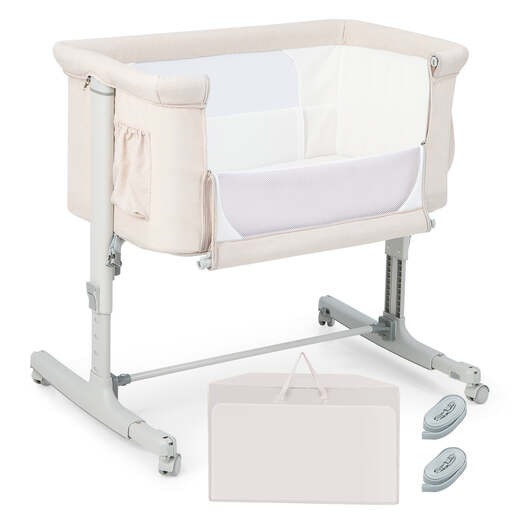
Why This Fits Their Persona: A practical option for new parents wanting one compact newborn sleeping bed for beside the bed, daytime movement and occasional travel.
The listed 0–6 month suitability and 9 kg weight capacity make its limits clearer than relying on its multi-function label alone.
Height adjusts from 67–81 cm, with fixing straps, lockable wheels, a 76 x 43 cm mattress and a foldable frame.
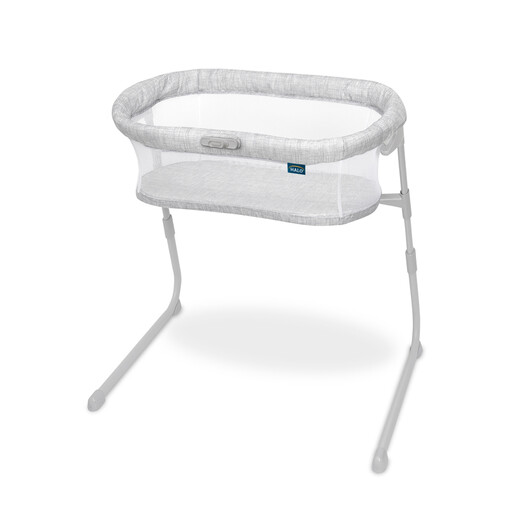
Why This Fits Their Persona: Suitable for households prioritising a dedicated bedside crib with portability for moving between rooms or taking on trips.
Its stated use ends at 5 months, 9 kg or earlier if rolling or pushing up begins, helping prevent extended use beyond the safe stage.
Fully mesh walls, a lowering bedside wall, carry bag and listed compliance with BS EN 1130:2019 and BS EN 16890:2017.
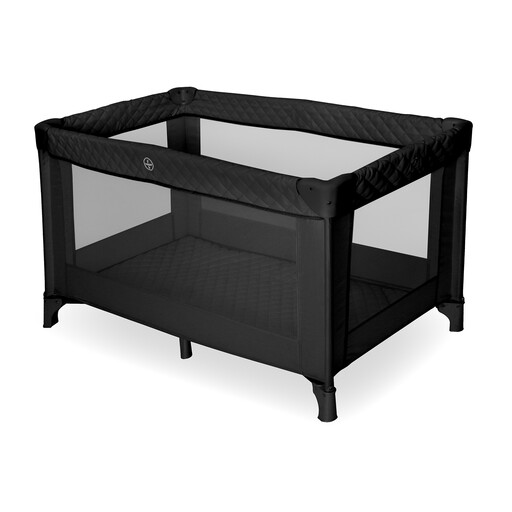
Why This Fits Their Persona: Designed for families visiting relatives, travelling around the UK or needing a playpen travel cot for daytime use.
The instructions specify using only the supplied mattress, avoiding the common mistake of adding an incompatible travel cot mattress.
Four mesh sides, a removable supplied mattress, carry bag and folded dimensions of approximately 75 x 21 x 21 cm.

Why This Fits Their Persona: A suitable direction for parents seeking a nursery cot that can transition into a toddler bed rather than relying on a short-use bassinet.
Three mattress-base positions and a stated conversion design help address changing mobility, provided the base is lowered at the correct stage.
Solid wood frame, three adjustable heights and an included water-repellent mattress with a high-density foam core.
We have compiled a complete, real-time list of products that fully satisfy these strict selection criteria and UK safety regulations.
Move according to the product’s instructions and your baby’s development, not simply a fixed age. A bassinet should no longer be used when the baby reaches its weight limit or shows signs of rolling, sitting, kneeling, pulling up or pushing on hands and knees.
No. Use the mattress size and thickness specified for the cot. It should fit closely with no hazardous gaps, remain firm and flat, and be kept free from pillows, loose bedding and soft toys. If purchasing a replacement, confirm compatibility with the manufacturer first.
Some travel cots are designed for sleep as well as play, but suitability depends on the product instructions. Assemble it on a stable surface, engage every lock and use only the supplied mattress where required. Do not add extra padding unless the manufacturer specifically permits it.