
24/7 Customer Support

Free returns

Same-day & Next-day Delivery

Quality Guaranteed

Unlock Your Welcome Offers: FREE Delivery | Up to 80% OFF | Free 30-day JoyPlus trial
Download the APP
By Joybuy Product Recommendation Officer
Choosing between baby cots and bedside cribs can feel straightforward until you compare mattress sizes, height settings, safety features and the claims made in product listings. A low-priced cot may lack a suitable mattress, while a multi-function bedside bassinet may be outgrown within months.
The right choice depends on where your baby will sleep, how often you move the product and whether you want a wooden baby cot bed, a bedside bassinet or a portable travel cot. Before buying, look beyond appearance and check the details that affect safe use, cleaning and value over time.
A cot described as a bassinet, swing cradle, bedside sleeper and playpen may offer flexibility, but each function has its own weight, age and usage limits. A bedside crib suitable for a newborn may not be appropriate once a baby can sit, pull up or move actively.
Check the suitable age, maximum weight and stop-use guidance for each mode. A convertible cot bed may offer longer use because it changes into a toddler bed, whereas a small bedside bassinet is generally intended for the early months.
Mattress fit is a safety-critical specification, not a cosmetic detail. Gaps between the mattress and cot sides can create an entrapment risk. Avoid buying a separate mattress until you have confirmed the exact internal dimensions and the manufacturer’s approved mattress requirements.
A cot bed with mattress can simplify compatibility, but still measure the supplied mattress and keep the product instructions. Do not add extra padding, toppers or folded blankets unless the manufacturer specifically permits them.
A water-repellent mattress cover can help resist small spills and make cleaning easier, but it does not mean the entire mattress is waterproof. Check whether the cover is removable, washable and breathable, and allow it to dry fully before use.
Likewise, a “breathable baby mattress” description should be supported by clear material and care information. Breathability does not replace a firm, correctly fitted sleeping surface or safe sleep practice.
Look for the internal cot dimensions, mattress measurements and any permitted tolerance. Common cot bed sizes include 120 × 60 cm, but product dimensions vary. The mattress should sit flat and snugly inside the frame, with no concerning gaps around the edges.
A removable, washable cover is useful for everyday nursery care. Foam type, cover fabric and water-repellent treatment should be clearly stated rather than hidden behind vague comfort claims.
An adjustable baby cot usually provides a higher base setting for easier access during the early stage and lower settings as the baby becomes more mobile. The mattress base should be moved to its lowest position as soon as the child can sit up or pull themselves up, following the supplied instructions.
Do not choose a cot solely because it has several height settings. Confirm that the adjustment mechanism locks securely and that the instructions explain when each position should be used.
For wooden nursery furniture, inspect the frame material, finish, fixed rails, teething rails and fixing method. Rounded edges and recessed hardware can reduce snagging points, but they do not remove the need for regular checks.
For UK purchases, look for clear manufacturer or importer details, instructions, warnings and relevant conformity information. Cot products may refer to standards such as BS EN 716, while bedside cribs may fall under different requirements depending on their design. Standards and markings should be verified against the product documentation rather than assumed from a marketing headline.
For a bedside model, check:

Why This Fits Their Persona: A straightforward nursery cot for families wanting a dedicated sleep space without adding multiple separate pieces of nursery furniture. It is listed for use from birth to approximately three years, or until the child can climb out.
The mattress is supplied with the cot, helping reduce uncertainty about compatibility. Its three-position base can be lowered as the child develops.
Solid wood frame, fixed side rails and a water-repellent mattress cover. Assembly and regular fastener checks are required.

Why This Fits Their Persona: Suitable for parents prioritising a wooden cot bed that can remain useful beyond the newborn stage and coordinate with a carefully planned nursery.
The product description identifies three base heights and includes toddler bed conversion rails, rather than offering only a short-term bedside format.
Solid wood construction, three adjustable base positions and a supplied breathable, water-repellent mattress cover.
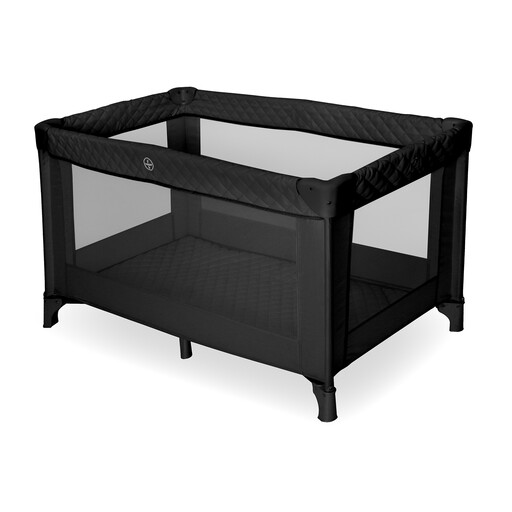
Why This Fits Their Persona: A practical option for families visiting relatives, travelling around the UK or needing a foldable sleep and play space.
It folds into a carry bag and includes a removable mattress. The instructions specifically say not to add another travel cot mattress.
Four mesh sides provide visibility and ventilation, while the stated maximum weight is 15 kg. Check every rail has locked before use.
We have compiled a complete, real-time list of products that fully satisfy these strict selection criteria and UK safety regulations.
They can be, provided the specific product is designed for bedside sleeping and is installed according to its instructions. Check the height range, attachment straps, side configuration and maximum weight. A bedside crib should not be treated as a universal substitute for a full-size cot once the baby reaches its stated limit or becomes able to sit or pull up.
The usable period depends on the model and the child’s development. Some bedside bassinets are listed for roughly the first six months, while a full cot or convertible cot bed may continue into toddlerhood. Always stop use when the child can climb out or when the manufacturer’s age, height or weight guidance is reached.
It can reduce the risk of buying an incompatible mattress and may provide longer use if it converts into a toddler bed. However, compare the frame construction, mattress dimensions, conversion parts, assembly requirements and replacement costs. A lower initial price is not necessarily a lower overall cost if essential components must be purchased separately.