
24/7 Customer Support

Free returns

Same-day & Next-day Delivery

Quality Guaranteed

Unlock Your Welcome Offers: FREE Delivery | Up to 80% OFF | Free 30-day JoyPlus trial
Download the APP
Watching your little one take their first steps towards self-feeding is a significant milestone. It is also a journey that often comes with a fair share of mess, questions and a search for the right tools. Choosing a suitable baby cutlery set is more than just picking a small spoon; it is about finding utensils that are safe, developmentally appropriate and designed to build your child's confidence at the dinner table.
This guide is designed to help UK parents and caregivers navigate the options. We will outline the key features to look for in weaning cutlery and present some practical recommendations to support your child's transition to independent eating.
Finding the ideal self-feeding utensils for babies involves considering a few key factors. Keeping these points in mind will help you select a set that is both safe and effective for your child's needs.
The material of a first cutlery set for baby is a primary consideration. For the initial stages of weaning (around 6 months+), soft-tipped utensils are often preferred.
A baby's fine motor skills are still developing, so the design of the handle is critical. Look for cutlery with:
Cutlery is designed for different developmental stages. A set for a 6-month-old will differ significantly from toddler cutlery for an 18-month-old. Check the manufacturer's recommended age to ensure the size and features are appropriate. For busy households, convenience is key. Opting for sets that are dishwasher-safe simplifies the clean-up process and ensures proper hygiene.
Here are a few recommendations that address the different needs and stages of the self-feeding journey.
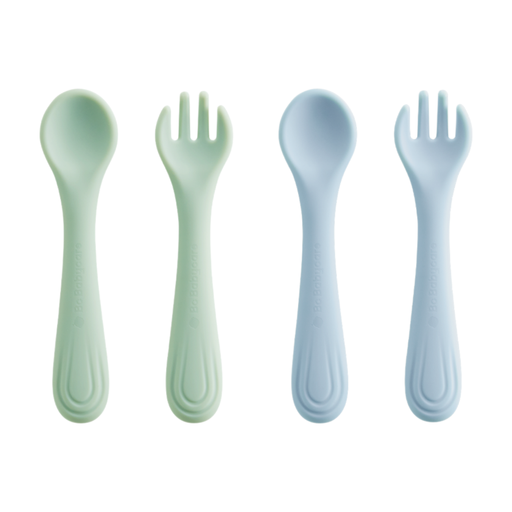
Why It Stands Out This set is an excellent starting point for babies just beginning their self-feeding adventure. The entire design is focused on safety and ease of use, with soft, flexible materials that protect delicate mouths. The inclusion of a travel case makes it a practical choice for meals on the go.
Pros
Who is it for? This set is ideal for parents introducing a first cutlery set for baby (from 6 months onwards) who are looking for a gentle, safe and encouraging start to self-feeding.
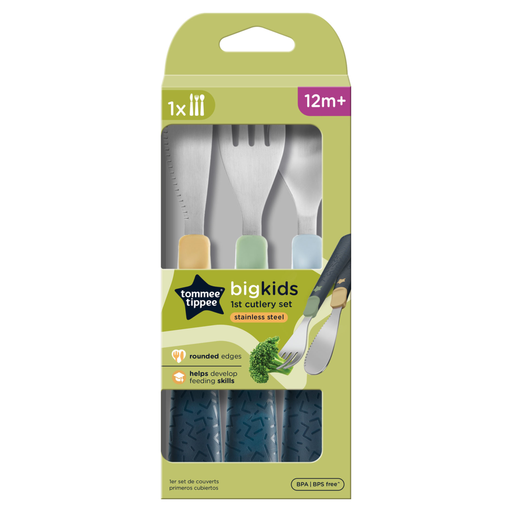
Why It Stands Out As toddlers become more adept, they often want to mimic the adults around them. This stainless steel set helps them do just that, safely. It bridges the gap between baby utensils and adult cutlery, with a design that promotes independence while prioritising safety.
Pros
Who is it for? This is a great choice for toddlers (12 months and older) who have mastered the basics and are ready for a more durable toddler cutlery set that resembles what the rest of the family uses.
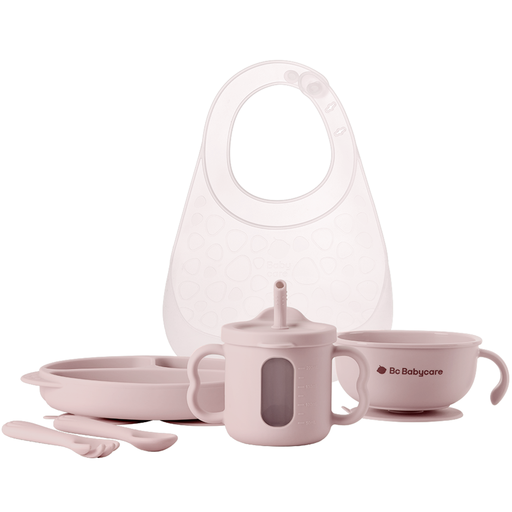
Why It Stands Out For parents seeking a complete, coordinated solution, this all-in-one set is a standout option. It provides everything needed to get started with weaning, from the bib to the bowl, all made from consistent, baby-safe materials. The suction bases on the plate and bowl are a particularly thoughtful feature for minimising mealtime chaos.
Pros
Who is it for? Parents who appreciate convenience and value and want a complete, matching set of feeding essentials to kick-start the weaning process from day one.
If the recommendations above are not quite what you are looking for, or if you need to purchase individual items, there are many other styles and options available. Exploring a wider collection can help you find the perfect tools for your child's unique needs.
Browse our full range of baby forks and other feeding accessories to find the perfect match for your little one.
You can typically introduce a baby cutlery set around the 6-month mark, or whenever your baby starts showing an interest in solid foods and can sit up unsupported. Begin by offering them a soft spoon to hold during mealtimes to familiarise them with the object.
For a baby's very first utensils, food-grade silicone is a popular and safe choice. It is soft on their gums, flexible and free from harmful chemicals like BPA. As they get older and develop more coordination, stainless steel cutlery with rounded edges and chunky handles becomes another safe and durable option.
Patience and practice are key. Start by letting them play with the spoon. Model the behaviour by using your own cutlery during family meals. Offer easy-to-scoop foods like thick purées, yoghurt or oatmeal. Celebrate their attempts, even if it gets messy, as this positive reinforcement encourages them to keep trying.