
24/7 Customer Support

Free returns

Same-day & Next-day Delivery

Quality Guaranteed

Unlock Your Welcome Offers: FREE Delivery | Up to 80% OFF | Free 30-day JoyPlus trial
Download the APP
Watching your little one graduate from fingers to their first fork and spoon is a major milestone. It’s an exciting, if often messy, step towards independence. But with so many options on the market, choosing the right baby cutlery set can feel overwhelming. You need something safe, easy for tiny hands to manage and durable enough to withstand being dropped (or thrown).
As the Joybuy Product Recommendation Officer, my role is to help you navigate these choices. This guide offers practical advice on what to look for in self-feeding utensils for babies and provides a few carefully selected recommendations to support your child's developmental journey.
Before you add anything to your basket, consider these key features. The right set can make a significant difference in helping your child build confidence and develop crucial fine motor skills.
The material of your baby’s first cutlery is about more than just looks; it’s about safety and function.
weaning cutlery. Look for sets that are explicitly BPA-free, ensuring no unwanted chemicals come into contact with your baby's food.stainless steel baby cutlery is an excellent transitional tool. These sets are designed with safety in mind, featuring rounded edges and plastic handles, but offer the durability and feel of adult utensils.Ergonomics are crucial for little learners. A poorly designed spoon or fork can lead to frustration and more mess.
chunky handle toddler cutlery. Short, thick and often textured handles are easier for a baby’s palmar grasp to hold securely. This helps them control the utensil and successfully guide food to their mouth.baby's first fork and spoon set. It holds a manageable amount of food, reducing the risk of gagging and helping your baby learn to clear the spoon effectively.Cutlery is not one-size-fits-all. A set designed for a 6-month-old will be different from one for an 18-month-old. Always check the manufacturer's recommended age. Early weaning spoons are often soft and designed purely for scooping purées, while toddler cutlery for 12 months and up will include a functional-yet-safe fork to encourage more advanced self-feeding.
Based on the criteria of safety, design and material quality, here are some standout options to consider for your little one.
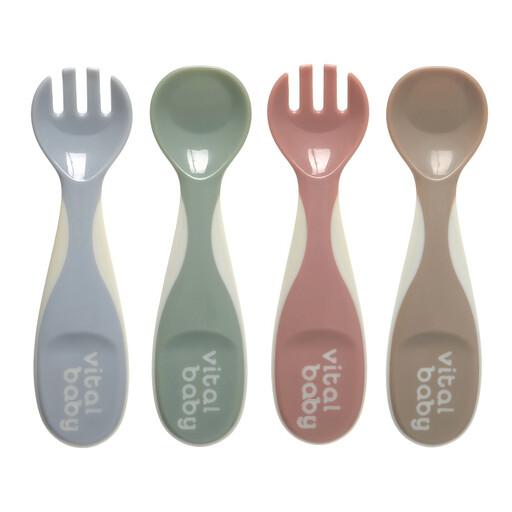
Why It Stands Out: This set is specifically engineered for the very beginning of the self-feeding journey. The chunky, textured handles are perfectly sized for small hands to grip with confidence, while the shallow spoon bowl helps prevent overloading and gagging.
Pros:
Who is it for: Parents of babies aged 6 months and older who are just starting to explore self-feeding and need a safe, encouraging first set of utensils.
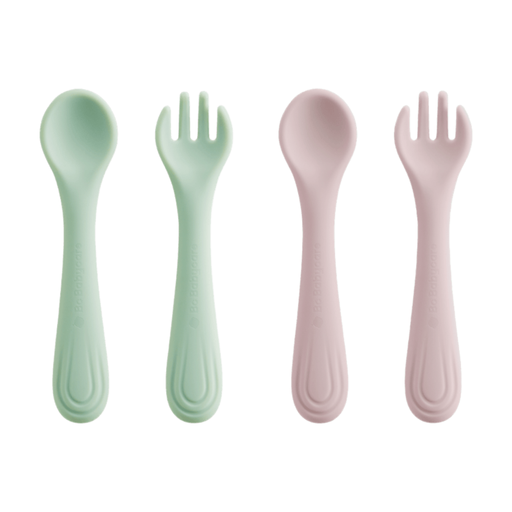
Why It Stands Out: Combining a soft silicone grip with a more structured head, this set offers a gentle introduction to cutlery. The flexible fork head is a thoughtful feature, making it easier for little ones to scoop food. A major benefit is the included portable storage case, making it ideal for meals out.
Pros:
Who is it for: Families who are often on the move or parents looking for a very gentle, flexible utensil option for babies from 6 months old.
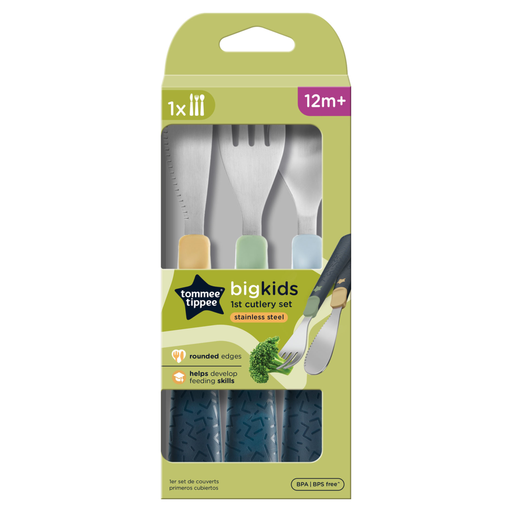
Why It Stands Out: This stainless steel baby cutlery set is the perfect next step for toddlers who are mastering their skills and want to be more like their parents. The durable stainless steel tips give a "grown-up" feel, while the design remains completely child-focused with chunky handles and rounded edges.
Pros:
Who is it for: Toddlers aged 12 months and over who are ready to move on from plastic or silicone and want a more durable, adult-style cutlery set.
If these recommendations aren't quite what you're looking for, or if you'd like to see a wider variety of styles and materials, there are many other choices available.
Explore our full range of Childrens Tableware Sets to find the perfect match for your child's age, stage and personality.
Most babies are ready to start exploring a spoon around 6 to 9 months, typically when they begin weaning with purées and soft foods. A fork can be introduced a little later, usually between 12 and 15 months, once their pincer grasp and coordination have developed enough to spear soft foods safely.
Always check the manufacturer's instructions first. Most modern baby cutlery is designed for convenience and can be washed on the top rack of a dishwasher. Alternatively, wash by hand in warm, soapy water, rinse thoroughly and allow to air dry completely to maintain hygiene.
Yes, as long as they are specifically designed for children. Look for toddler cutlery made from stainless steel that features chunky, easy-grip handles, rounded fork tines and smooth edges. These sets are highly durable, easy to clean and a great way to help your toddler transition to using the same type of cutlery as the rest of the family.