
24/7 Customer Support

Free returns

Same-day & Next-day Delivery

Quality Guaranteed

Unlock Your Welcome Offers: FREE Delivery | Up to 80% OFF | Free 30-day JoyPlus trial
Download the APP
Navigating the world of baby toys can feel overwhelming. With so many options claiming to support your child's growth, it’s difficult to know which ones genuinely add value to their playtime. As a parent, grandparent or gift-giver, you want a toy that is not only fun but also safe and beneficial for a child's developmental journey.
This guide is designed to help you make a clear, informed choice. We will walk through key considerations when selecting baby development toys and highlight a few standout options that cater to different stages, from early sensory exploration to active toddler play.
Before diving into specific products, let's cover a few practical points to keep in mind. Focusing on these areas will help you choose toys that are appropriate, safe and engaging for your little one.
A baby's needs change rapidly in the first few years. A toy that is perfect for a three-month-old may not hold the attention of a one-year-old.
In the UK, reputable toys must meet stringent safety standards. Always look for the UKCA (or CE) mark on the packaging, which indicates the product complies with legal safety requirements. Pay close attention to the age recommendation, as it often relates to the presence of small parts that could be a choking hazard for younger children. Check that materials are non-toxic and that the toy is sturdily built to withstand enthusiastic play.
Some of the most practical toys are those that can grow with your child. A toy that offers multiple ways to play or can be adapted for different developmental stages provides better long-term value. For example, an activity table with removable legs can be used for floor play by a baby who is sitting up and later used as a standing table for a toddler.
Based on features that support key developmental milestones, here are our recommendations for 2026.

Why It Stands Out: Inspired by the popular videos for babies and toddlers, this soft playset is one of the most talked-about Ms Rachel toys in the UK. It is designed to promote sensory, cognitive and motor skills through gentle, interactive play. The soft fabric book opens to reveal eight farm environments, each with different textures, crinkle flaps, colourful ribbons and a baby-safe mirror. It encourages early language by using familiar prompts to name animals, make sounds and count, reinforcing learning through repetition.
Pros:
Who is it for? This is an excellent choice for babies from 3 to 18+ months, especially those who respond well to sensory stimulation and gentle, guided play.
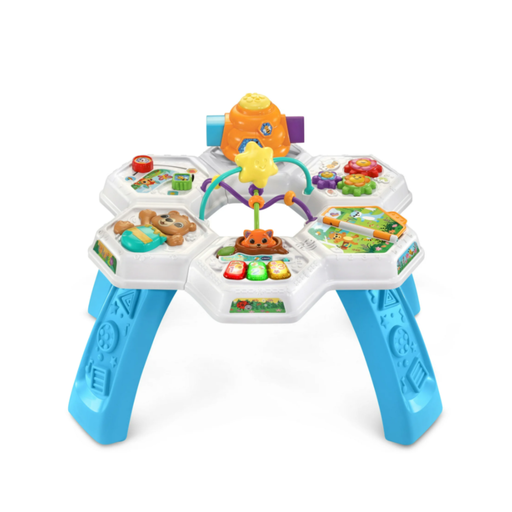
Why It Stands Out: This VTech learning toy is a versatile activity hub designed to grow with your child. The legs can be removed for babies who are sitting, then reattached once they are ready to stand and play. It features six distinct play zones, including light-up piano keys, a peek-a-boo fox, a mini storybook and a shape-sorter. Each zone targets different skills, from motor control and sensory awareness to introducing colours, numbers and animals through songs and melodies.
Pros:
Who is it for? Suitable for children from 9 to 36 months, this activity table is ideal for curious toddlers who are ready for a dedicated station for interactive play.
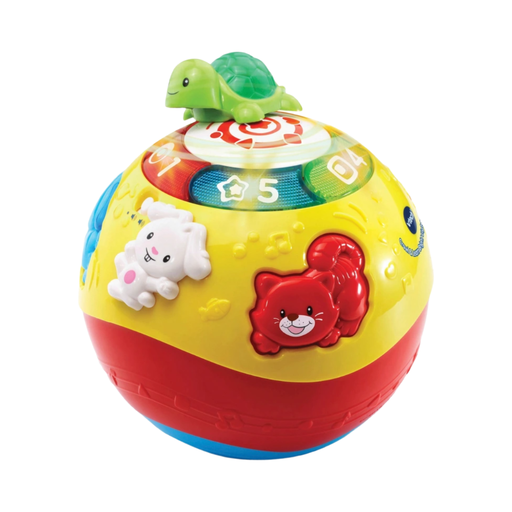
Why It Stands Out: This clever ball is specifically designed to get your little one moving. A built-in motor allows it to roll around on its own, encouraging babies to follow and crawl. It’s more than just a rolling toy; it features chunky, light-up buttons that introduce numbers and four friendly animal characters. With interactive elements to press, slide and twist, it helps develop fine motor skills while providing auditory stimulation through songs and melodies.
Pros:
Who is it for? This toy is perfect for babies from 6 to 36 months, particularly those who are on the verge of crawling or need a little extra motivation to get moving.
If these recommendations aren't quite what you're looking for, or if you need a toy for a different age group, there are many other choices available. Explore our full range of developmental toys to find the perfect fit for your child's needs.
Explore the complete Baby Learning Toy collection at Joybuy.co.uk
For newborns (0-6 months), focus on sensory toys for infants that stimulate sight, sound and touch. From 6-12 months, toys that encourage movement, like rolling balls or push-along walkers, are great. For toddlers (12+ months), interactive toddler toys like shape sorters, building blocks and activity tables help develop fine motor skills and problem-solving abilities.
Always check for the UKCA mark on the packaging, which confirms it meets UK safety standards. Adhere to the manufacturer's age guidelines, as these often relate to small parts that could be a choking hazard. Regularly inspect toys for any signs of wear and tear, such as loose parts or broken pieces.
Electronic toys, such as many VTech learning toys, can be very beneficial. They are excellent for teaching cause and effect (e.g., "when I press this button, a sound plays"), introducing numbers and letters and holding a child's attention. It is generally recommended to balance playtime with electronic toys with other forms of play, such as building blocks, puzzles and imaginative play, to support well-rounded development.