
24/7 Customer Support

Free returns

Same-day & Next-day Delivery

Quality Guaranteed

Unlock Your Welcome Offers: FREE Delivery | Up to 80% OFF | Free 30-day JoyPlus trial
Download the APP
Choosing baby developmental toys can feel more complicated than it should. Product pages often promise sensory learning, Montessori-style development and endless entertainment, but attractive features do not always translate into useful everyday play.
For UK parents, grandparents and carers, the practical questions are more important: Is the toy suitable for the child’s exact age? Can it be cleaned easily? Will it fit in a flat, pram or playroom? Are the sounds manageable, and are there small parts that could become unsafe?
This guide explains the main buying traps, the specifications worth checking and a selection of toys suited to different family needs.
A toy marked “6–36 months” may be suitable across a broad period, but a six-month-old and a three-year-old have very different abilities. A busy activity centre may be too complicated for a young baby, while a simple fabric book may not provide enough challenge for an active toddler.
Use the minimum recommended age as your starting point. For babies aged 0–6 months, look for soft sensory toys, pram toys and baby toys for tummy time. For older babies, consider cause-and-effect features such as buttons, rattles, lights or moving parts. Toddlers may benefit from educational toys for toddlers that involve sorting, pretend play, music or physical movement.
A toy with lights, melodies, animal sounds and several play zones may appear to offer greater value. However, too many functions can create noise, clutter and short-lived interest. Check whether your child can use the features independently and whether the toy encourages actions such as reaching, grasping, turning, crawling or matching.
For many babies, a small number of tactile surfaces and sounds can be more practical than an oversized electronic product. The right choice depends on the child’s stage and your home routine.
Soft toys with internal squeakers or rattles may not be suitable for machine washing. Some fabric activity toys are surface-clean only, while larger foam products need enough space to dry properly after wiping.
Before buying, check the care instructions, material and storage footprint. This is particularly important for organic baby soft toys, toys used during feeding and products taken on public transport or family visits.
Always follow the age guidance on the product listing and packaging. Remove plastic tags, fasteners and packaging before use. Inspect toys regularly for loose stitching, damaged clips, cracked plastic, detached pieces or exposed filling.
Toys with small parts, such as shape sorters or musical accessories, should be used according to the stated age range and with appropriate adult supervision. A product designed for 1–3 years should not automatically be offered to a younger baby.
Look for clearly stated materials, smooth edges and secure construction. Product listings may refer to CE marking and EN71 safety standards. These are useful details to check, but they do not replace reading the warnings or supervising play.
For babies who mouth toys, avoid giving access to damaged surfaces, loose attachments or detachable components. BPA-free plastic, embroidered details and soft fabric can be helpful material information, but families should still follow the manufacturer’s cleaning and usage instructions.
Measure the available floor, shelf or travel space before ordering. A toddler activity centre or soft play set may be useful indoors but impractical in a smaller UK living room.
For musical baby toys, check whether batteries are included, whether the volume can be adjusted and whether a mute setting is available. Keep electronic toys at a comfortable volume and avoid placing them close to a baby’s ears. For active products, review the base design, maximum load, assembly requirements and whether the toy needs to be secured.
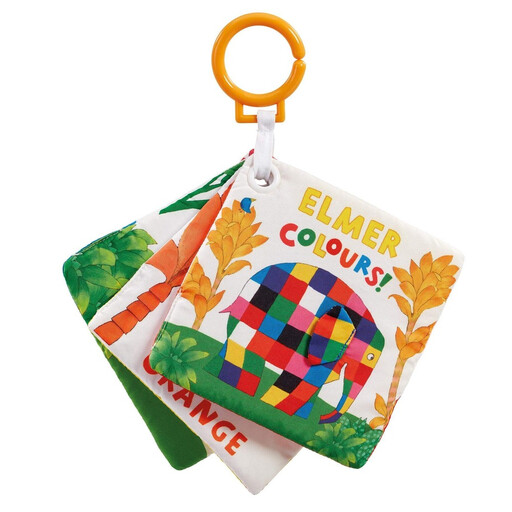
Why This Fits Their Persona: A compact option for newborns and families who want a first sensory toy for home, prams, car seats or changing bags.
It focuses on tactile patches, crinkle sounds and a hidden squeaker rather than a large collection of electronic functions.
Suitable from 0+ months; clip ring supports portable use; soft format is easy for little hands to grasp.
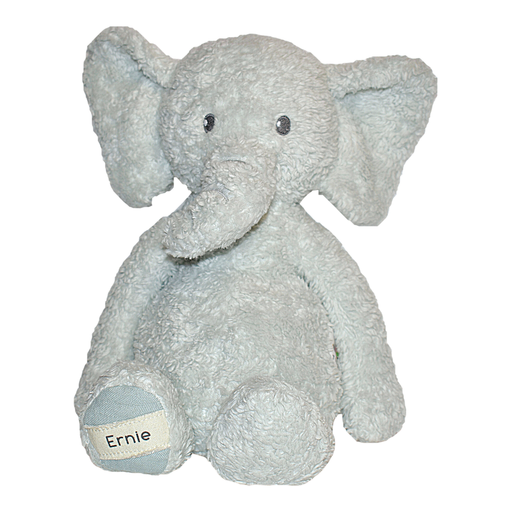
Why This Fits Their Persona: A suitable gift-style choice for families prioritising organic fabric, a soft companion and a quieter sensory experience.
The listing specifies 100% certified organic cotton outer fabric and hand-wash care, making the material and maintenance requirements clear.
20 cm plush design; internal chime rattle; embroidered facial details and tactile ears.
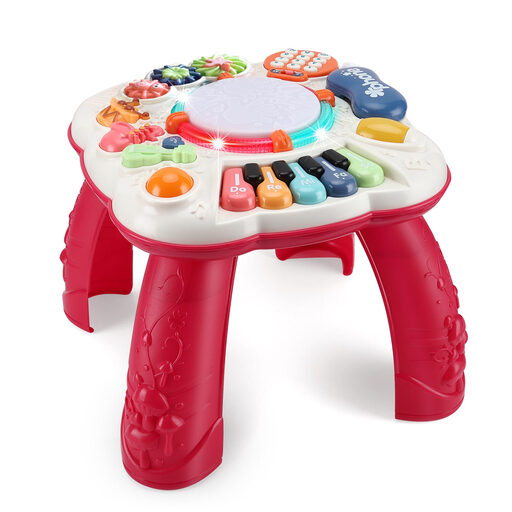
Why This Fits Their Persona: Designed for households wanting several activities in one unit as a baby moves from floor play towards standing play.
Its removable legs allow floor-panel use before standing play, while the built-in volume control and quiet mode address noise concerns.
Six play zones; ABS construction with rounded edges; batteries are not included.
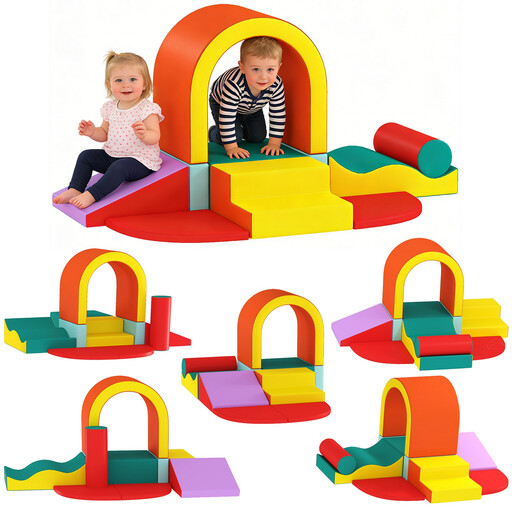
Why This Fits Their Persona: A substantial indoor play option for toddlers aged 12–36 months who need space to crawl, climb and rearrange activities.
It is not a single-purpose climber: the ten pieces can be rearranged, and the PU surface is designed to wipe clean after active play.
High-density EPE foam; anti-slip hook-and-loop pads; 152 × 82 × 70 cm overall dimensions.
A toy does not need to be used for long sessions to be worthwhile. Offer one or two options at a time and rotate them when interest fades. Sit nearby and describe what your child is touching, hearing or doing. This supports shared interaction without suggesting that a toy can guarantee a particular developmental outcome.
For sensory toys for babies, place items within safe reach during supervised floor play. As mobility increases, create clear space around activity toys and secure larger products according to their instructions. Musical toys can become first musical instruments for children when adults join in with simple rhythms, clapping and singing.
If you need more flexible play ideas for growing toddlers, browse the open ended toys for 2 year old range.
We have compiled a complete, real-time list of products that fully satisfy these strict selection criteria and UK safety regulations.
Soft fabric books, lightweight rattles, textured plush toys and pram toys are common starting points. Choose products marked 0+ months, remove all packaging and supervise use. Avoid placing toys with clips, cords or detachable components within a baby’s unsupervised sleeping space.
Lifespan depends on materials, frequency of use, cleaning and storage. Inspect toys before each use, particularly after drops or washing. Replace any item with damaged stitching, loose pieces, cracked plastic, exposed filling or a weakened attachment ring.
Battery-operated musical baby toys usually have an ongoing battery cost, and the listing should state whether batteries are included. Look for adjustable volume or mute functions to make the toy more practical at home. Switch toys off after play and remove batteries before long-term storage where the manufacturer advises it.