
24/7 Customer Support

Free returns

Same-day & Next-day Delivery

Quality Guaranteed

Unlock Your Welcome Offers: FREE Delivery | Up to 80% OFF | Free 30-day JoyPlus trial
Download the APP
As a Joybuy Product Recommendation Officer, my role is to help you navigate the crowded market of baby products. When it comes to choosing baby dummies, the sheer variety can be overwhelming. It’s easy to fall into common traps that lead to wasted money and a drawer full of unused soothers. Before you make a choice, let’s look at the frequent pitfalls UK parents encounter.
One common issue is the "one-size-fits-all" myth. A soother that’s perfect for a six-month-old can be too large and cumbersome for a newborn, while a newborn’s dummy may not be robust enough for a toddler. Another trap is overlooking the importance of teat shape and material. A baby who rejects one dummy might happily accept another with a different design. Finally, practical features like self-sterilising cases or a glow in the dark dummy are often dismissed as gimmicks, but they can be genuinely useful tools for busy, sleep-deprived parents.
To make a confident choice, focus on a few key parameters rather than marketing slogans. These objective factors will help you find a soother that is safe, comfortable and suitable for your child.
The age grading on a dummy pack (e.g., 0-2 months, 6-18 months) is a critical safety and comfort feature. Newborn soothers are designed to be smaller and lighter, making them easier for tiny mouths to hold without causing fatigue. As your baby grows, soothers for older age groups, like dummies for 6-18 months, feature larger, more durable teats and shields to accommodate a developing jaw and the eventual arrival of teeth. Using the correct size ensures a proper fit and reduces potential safety hazards.
The teat is the most important part of the soother. You will generally find two main shapes:
Materials also matter. Most modern soothers use silicone, which is durable, easy to clean and odourless. Natural rubber latex is a softer alternative, but it is less durable and can trigger allergies in some babies. Always ensure any soother you choose is advertised as a BPA-free pacifier, which is standard for products sold in the UK.
The shield is the plastic part that sits against your baby's face. Look for shields with large air holes, as these allow skin to breathe and prevent the build-up of saliva, which can cause irritation and rashes. All soothers sold in the UK must comply with the safety standard EN 1400. This standard ensures the dummy is strong enough to prevent breaking and that the shield is large enough to prevent it from being fully drawn into a baby's mouth.
Based on these practical criteria, here are some recommendations matched to different parenting needs.
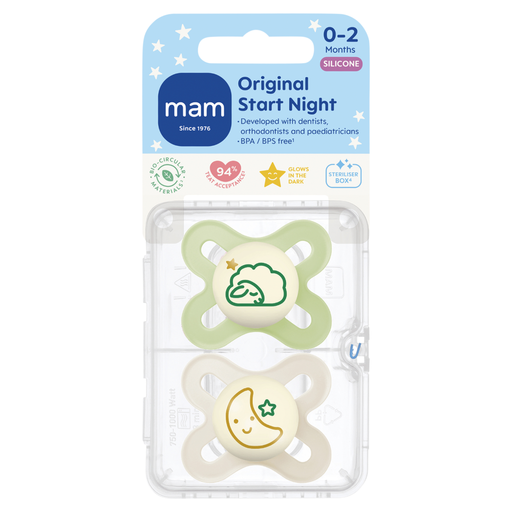
Why This Fits Their Persona: Parents of newborns need a soother that is extra small and lightweight, making it easy for a tiny baby to keep in their mouth. Night-time fumbling is a real challenge, and any feature that simplifies it is a huge plus.
It avoids the "one-size-fits-all" trap by being specifically engineered for newborns. The glow-in-the-dark button proves that so-called "gimmicks" can be incredibly practical, solving the problem of finding a dropped dummy in the dark without disturbing the baby.
Its extra small and lightweight design is ideal for tiny mouths. It also includes a self-sterilising travel box for quick, hygienic cleaning in a microwave.
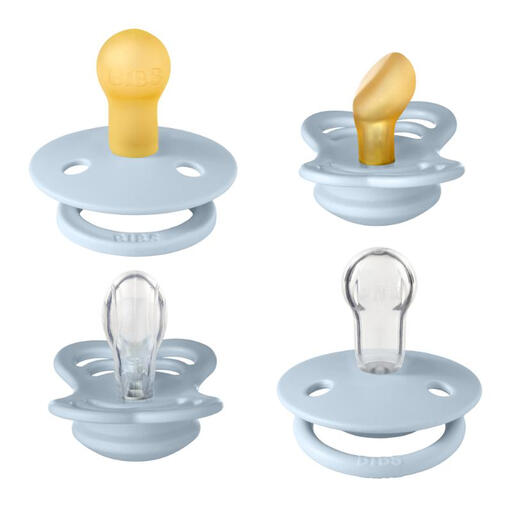
Why This Fits Their Persona: For parents who have tried a soother or two with no success. This collection is a practical way to discover a baby's preference without committing to multiple full packs of a single style.
This pack directly solves the problem of not knowing which teat shape or material your baby will accept. It prevents the waste and expense of buying several different soother types that might be rejected.
It includes four different soothers with three teat shapes (round, anatomical, symmetrical) and two materials (natural rubber latex and silicone), maximising the chance of finding a match.
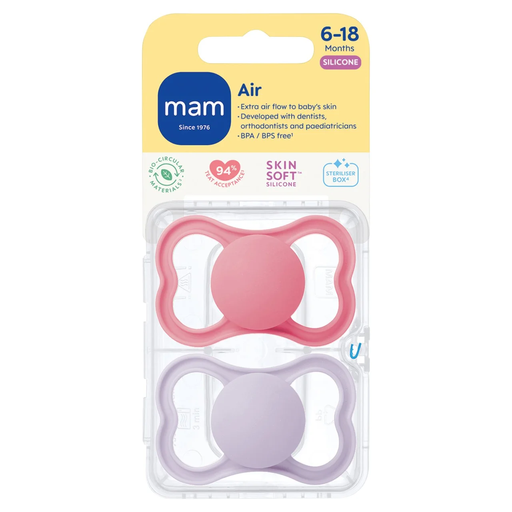
Why This Fits Their Persona: Ideal for parents of active, older babies, especially those with sensitive skin. At this stage, a durable, skin-friendly and developmentally appropriate soother is essential.
Its open-shield design directly counters the problem of skin irritation caused by trapped moisture. It is also correctly sized for the 6-18 month age range, avoiding the issues of using a soother that is too small or large.
The extra-large air holes allow maximum airflow to the skin. It features a SkinSoft silicone teat developed with orthodontists and includes a convenient self-sterilising box.
We have compiled a complete, real-time list of products that fully satisfy these strict selection criteria and UK safety regulations.
For both safety and hygiene, it is recommended to replace soothers every 1 to 2 months. You should also replace them immediately if you notice any signs of damage, such as tears, holes or the material becoming sticky. Always pull the teat in all directions before each use as a quick safety check.
Orthodontic dummies are designed with a specific shape to support the natural development of a baby's jaw and palate. Many parents prefer them for this reason. However, the "better" choice is ultimately the one your baby accepts and finds comforting. Some babies prefer a symmetrical teat, and as long as the soother is age-appropriate and used correctly, it can be a perfectly suitable option.
Always sterilise a new dummy before its first use by boiling it in water for five minutes. For daily cleaning, washing with warm, soapy water is sufficient. For regular sterilisation, you have several options: