
24/7 Customer Support

Free returns

Same-day & Next-day Delivery

Quality Guaranteed

Unlock Your Welcome Offers: FREE Delivery | Up to 80% OFF | Free 30-day JoyPlus trial
Download the APP
Welcoming a new baby brings endless joy, but it also comes with a long list of questions. One of the most common is: how do I keep my little one safely occupied and happily stimulated? The market is filled with options, from gentle newborn rockers to bouncing baby jumpers and it can be difficult to know which baby entertainer is right for your child and your home.
This guide is designed to cut through the clutter. We will walk you through the key differences between the main types of baby entertainers, explain what to look for based on your baby's developmental stage and share some of our top recommendations to help you make a confident choice.
Before you decide, consider a few practical points. The right choice depends not just on the product, but on your baby's needs and your family's lifestyle.
A product that is perfect for a six-month-old may be unsuitable for a newborn.
Safety is the most important factor. When selecting any baby equipment, look for features that comply with UK and EU safety standards. This includes a sturdy, wide base to prevent tipping, a secure harness system (typically 3-point or 5-point) and for walkers, features like anti-tip pads and speed-reducing friction strips. Always check the manufacturer's age and weight limits and use the product exactly as instructed.
Think about your living space. If you are short on room, a model that folds flat for easy storage is a significant advantage. Portability is also key if you plan to move the entertainer between rooms or take it to a grandparent's house. Finally, look for practical features like removable, machine-washable seat covers – they are essential for handling the inevitable spills and messes.
Based on features, practicality and developmental suitability, here are a few standout options for different needs and stages.
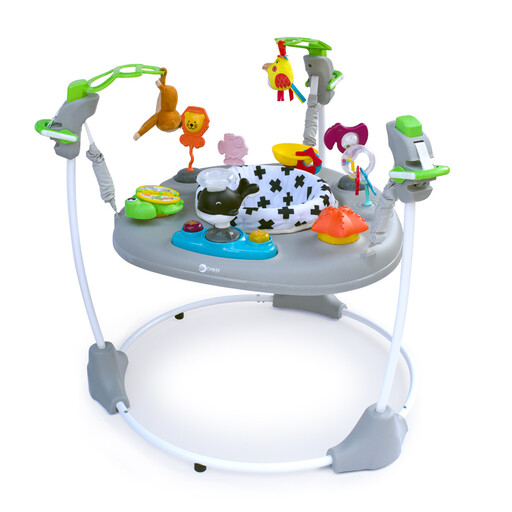
Why It Stands Out: This baby activity centre is a complete entertainment hub. The standout feature is its 360-degree rotating seat, which allows your baby to turn and interact with 10 different activities. This freedom of movement helps keep them engaged for longer while encouraging them to reach, turn and explore.
Pros:
Who is it for? This is an excellent choice for babies from approximately 4 to 12 months who can sit up independently and are ready for a stimulating, stationary play zone that encourages active bouncing and learning.
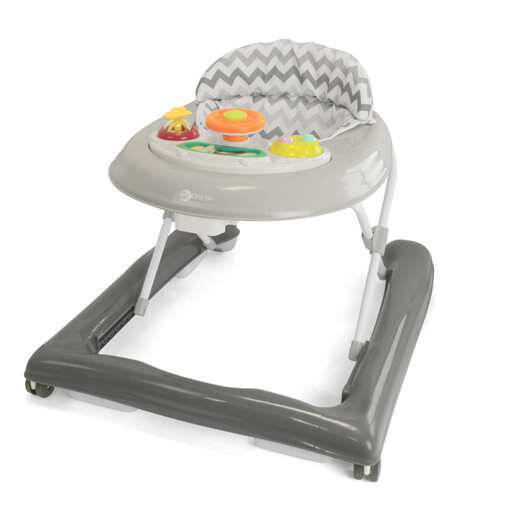
Why It Stands Out: The Mychild Wizzy Walker combines mobility with practicality. Its most useful feature is the detachable toy tray. This allows you to remove the interactive steering wheel and toys for floor play, and it transforms the walker into a simple snack tray. Its ability to fold completely flat makes it ideal for homes where space is at a premium.
Pros:
Who is it for? This baby walker is designed for babies from around 6 months who can sit up confidently and are beginning to show an interest in moving independently, giving them a secure way to find their feet.

Why It Stands Out: This newborn rocker offers a unique, calming experience powered entirely by your baby's own movements. It requires no batteries or mains power, responding to your child's wiggles with a gentle, side-to-side swaying motion. Its minimalist wood-effect frame and 100% organic cotton fabric give it a stylish look that blends into modern interiors.
Pros:
Who is it for? Perfect for parents of newborns (from birth to 9kg) who value a minimalist aesthetic, portability and a sustainable, battery-free soothing solution.
If your little one isn't quite ready for these entertainers, or you're looking to supplement their playtime with more hands-on activities, exploring a range of sensory toys is a great next step. These toys are designed to stimulate developing minds and motor skills through touch, sight and sound.
Discover our curated collection of baby sensory toys to find the perfect match for your child's stage.
This depends entirely on the type. Newborn rockers and some baby bouncers can be used from birth up to around 6 months (or until the baby can sit up). Stationary baby activity centres and baby jumpers are generally suitable from around 4-6 months, once a baby has full head control. Always refer to the manufacturer's specific guidelines.
Modern baby walkers sold in the UK must meet strict safety standards. Look for models with features like anti-tip pads and wide bases to ensure stability. However, they should only ever be used on flat surfaces, away from stairs and for short periods under constant adult supervision.
It is generally recommended to limit time in a baby jumper or activity centre to short, supervised sessions of around 15-20 minutes at a time, once or twice a day. This ensures your baby gets plenty of floor time, which is crucial for developing crawling, rolling and other essential motor skills.