
24/7 Customer Support

Free returns

Same-day & Next-day Delivery

Quality Guaranteed

Unlock Your Welcome Offers: FREE Delivery | Up to 80% OFF | Free 30-day JoyPlus trial
Download the APP
Choosing baby feeding accessories can feel straightforward until you compare bib materials, feeding sets, soother storage and cleaning instructions. Marketing often focuses on attractive prints or phrases such as “mess-free”, while the details that affect daily use can be easy to miss.
For UK parents, guardians and gift buyers, the right choice usually depends on your child’s age, feeding stage, laundry routine and how often you travel. This guide explains the main buying pitfalls, the specifications worth checking and a selection of products suited to different households.
Small cotton bibs may work well for dribbles, but they are not designed to protect clothing during spoon-feeding or self-feeding. Conversely, a long-sleeved coverall can feel excessive for a newborn.
Consider the type of mess first:
A bib should fit securely without pressing on the neck, and it should be removed after feeding. Adult supervision is required whenever a bib is being worn.
A wipe-clean bib still needs regular washing, while silicone products should be dried fully before storage. Damp items placed in closed bags or cases may develop unpleasant odours and hygiene issues.
Check whether the product is:
For everyday use, buying two or more bibs can be more practical than relying on a single item between washes.
A soother box may hold several pacifiers but may not suit every shield shape. A microwave sterilising case may also be suitable only for silicone soothers, not natural rubber latex.
Likewise, suction bowls and plates work best on clean, dry, smooth surfaces. They are not guaranteed to stay attached to textured or uneven tables. Always check the stated age guidance, material information and warnings before purchase.
Look for clear material descriptions such as food-grade silicone, BPA-free polypropylene, cotton muslin or polyester with a water-resistant backing. “Non-toxic” on its own provides less useful information than a specific material list.
For baby feeding sets, check whether the bowl, plate, cup, utensils and bib are made from the same material or include polypropylene components. Also check whether the set is PVC-free, phthalate-free or dishwasher safe if those features matter to your household.
Textile buyers may prefer:
A bib that is too loose may fail to catch spills; one that is too tight can be uncomfortable. Adjustable snaps or neck closures allow you to alter the fit as your child grows.
Age guidance is also important:
For pacifier clips, look for a stated length and instructions on attaching them only to clothing. The clip should never be placed around the neck, used in a cot or treated as a toy.
A useful baby feeding set should be simple to dismantle, rinse and dry. If you regularly visit grandparents, use childcare or travel by pram, consider a compact case or fastening strap.
A soother box that holds up to three pacifiers can reduce the need to carry loose items in a changing bag. However, always follow the manufacturer’s sterilisation instructions. For the BIBS boxes listed below, microwave sterilisation is specified for silicone pacifiers only, with a maximum power and heating time stated in the product directions.
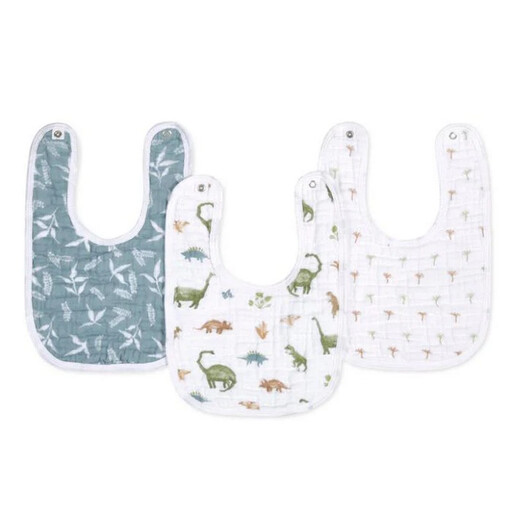
Why This Fits Their Persona: A three-pack gives new parents several bibs for changes between washes, and the 0+ months guidance makes it suitable for early feeding and burping routines.
The three-layer cotton muslin construction is designed for spills, drool and dribbles, rather than relying on a small decorative bib with limited coverage.
Three front snaps provide an adjustable fit, and the bibs are machine washable. They can also be used as burp cloths according to the product description.

Why This Fits Their Persona: This option suits buyers who want a larger, softer-feeling textile for feeding, burping and gifting, with organic cotton specified in the product details.
Its four-layer design and 57cm x 28cm dimensions provide more information than vague claims about “full coverage”. Buyers can judge the size for themselves.
Made from 100% organic cotton muslin and designed for use as either a snap bib or a shoulder burp cloth.
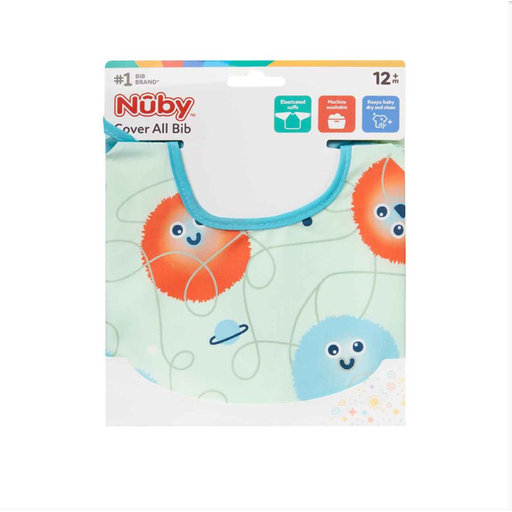
Why This Fits Their Persona: It is intended for toddlers aged 12 months and over, making it suitable for messy self-feeding, nursery meals and food activities at home.
The long sleeves, elasticated cuffs and waterproof material address the limited coverage of standard bibs during larger, wetter meals.
Machine washable with snap fastening and a polyester front with synthetic rubber backing. Colours are supplied assorted.
We have compiled a complete, real-time list of products that fully satisfy these strict selection criteria and UK safety regulations.
A baby feeding set can be more economical than buying each item separately when your child begins self-feeding. The Bc Babycare silicone sets include a plate, bowl, cup, fork, spoon and bib, with suction bases on the bowl and plate. Use these only on suitable smooth surfaces and inspect every component regularly.
For newborn feeding essentials and outings, a soother box can keep pacifiers separate from other changing-bag items. The BIBS Soother Box fits up to three pacifiers and includes a fastening strap. Its instructions distinguish between silicone and natural rubber latex soothers, so read them carefully before using any sterilising function.
A pacifier clip can help keep a soother within reach, but it must be attached to clothing only. Never lengthen it, place it in a cot or use it as a teether.
Many households find that four to eight bibs provide a practical rotation, depending on how often the baby feeds, dribbles or self-feeds. Muslin bibs may need changing several times a day, while silicone bibs can be rinsed and reused once fully dry.
Generally, silicone bibs and feeding items can be rinsed with warm water and mild washing-up liquid. Some are top-rack dishwasher safe, but check the individual instructions. Detach removable parts and allow everything to dry completely before storage.
The change is usually most useful when a child begins eating wetter foods or feeding independently, commonly from around six months. Muslin remains useful for milk, drool and burping, while waterproof or silicone styles offer more protection during meals.