
24/7 Customer Support

Free returns

Same-day & Next-day Delivery

Quality Guaranteed

Unlock Your Welcome Offers: FREE Delivery | Up to 80% OFF | Free 30-day JoyPlus trial
Download the APP
Choosing baby feeding and bottle care products can quickly become confusing. A bottle may promise a natural latch, an anti-colic valve or fast sterilisation, but those features only help if they suit your baby’s age, feeding method and daily routine.
For parents preparing for a newborn, combination-feeding families and carers of babies moving towards independent drinking, the right choice usually comes down to three things: comfortable feeding, easy cleaning and a hygiene routine you can maintain consistently.
Anti-colic baby bottles use different designs, including vented bases, internal valves and air-flow systems. These features are intended to reduce air entering the milk, but feeding position, teat flow and how well the bottle is assembled also matter.
A bottle that is difficult to vent, prone to leaking or fitted with the wrong flow teat may create more practical problems than it solves. Treat anti-colic features as design considerations rather than guaranteed outcomes.
Age guidance is useful, but it is not the only factor. A fast-flow teat may overwhelm a younger baby, while a slow-flow teat can make an older baby feed for longer or become frustrated. Watch how your baby feeds and follow the manufacturer’s guidance.
Also check compatibility carefully. Replacement bottle teats are rarely universal, even when bottles look similar. Some are designed for a particular neck shape, valve or collar.
Self-sterilising baby bottles can be convenient for small households or travel, but only if every component is cleaned and assembled correctly. Similarly, UV baby sterilisers and larger baby bottle sterilisers are not substitutes for washing away milk residue.
A UV unit generally requires items to be visibly clean and positioned so the light can reach the relevant surfaces. Steam systems require water, while UV models may require regular filter or surface maintenance. Consider the full process, not just the headline cycle time.
For newborns, 150ml to 160ml baby bottles with slow-flow teats can be practical for smaller feeds. As feeding volumes increase, 240ml, 260ml or 330ml bottles may reduce the need for refilling.
Check:
Breast-like baby bottles typically have a wider, softer teat designed to support a familiar latch. This may be useful for combination feeding, although babies can respond differently to teat shape and flow.
Look for clear material details, such as BPA-free and BPS-free polypropylene or food-grade silicone. BPA-free baby feeding products are widely available, but the label should not replace checking the complete care instructions.
For UK households, confirm that the product is intended for feeding use and that its instructions cover cleaning, heating and sterilisation. Feeding equipment should be used under adult supervision. Inspect teats regularly and replace them at the first sign of cracking, weakness, tackiness or bite damage.
Never heat a sealed bottle in a microwave. Microwaves can create hot spots and pressure can build up if the lid is tightly fitted. Stir heated milk thoroughly and check its temperature before feeding.
Wide-neck bottles are usually easier to fill and clean. Bottle parts should come apart without forcing, and narrow areas need a suitable bottle cleaning brush or teat brush.
After washing, allow components to dry fully in a clean, ventilated area. Storing damp parts in a closed case can encourage odours and moisture build-up. A baby bottle washer and dryer can reduce manual work in busy households, but check its capacity, water requirements, filter care and worktop space before purchasing.

Why This Fits Their Persona: A compact twin pack for newborn feeding, combination feeding or parents who want a simple starter set without immediately buying a separate steriliser.
The self-sterilising design still requires disassembly and thorough cleaning first. The 160ml size also helps avoid buying oversized bottles for early feeds.
BPA- and BPS-free components; 3-minute microwave self-sterilisation using the specified water quantity.
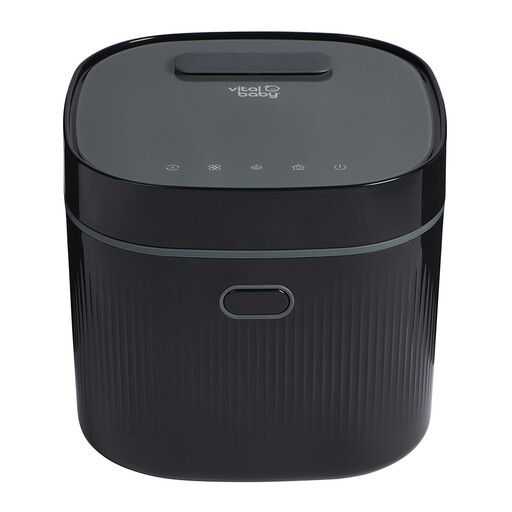
Why This Fits Their Persona: Suitable for households wanting a dedicated worktop appliance for bottles, teats, soothers and breast pump parts, without routine water-filled steam cycles.
Items must be cleaned first and arranged without overcrowding, so the UV cycle is used as part of a complete hygiene routine rather than as a shortcut.
Offers Sterilise, Dry, Auto and Store modes; HEPA-filtered drying is specified by the manufacturer.
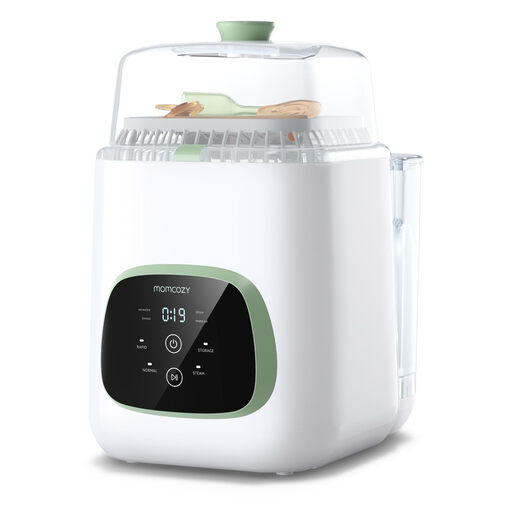
Why This Fits Their Persona: Designed for frequent bottle users and families managing several bottles or breast pump parts each day.
Its stated capacity is up to four standard bottles per cycle, making capacity easier to assess than relying on vague “family-sized” wording.
Combines washing, steam sterilising and drying; includes 26 spray jets and nine combinable settings.
We have compiled a complete, real-time list of products that fully satisfy these strict selection criteria and UK safety regulations.
There is no single interval for every teat. Follow the manufacturer’s guidance and inspect before each use. Many manufacturers advise replacing teats around every one to two months, or immediately if there is damage, weakness, cracking or noticeable wear.
Running costs depend on cycle frequency, electricity use, cycle length and the appliance’s purchase price. UV models do not require water or descaling in the same way as steam units, while steam sterilisers may suit households that already have a regular water-based routine. Compare the stated wattage, cycle time and maintenance requirements before buying.
Usually, yes. A washer can reduce manual cleaning, but a brush remains useful for checking residue, cleaning parts that are not loaded correctly and handling items outside the machine. Choose a brush with a teat or narrow-channel attachment and replace it when bristles loosen or the sponge deteriorates.