
24/7 Customer Support

Free returns

Same-day & Next-day Delivery

Quality Guaranteed

Unlock Your Welcome Offers: FREE Delivery | Up to 80% OFF | Free 30-day JoyPlus trial
Download the APP
Choosing baby feeding bottles and cups can become surprisingly complicated. Product packaging often highlights anti-colic valves, breast-like teats or no-spill technology, but these features do not automatically make a product suitable for every baby or household.
The most useful choice depends on your baby’s age, feeding method, flow preference and how much cleaning you are prepared to do each day. This guide explains the key specifications to check before buying, followed by product recommendations matched to different family needs.
Anti-colic baby bottles use different systems, including vented bases, valve-equipped teats and internal air channels. These designs aim to manage air intake, but correct assembly and feeding position still matter. A poorly fitted valve may leak or fail to vent properly.
Look for clear instructions, removable parts for cleaning and a teat that remains filled with milk during feeding. No bottle can guarantee that a baby will experience less wind or discomfort.
A larger bottle does not always mean it is suitable for a younger baby. Flow rate is usually more important than capacity. Newborn feeding bottles commonly use a slow-flow teat, while older babies may move to medium or fast flow as their feeding skills develop.
A flow that is too fast may cause coughing, gulping or leaking around the mouth. A flow that is too slow can lead to frustration. Follow the manufacturer’s age guidance and observe how your baby feeds rather than changing flow solely because of age.
Self-sterilising baby bottles can reduce the equipment needed at home or while travelling, but all parts still need to be washed first. Milk residue can remain around collars, valves and teat openings. Microwave sterilisation must also be carried out exactly as directed, using the specified water quantity and heating time.
Similarly, “non-spill” does not always mean completely leak-proof in every position. Check whether the lid must be closed, whether the cup is suitable for travel and how easily the valve can be removed for cleaning.
Check the stated age range before buying. For babies aged 0–3 months, a 150ml or 160ml bottle with a slow-flow teat may be practical. As feeds increase, 240ml to 340ml bottles can reduce the need for refilling.
For combination-feeding families, breast-like baby bottles with a wide, flexible silicone teat may offer a familiar shape. However, acceptance varies between babies, so buying a small pack first can be more economical than purchasing a large set immediately.
When introducing baby sippy cups, consider the drinking mechanism:
Many families specifically search for BPA-free baby bottles. Polypropylene and silicone are common materials, while some products also state that they are free from BPS, PVC, phthalates, latex or nitrosamines.
Material claims should be checked on the product listing and packaging rather than assumed from a brand name. Also check whether the bottle is dishwasher-safe, whether it can be boiled and whether all parts tolerate steam, UV or cold-water sterilisation.
In the UK, always follow the manufacturer’s instructions and use products under adult supervision. Inspect teats, spouts, valves and bottle bodies before every use. Replace parts at the first sign of splitting, tackiness, weakness or bite damage.
A bottle with several valves may offer useful airflow management but can take longer to clean. A wide neck can make filling and brushing easier. Cups with only two or three parts may be more practical for nursery bags and daily washing.
Check whether replacement teats or spouts are available in the correct flow and whether they need replacing at a specified interval. This ongoing cost is easy to overlook when comparing the initial purchase price.
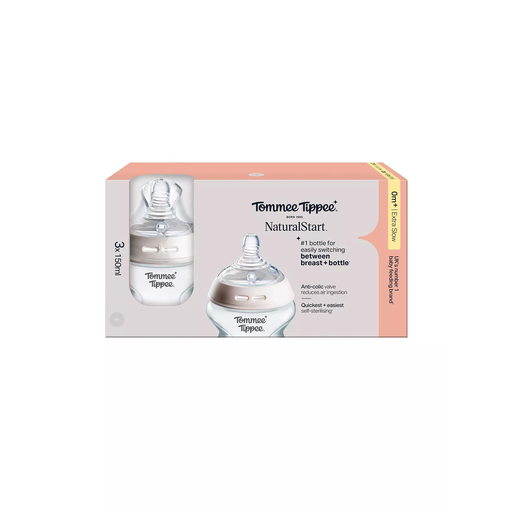
Why This Fits Their Persona: A three-bottle pack gives new parents a practical starting supply for home use, especially when combining breastfeeding with expressed milk or formula.
The stated 0+ month suitability and slow-flow teat help avoid choosing a large-capacity bottle with an unsuitable initial flow.
150ml capacity, soft silicone teat, integrated anti-colic valve and wide-neck construction. The bottles are stated to be BPA-free and dishwasher-safe.
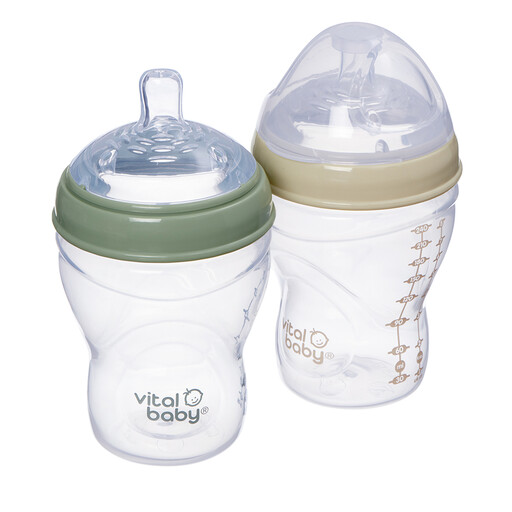
Why This Fits Their Persona: Suitable for families prioritising a wide teat shape, combination feeding and a larger capacity that can remain useful as feeds develop.
Its triple anti-colic valve system is a defined physical feature, while the manufacturer’s instructions still require proper positioning and cleaning.
240ml bottles with breast-like FlexZone teat design, triple anti-colic valves and microwave self-sterilisation instructions. Materials are stated to be BPA-, latex- and phthalate-free.
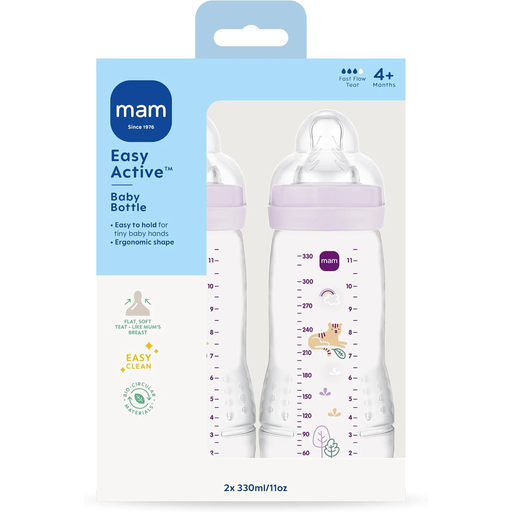
Why This Fits Their Persona: The 330ml capacity and included milk powder box suit longer days out, nursery routines and families preparing several feeds in advance.
The wide opening supports filling and cleaning, while the spill-proof lid protects the teat and doubles as a measuring cup rather than relying only on marketing claims.
Two 330ml bottles, ergonomic shape, wide openings, fast-flow teat for 4+ months and BPA- and BPS-free polypropylene components.
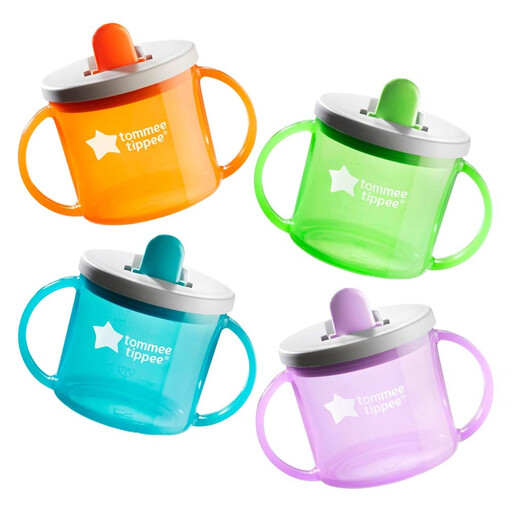
Why This Fits Their Persona: Parents introducing a first cup can use the handles and free-flow spout to practise tipping and sipping at home or while travelling.
The free-flow spout is clearly different from a fully sealed valve, so parents can choose it for drinking practice rather than expecting complete spill prevention.
190ml capacity, easy-grip handles, flip-down spout lid and a two-part design that is suitable for dishwasher cleaning and sterilisation.
We have compiled a complete, real-time list of products that fully satisfy these strict selection criteria and UK safety regulations.
For bottle feeding, three to six bottles can reduce washing between feeds, depending on your routine and whether your baby attends nursery. A smaller selection is sensible initially, as some babies prefer particular teat shapes. For cups, one at home and one in a changing bag may be enough while your baby learns to drink independently.
There is no universal lifespan. Inspect them before every use and follow the product instructions. Replace immediately if you notice cracks, thinning, tackiness, discolouration or bite marks. Some manufacturers recommend scheduled replacement, such as every one to two months, even when damage is not obvious.
No. A non-spill trainer cup can reduce leakage when the valve is correctly fitted and the cup is used as directed, but it may still leak if overfilled, dropped, shaken or assembled incorrectly. Clean the valve carefully and check the lid is fully closed before placing it in a changing bag.