
24/7 Customer Support

Free returns

Same-day & Next-day Delivery

Quality Guaranteed

Unlock Your Welcome Offers: FREE Delivery | Up to 80% OFF | Free 30-day JoyPlus trial
Download the APP
As a Joybuy Product Recommendation Officer, I see how overwhelming the baby food aisle can be for parents. With shelves packed with colourful pouches, jars and snacks, all promising goodness for your little one, it's easy to feel lost. The goal is simple: find nutritious, safe and convenient food for your baby's weaning journey. However, marketing messages can often create confusion. This guide will help you cut through the clutter and make informed choices for your family.
Before you fill your basket, it's worth being aware of a few common traps that can lead to frustration and wasted money.
To avoid these pitfalls, focus on these key parameters. They provide a clearer picture of what you're actually buying.
The ingredients list is your most reliable source of information. Look for products where the main ingredients are whole foods like vegetables, fruits or proteins (e.g., 'Organic Sweet Potato', 'Chicken'). Water or fruit juice concentrate listed as the first ingredient can indicate a less nutrient-dense product. Also, pay attention to the total sugar content, not just whether it has "no added sugar." This gives you a better understanding of the overall sweetness. Choosing organic baby food can also provide peace of mind, as it ensures ingredients are grown without synthetic pesticides.
A successful weaning journey is a gradual progression of textures.
Each format has its place in a modern parent's cupboard.
To help you match a product to your needs, here are a few options suited to different parenting scenarios.
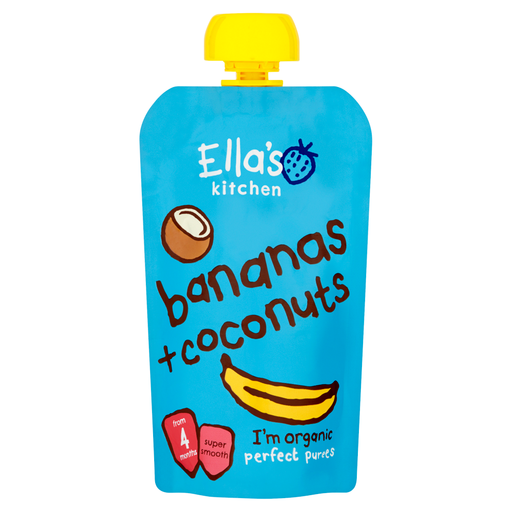
Why This Fits Their Persona: Ideal for parents starting the weaning journey. Its simple, two-fruit blend and suitability from 4 months make it a gentle introduction to solid foods.
It has a transparent, short ingredient list (organic bananas, coconut milk, lemon juice), avoiding the "healthy halo" pitfall. Its super-smooth texture is perfectly aligned with Stage 1 needs, removing any guesswork.
Made with 100% organic fruit and contains only naturally occurring sugars. The smooth texture is easy for babies to swallow.
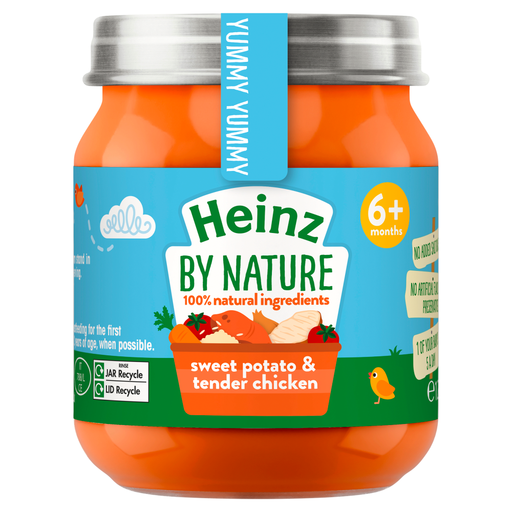
Why This Fits Their Persona: For parents needing a quick, nutritious meal without the prep time. This savoury pouch combines vegetables and protein, making it a balanced option for lunch or dinner.
This pouch offers a complete meal, addressing the convenience trap where parents might otherwise rely on simple fruit purées. The ingredients clearly state it contains 57% vegetables and 10% chicken.
Made with 100% natural ingredients and contributes to one of your baby's 5 a day. It has no added sugar or salt.
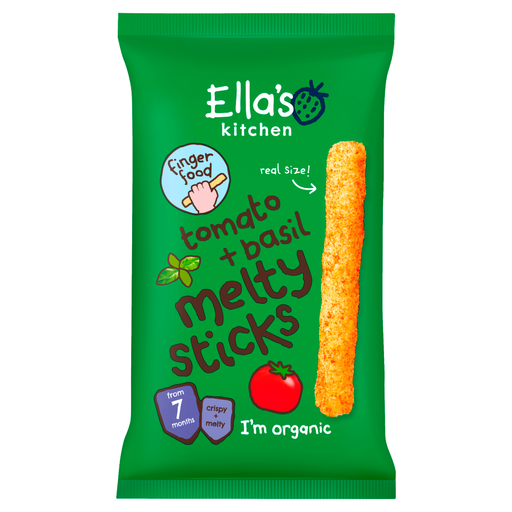
Why This Fits Their Persona: Perfect for babies from 7 months who are ready to practice self-feeding. The stick shape is easy for little hands to hold, and the texture is designed to be safe for developing mouths.
This product directly counters the over-reliance on purées by providing a safe way to introduce texture and self-feeding, helping to develop crucial motor skills and chewing muscles.
These organic sticks have a crispy but melty texture that dissolves easily. They contain no added sugar or salt.
We have compiled a complete, real-time list of products that fully satisfy these strict selection criteria and UK safety regulations.
You can start introducing soft finger foods for babies around 6 to 7 months, or whenever your baby can sit up without support and is showing an interest in picking up food. Start with items that dissolve easily, like melty puffs or soft-cooked vegetable sticks and always supervise your child while they are eating.
Choosing organic baby food means the ingredients are grown without the use of synthetic pesticides or fertilisers. For many parents, this provides valuable peace of mind. While it's a personal choice that depends on your budget and priorities, opting for certified organic products is a straightforward way to ensure a certain standard of farming practice.
Always check the packaging for specific storage instructions, as it varies by brand and format. As a general rule, opened jars of weaning food can typically be refrigerated for 24-48 hours. Many baby food pouches, however, are designed for single use and should be consumed immediately after opening, especially if the baby has fed directly from the spout. Never reheat baby food more than once.