
24/7 Customer Support

Free returns

Same-day & Next-day Delivery

Quality Guaranteed

Unlock Your Welcome Offers: FREE Delivery | Up to 80% OFF | Free 30-day JoyPlus trial
Download the APP
Choosing a baby hair brush can seem straightforward until you compare soft bristles, silicone designs, comb sets and bath-time brushes. Newborn hair is fine and delicate, while older babies may develop thicker, curlier or more easily tangled hair. The right tool should suit your child’s age, scalp sensitivity and daily routine rather than simply carrying the most appealing marketing claims.
A brush may be described as soft without explaining the bristle material, construction or intended age range. For a newborn hair brush, look for clearly stated materials such as soft synthetic bristles or food-grade silicone, alongside a stated suitability of 0+ months where applicable.
Avoid using adult brushes or firm styling tools on a baby’s scalp. They may pull fine hair, feel uncomfortable or make grooming more difficult.
Dry flakes can encourage parents to scrub harder, but pressure is not a substitute for a suitable design. A baby scalp brush should be used with gentle circular movements and should never be used to scratch, pick or forcibly lift skin.
If your baby’s scalp appears sore, inflamed, bleeding or persistently affected, stop using the brush and seek appropriate advice from a healthcare professional. A grooming tool is not a treatment for a skin condition.
A baby brush can collect shampoo, skin flakes and moisture between uses. Designs that are difficult to rinse or dry may become inconvenient for everyday care. Check whether the brush can be washed with warm water, whether it has areas that trap residue and how it should be stored.
A simple rinse and thorough air-drying routine is often more practical than a product requiring specialist cleaning equipment.
For a soft baby brush, check whether the bristles are described as extra-soft, rounded or flexible. Silicone nubs are often useful during bath time because they can help distribute shampoo while providing a gentle massaging action. Nylon bristles may be more suitable for smoothing fine, dry hair.
For a baby brush and comb set, rounded, non-scratch teeth and a wide-tooth design can help reduce snagging when hair becomes thicker or curly. Always work from the ends of the hair towards the roots, using slow strokes.
Product listings should identify the main materials and provide directions or warnings. The Shnuggle silicone options below are listed as made from 100% food-grade silicone, while the Tommee Tippee set uses BPA-free plastic with synthetic nylon bristles.
Material information does not remove the need for supervision. Inspect the brush or comb before every use and discontinue use if bristles become loose, teeth crack or the silicone tears.
A palm-shaped or ergonomic handle can be useful when bathing a wriggly baby. Look for a grip that remains manageable when wet and is comfortable for the adult using it.
For hygiene, rinse away shampoo and flakes after each use, then allow the brush to dry in a well-ventilated area. Keep it away from direct heat, sharp objects and unsupervised children. These simple checks are particularly important when buying a baby bath brush for frequent use.
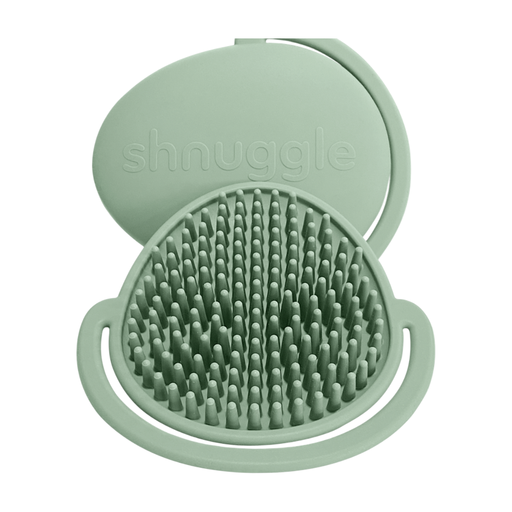
Why This Fits Their Persona: A straightforward option for parents who want one compact brush for newborn scalp cleansing, shampooing and everyday bath-time care.
Its listing clearly identifies super-soft silicone bristles, 0+ suitability and gentle circular use, helping avoid an overly firm or poorly specified brush.
Made from 100% food-grade silicone, with a palm-friendly ergonomic shape and rinse-clean maintenance.
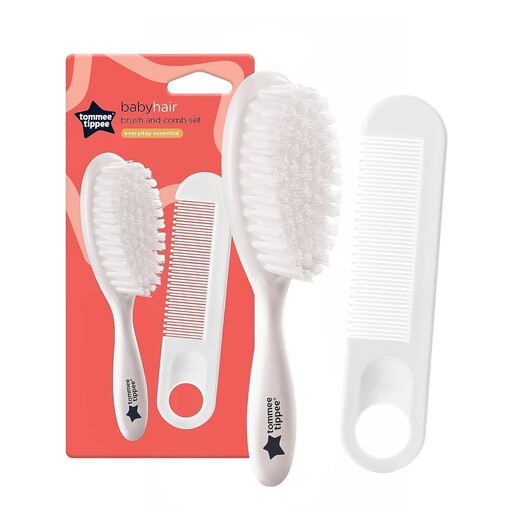
Why This Fits Their Persona: Suitable for households wanting a coordinated grooming set that can accommodate fine newborn hair and thicker hair as a child grows.
Rather than relying on one tool for every stage, the set separates soft brushing from combing, reducing the temptation to use firm teeth on fine hair.
Includes extra-soft bristles, rounded comb teeth, chunky handles and a compact design for a nursery or changing bag.
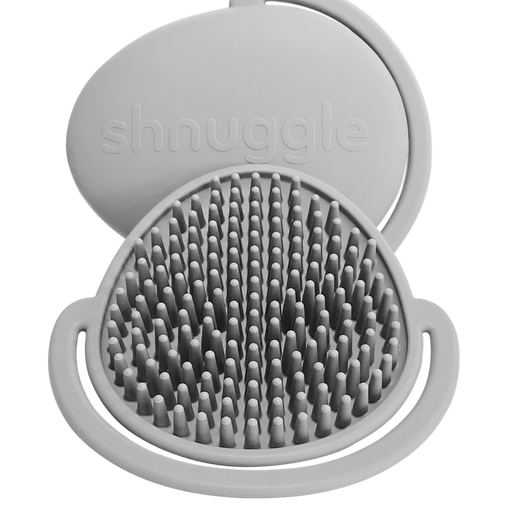
Why This Fits Their Persona: A practical match for families using a baby bath brush regularly for shampooing, scalp cleansing and gentle massage.
The loop handle gives additional control in wet conditions, while the flexible silicone format avoids exposed hard bristles during bath-time use.
Made from 100% food-grade, BPA-free and latex-free silicone; the listing also states that it can be rinsed and air-dried, or placed in a dishwasher for cleaning.
We have compiled a complete, real-time list of products that fully satisfy these strict selection criteria and UK safety regulations.
Some products are specifically listed as suitable from 0+ months, including the Shnuggle brushes and Tommee Tippee brush and comb set featured above. Always check the individual packaging, age guidance and warnings before use. Choose a very soft design for newborn hair and use only light pressure.
Rinse the brush after each use to remove hair, shampoo and loose flakes. Leave it to air dry fully before storing. A silicone design may be simpler to rinse than a brush with densely packed bristles, while a brush and comb set can usually be washed in warm soapy water according to its care instructions.
There is no universal replacement period. Lifespan depends on frequency of use, cleaning and storage. Inspect the bristles, teeth, handle and silicone surface regularly. Replace the item when it becomes worn, cracked, loose or difficult to clean, even if it still looks usable.