
24/7 Customer Support

Free returns

Same-day & Next-day Delivery

Quality Guaranteed

Unlock Your Welcome Offers: FREE Delivery | Up to 80% OFF | Free 30-day JoyPlus trial
Download the APP
As a Joybuy Product Recommendation Officer, my role is to help you navigate the crowded market of baby products. Choosing a baby highchair is a significant step; it’s where your little one will explore new tastes and join family mealtimes. However, many parents find their purchase falls short of expectations. Marketing claims can be misleading, leading to frustration and wasted money. This guide will help you identify the key features that truly matter and avoid the common pitfalls.
Before you start browsing, be aware of these frequent issues. A highchair might look perfect online, but these hidden flaws can make daily use a chore.
To ensure you get a highchair that is safe, practical and offers genuine value, focus on these non-negotiable parameters.
Safety is paramount. In the UK, highchairs should comply with the safety standard BS EN 14988:2017+A1:2020. This ensures the chair has passed rigorous stability, structural integrity and entrapment hazard checks.
Beyond the standard, inspect the harness. For a highchair for 6 months plus, a 5-point harness is essential. This secures the baby at the shoulders, hips and between the legs, preventing them from standing up or slipping down. A 3-point harness, which only secures the waist, offers significantly less protection for smaller infants.
The materials directly impact how easy the chair is to live with. An easy clean highchair will typically feature:
If space is a concern, you need a genuine space saving highchair. Don't just look for the word "folding"; check the folded dimensions. An ultra-slim fold (under 15cm) is ideal for modern homes. For those who need a portable highchair for travel or visits to grandparents, weight is also a key factor. A lightweight model (under 6kg) with a built-in carry handle is far more practical to move around.
We've selected a few highchairs that align with specific needs, helping you find a model that genuinely fits your lifestyle.
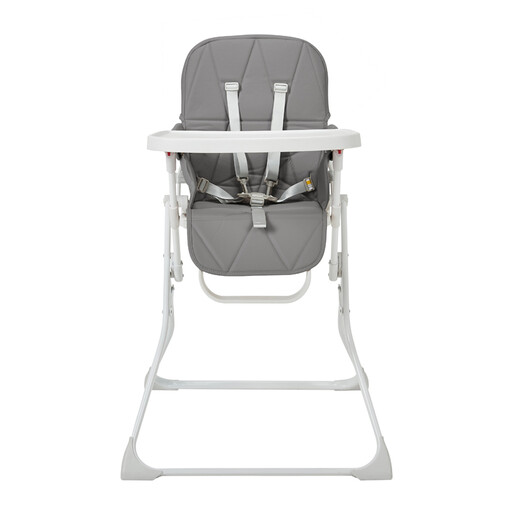
Why This Fits Their Persona: Living in a modern UK flat or house often means making every square foot count. This highchair is designed specifically for that, offering a full-size, secure seat for mealtimes that disappears when not in use.
It directly counters the "bulky fold" pitfall. With an ultra-slim 8cm folded profile, it can be stored behind a door or in a narrow gap, making it a true space-saving solution.
Its primary advantage is the exceptionally slim fold. It also features a wipe-clean leatherette seat and a dishwasher-safe tray, addressing the cleaning issue effectively.

Why This Fits Their Persona: For parents who appreciate minimalist design and want a product that lasts beyond the toddler years. The Scandi-inspired look with solid beech wood legs complements modern interiors and its multi-mode function offers excellent long-term value.
This chair delivers on the "grows with your child" promise. It converts from a highchair to a portable booster seat and finally into a genuinely useful junior stool suitable for a child up to 10 years old.
Its 3-in-1 versatility provides a long product life. The combination of stylish design, solid wood legs and an easy-wipe faux leather seat makes it both beautiful and practical.
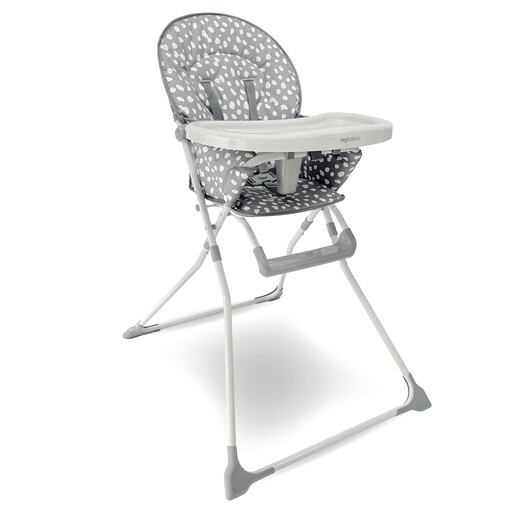
Why This Fits Their Persona: Ideal for parents who need a reliable, straightforward and affordable highchair without unnecessary complications. It's also a great option for grandparents or as a secondary chair due to its light weight and simple storage.
It avoids the "easy-clean" illusion by using simple, wipeable surfaces and a removable padded seat. The frame is uncomplicated, minimising food traps and making post-meal cleanup quick and efficient.
Its main strengths are its ultra-lightweight frame (only 5kg) and easy flat-fold mechanism. It provides all the essential features, including a 5-point harness and feeding tray, in a simple, effective package.
We have compiled a complete, real-time list of products that fully satisfy these strict selection criteria and UK safety regulations.
1. When can my baby start using a highchair? Most babies are ready for a highchair around the age of 6 months, or whenever they can sit up independently with good head and neck control. This is a crucial developmental milestone for safety. Always check the manufacturer's specific age and weight recommendations before use.
2. Are wooden or plastic highchairs better? There is no single "better" material; it depends on your priorities. Plastic highchairs are typically lighter, easier to wipe clean and often offer more features like height adjustment and compact folding. Wooden highchairs are often chosen for their aesthetic appeal and durability, but they can be heavier and may require more care to clean around joints.
3. How important is a footrest on a baby highchair? A footrest is a very important feature for your child's comfort and posture. When a child's feet are supported, they are less likely to fidget and can concentrate better on eating. It provides stability and promotes a proper, ergonomic sitting position. An adjustable footrest is even better, as it can be moved to support your child's legs as they grow.