
24/7 Customer Support

Free returns

Same-day & Next-day Delivery

Quality Guaranteed

Unlock Your Welcome Offers: FREE Delivery | Up to 80% OFF | Free 30-day JoyPlus trial
Download the APP
Choosing between baby highchairs and toddler chairs involves more than picking a colour or checking the price. UK parents, grandparents and carers need seating that suits a child’s stage, fits the available space and remains practical after repeated spills.
Several features are frequently highlighted in product listings but may not work for every household. A compact highchair can save floor space, but a narrow footprint may offer less room for a growing toddler. A foldable baby highchair is convenient for storage, yet folding mechanisms must be locked securely before every use. Likewise, a 3-in-1 highchair may appear economical, but its different modes need to match your child’s age, weight and dining arrangements.
“Suitable from 6 months” generally refers to a child who can sit unaided, not simply a child who has reached a particular birthday. The maximum weight can also vary significantly between products. Always check both the age guidance and maximum weight recommendation in the instructions.
An easy-clean highchair reduces daily effort, but food can still collect around harness points, tray edges, hinges and footrests. Removable covers, dishwasher-safe trays and smooth surfaces are useful features, although all parts still require regular inspection and cleaning according to the manufacturer’s instructions.
A foldable highchair may be convenient in a small kitchen, but check its folded dimensions and weight. A chair weighing 4–5kg may be manageable for visits to grandparents, while a bulkier model may be more suitable for permanent use beside the dining table.
Look for a secure 5-point harness, a stable base and a locking mechanism that is easy to confirm visually or by touch. The child should be secured during every use, and the chair should stand on a flat, level surface away from stairs, heaters and other hazards.
UK buyers should read the product’s safety information and look for relevant conformity details, such as references to applicable BS EN 14988 requirements where provided. Do not rely on a marketing phrase alone: check the supplied instructions, warnings and product documentation.
A highchair with tray is useful for independent feeding, but the tray should lock firmly into position. If the chair can be used at the family table, confirm that the tray can be removed or folded away without affecting stability.
A highchair with footrest can provide more supported positioning than a seat where a child’s legs dangle. Adjustable footrests are particularly useful as children grow. However, the footrest should be fitted at the correct height and should not be treated as a climbing platform.
For toddlers aged around 3 to 5, a toddler armchair offers a different type of seating. Features worth checking include seat height, back support, rounded edges, stable feet and the maximum load.
For messy weaning stages, consider a removable or dishwasher-safe tray, wipe-clean upholstery and as few difficult-to-reach seams as possible. Measure the storage area before buying: folded dimensions can matter more than the chair’s open size in a small UK kitchen or flat.
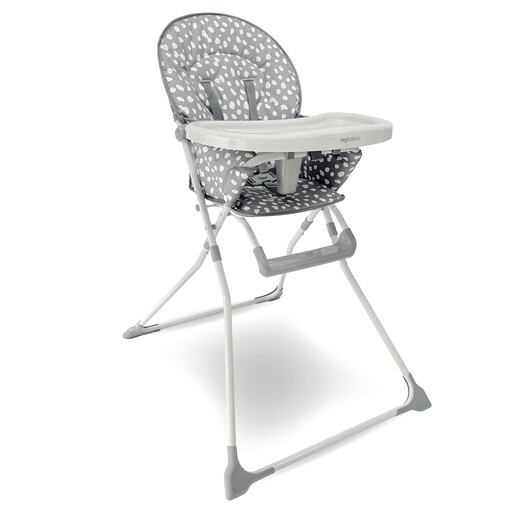
Why This Fits Their Persona: At 5kg, this compact highchair suits smaller kitchens and households looking for straightforward seating from approximately 6 months to 3 years, subject to the 15kg maximum recommendation.
Its flat-fold design addresses storage concerns, while the removable wipe-clean seat cover helps avoid upholstery that is difficult to maintain.
5-point harness, built-in leg rest, spacious tray with cup holder and 5kg overall weight.

Why This Fits Their Persona: This option suits families who value adaptable furniture and want one seating system for weaning, meals away from home and later junior seating.
Its stated modes are clearly defined, helping buyers assess whether the extra versatility is useful rather than paying for unused functions.
Removable dishwasher-safe top tray, four-position footrest, 5-point harness and 15kg recommendation for highchair and booster modes.
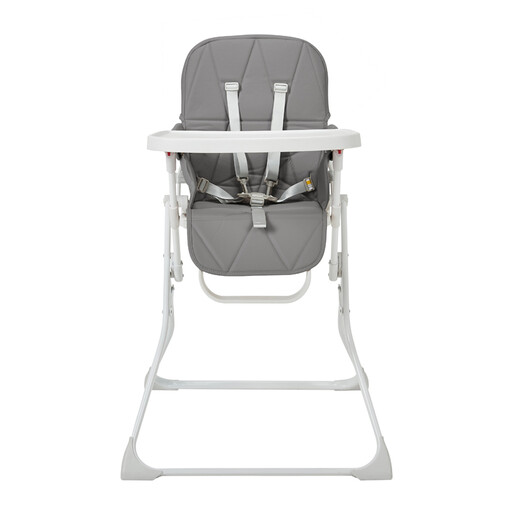
Why This Fits Their Persona: A practical choice for families moving between a compact home, car travel and meals at grandparents’ houses.
It folds to a stated 70 x 60 x 8cm profile and weighs 4.3kg, giving buyers measurable information before planning storage or transport.
BPA-free dishwasher-safe tray, wipe-clean detachable seat, adjustable footrest and 15kg maximum recommendation.
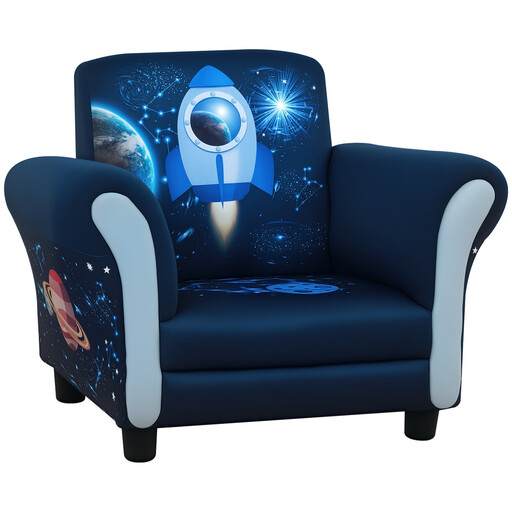
Why This Fits Their Persona: Designed for children aged 3–5, this kids armchair creates a separate spot for reading, relaxing and play rather than replacing a feeding highchair.
The stated age range, seat dimensions and 45kg maximum load make it easier to compare suitability with your child’s size.
Solid wood frame, thick padding, rounded edges, high backrest and anti-slip feet.
We have compiled a complete, real-time list of products that fully satisfy these strict selection criteria and UK safety regulations.
A highchair from 6 months is generally intended for a child who can sit upright without assistance and is beginning solid foods. Read the specific product instructions, as readiness and weight limits differ.
Many models are intended for approximately 6 months to 3 years, with a maximum weight such as 15kg. A 3-in-1 highchair may offer longer use through booster or junior-stool modes, but each mode has separate instructions and limits.
They can be, particularly in smaller homes, provided the frame locks securely when open and the chair is checked before each meal. For frequent travel, compare folded size, weight, tray removal and cleaning requirements rather than relying on the word “portable” alone.