Do not choose a reduced-fat cereal bar as a snack for a baby under one: NHS guidance says children under one should not be given snacks. For an older child, a reduced-fat claim does not settle whether a bar is appropriate. Check the current pack’s ingredients, allergens and texture, as well as any nursery food policy, before considering it for a packed snack.
Who is making this choice?
Parents baby-led weaning a child under one
If you are considering a bar as a finger-food snack, start with the child’s age rather than the fat claim. The NHS advises against snacks for children under one; solids are introduced from around six months alongside breast milk or infant formula, according to UK government guidance summarising NHS advice.
Parents packing a snack for an older child
For a child over one, compare the exact bar’s ingredients, nutrition declaration and texture. A reduced-fat label alone cannot answer questions about sugars, honey, nuts or allergens.
Parents following nursery or school food policies
Check the current pack’s allergen declaration and ask the setting about restrictions before packing a bar. Gluten and nut ingredients vary by product; the NHS specifically advises checking a nursery’s food policy.
What should you check first?
Age comes before a front-of-pack fat claim. If the child is old enough for a packed snack, move on to the exact recipe, texture and setting policy.
| Priority | What to check | Your needs |
|---|
| Age and feeding stage |
Check the child’s age and the pack’s age label. NHS guidance says children under one should not be given snacks; UK government guidance says solids are introduced from around six months alongside milk feeds. |
For a baby under one, I’m choosing foods for meals during weaning, not a cereal bar as a between-meal snack. |
| Ingredients and nutrition |
Read the current ingredient list for honey, sugar and syrups, then compare the nutrition declaration rather than relying on a reduced-fat claim. The NHS says not to give honey until a child is over one and advises avoiding foods with sugar or sweeteners for children aged four or under. |
If I’m considering a bar for an older child, I want to know what the fat claim leaves out about its ingredients and sugar content. |
| Texture and supervision |
Check for whole nuts and assess the bar’s pieces and texture for the child. Department for Education guidance says whole nuts should not be given to under-fives; young children should be supervised while eating. |
I need to be able to offer the food in a form my child can manage while seated and supervised. |
| Allergens and food policy |
Read the allergen declaration for the exact flavour and current recipe. Confirm any nursery or school restrictions; do not assume every cereal bar has the same gluten or nut status. |
Before packing a bar, I want to know both what this pack declares and what the setting permits. |
Common mistakes to avoid
-
Using “reduced fat” as an age-appropriateness test
Lower fat does not change the NHS advice that children under one should not be given snacks.
Do not use a cereal bar as a snack for a baby under one. For an older child, read the full ingredient list and nutrition declaration.
-
Overlooking honey or difficult-to-manage pieces
The NHS says honey should not be given until a child is over one. Department for Education guidance says whole nuts should not be given to under-fives; texture also needs checking for the individual food.
Inspect the exact ingredients and bar texture, and keep young children seated and supervised while they eat.
-
Assuming all bars have the same allergens
One bar’s wheat or nut ingredients cannot establish the allergen status of another flavour or recipe.
Check the current pack’s allergen declaration and the nursery or school food policy before packing it.
-
Relying on an old “light” listing
Alpen lists several former bar lines, including Alpen Light Bars Chocolate & Orange, as no longer made. Kellogg’s says its recipes can change.
Use the ingredients, allergens and nutrition declaration on the exact pack you are considering.
Brand references and their limits
These examples show why a familiar brand or historic “light” label cannot replace checks on a particular bar; they are not recommendations for babies.
Nature Valley
Nature Valley UK describes wholegrain oats in its Crunchy bars and whole roasted peanuts in its Protein bars; it also describes honey in parts of its range.
- The brand’s range information identifies ingredients worth checking on the exact pack.
- Do not infer suitability for a young child from the brand name. NHS guidance excludes honey for under-ones and whole nuts for under-fives.
Kellogg’s
Kellogg’s UK lists wheat gluten and several sugar-containing ingredients in its Rice Krispies Cereal & Milk Bar.
- Its product information provides ingredients and a nutrition declaration for comparing that particular bar.
- Those details do not establish suitability for a baby. Kellogg’s says recipes can change and advises checking the pack.
Alpen
Alpen lists several former bar lines, including Alpen Light Bars Chocolate & Orange, as no longer made.
- Its product-availability information helps distinguish a historic bar listing from a current product.
- Alpen No Added Sugar is a muesli, not a cereal bar; it is not a substitute recommendation for a baby-led-weaning snack.
Joybuy options for older children
These are soft oaty bars labelled for ages 12 months and over, for consideration as packed snacks for older children—not reduced-fat recommendations or snacks for babies under one. Check the current pack before offering either flavour.
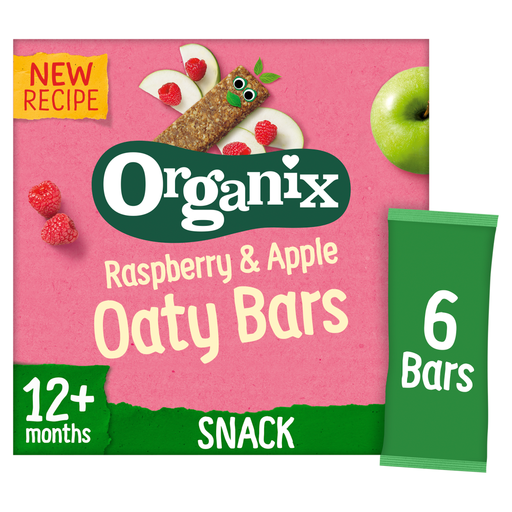 Image unavailable
Organix Raspberry & Apple Soft Oaty Bars, 12+ Months, 6 x 23g
For an older child’s packed snack, check the current ingredients, allergen declaration and texture before offering this bar. It is labelled 12+ months and comes as 6 x 23g bars.
View on Joybuy
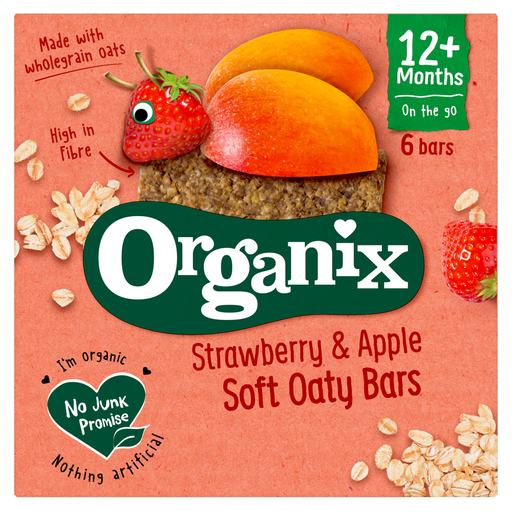 Image unavailable
Organix Strawberry & Apple Soft Oaty Bars, 12+ Months, 6 x 23g
If you are considering a bar for a child over one, check this flavour’s current ingredients, allergens and texture rather than relying on the age label alone. The pack is labelled 12+ months and contains 6 x 23g bars.
View on Joybuy
Frequently asked questions
Can a baby doing baby-led weaning have a reduced-fat cereal bar?
Not as a snack under the age of one: the NHS says children under one should not be given snacks. A reduced-fat claim does not answer questions about the bar’s honey, sugar, allergens or texture.
When are solid foods introduced during weaning?
UK government guidance summarising NHS advice says solids are gradually introduced from around six months alongside breast milk or infant formula. That does not make a packaged cereal bar a necessary weaning food.
What if a cereal bar contains honey?
Do not give a honey-containing bar to a child under one. The NHS says honey should not be given until a child is over one because it can occasionally contain bacteria that produce toxins in a baby’s intestines.
Do all cereal bars contain gluten?
Do not assume they do: check the current ingredient and allergen declaration for the exact bar. The Food Standards Agency says a UK “gluten-free” label has a limit of 20 mg/kg gluten; oats must still be emphasised as an allergen when used.
Should I check the nursery policy before packing a bar?
Yes. The NHS advises checking a nursery’s food policy, including any peanut or nut restrictions. Check the exact pack’s allergens as well, because recipes can change.


