What to check before buying
Start with readiness and safe serving, then compare the exact ingredients, nutrition panel and storage instructions for the pancake format you are considering.
| Priority |
What to check |
Your needs |
| Readiness and serving |
Check that the baby is developmentally ready for solids; offer an age-appropriate, manageable piece while seated upright and supervised. Keep toppings suitable for the child’s age. |
I want to share breakfast without assuming that a soft pancake is automatically suitable. NHS guidance says complementary feeding starts at around 6 months and distinguishes normal gagging from choking. |
| Sugar and salt |
Compare the ingredients list for sugar, syrup and sweet toppings, then compare sugars and salt on like-for-like nutrition panels. Check whether values are per pancake, serving or 100g. |
I want an adult-oriented product that does not make sweetness the deciding feature. NHS guidance says babies do not need sugar or sweeteners and should not eat much salt. |
| Allergens |
Read the full ingredient list and allergen declaration for wheat or gluten, egg and milk. Treat gluten-free claims as one part of the check, not the whole answer. |
I need the exact pack to match the child’s dietary requirements. A pancake made without wheat may still contain egg, so the whole label matters. |
| Pack size and storage |
Match the number of pancakes to likely portions. Check freezing, defrosting and opened-pack instructions on that product before planning leftovers. |
I want enough pancakes for the household without relying on storage rules that do not apply to the pack I have chosen. |
Joybuy product options
Joybuy product options for making pancakes to share at breakfast, with controllable cooked portions.
 No image available
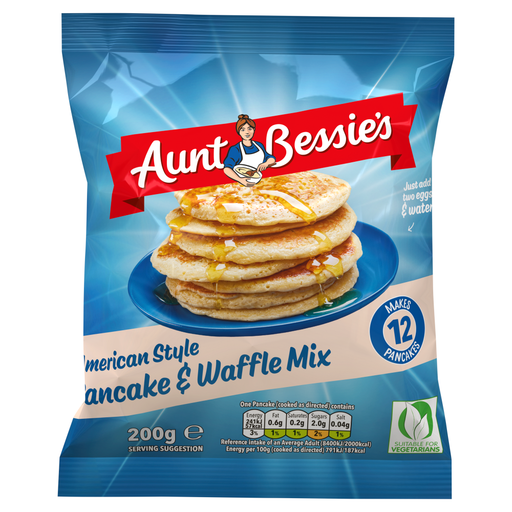
Aunt Bessie’s American Style Pancake & Waffle Mix 200g
Suitable for households that want to make a smaller cooked serving rather than open a ready-made pack.
The 200g pack makes approximately 12 pancakes, with instructions for 30ml batter per pancake. It contains wheat, milk and added sugar, and the recipe requires two eggs. The mix must be cooked until piping hot; check current pack guidance before storing cooked leftovers.
Joybuy
Frequently asked questions
Can I share a shop-bought pancake with my baby during baby-led weaning?
Potentially, but only once the baby is developmentally ready for solid foods, usually from around 6 months, and while they are safely supervised. Check the label for salt, added sugar and allergens, and offer an age-appropriate amount and texture rather than copying an adult serving.
Are ordinary pancakes gluten-free?
No. Standard ready-made pancakes referenced from Waitrose, Tesco and M&S use wheat flour and declare cereals containing gluten. A specifically labelled gluten-free product can suit wheat or gluten avoidance, but it may still contain egg and should be checked against the individual’s full allergy requirements.
What should I check if pancakes are going into a school or nursery lunchbox?
For a setting in England, check its published allergy safety policy and any lunchbox rules before packing food. The Department for Education says England schools must publish an allergy safety policy; keep the original product packaging or clear ingredient information where the setting requests it.
Can I freeze pancakes for later?
Only if the exact pack says so. Waitrose Essential Scotch Pancakes may be frozen on the day of purchase and must not be refrozen after defrosting, while M&S Sweet Pancakes are listed as unsuitable for freezing. Follow the individual pack’s date and defrosting instructions.
Is a high-protein pancake automatically a better baby-led-weaning choice?
No. A protein claim does not answer whether the product fits the baby’s stage, allergen needs, sugar or salt intake. For example, the referenced Waitrose high-protein pancakes contain wheat, wheat gluten, buttermilk and egg, so the label still needs checking.


