Parents weighing batch cooking against packs
If your baby is starting to self-feed, compare the time needed to cook with the ingredients and number of portions you would use.


Make a small batch if you want to choose the ingredients and avoid adding sugar or salt; a MadeForMums finger-food recipe for babies from around six months uses banana instead of sugar. Ready-made pancakes save preparation time, but check the current pack for sugar, salt and allergens before serving: the NHS says babies do not need sugar or sweeteners and should not eat much salt.
If your baby is starting to self-feed, compare the time needed to cook with the ingredients and number of portions you would use.
Pack size and convenience matter, but so do the ingredient list, nutrition per pancake and storage instructions.
A free-from label needs to match the particular ingredient being avoided. Check other allergens too: the Genius gluten-free and milk-free Scotch pancakes listed by ASDA contain egg.
Start with the baby's readiness and the ingredients; then consider portions and storage for the pancakes you would actually use.
| Priority | What to check | Your needs |
|---|---|---|
| Readiness and serving | Follow NHS guidance on starting solids from around six months. Consider the pancake's size, shape and texture; seat the baby upright and supervise eating. | I want pieces my baby can manage while seated and supervised, whether I cook them or open a pack. |
| Sugar and salt | Read the ingredients and nutrition per pancake or serving. The NHS says babies do not need sugar or sweeteners and should not eat much salt. | For pancakes I plan to serve regularly, I would rather control what goes into the batter than assume a plain-looking pack has no added sugar or salt. |
| Allergens | Check the exact pack or recipe for wheat, milk, egg and any precautionary allergen statements. NHS advice is to introduce foods that can trigger allergies one at a time, in very small amounts, from around six months. | If an ingredient is new to my baby, I need to know what is in the pancake before serving it. |
| Portions and storage | Compare pack size with the portions you expect to use. Follow the exact product's storage, opened-pack and freezing instructions. | A batch or pack only works for my household if I can prepare and use its portions as directed. |
An opened pack may need using sooner than expected, so its size matters alongside convenience.
Check how many pancakes you will use and follow that pack's storage and freezing directions.
Ready-made pancakes can contain added sugar or syrup and salt. The NHS says babies do not need sugar or sweeteners and should not eat much salt.
Compare ingredients and nutrition per pancake; making batter at home gives you control over what you add.
The Genius Scotch pancakes listed by ASDA are labelled gluten free and milk free, but contain egg.
Match the current label, including precautionary statements, to the ingredient that needs avoiding.
Some ready-made pancakes already contain sugar or syrup, so a sweet topping adds to what is in the pancake.
Read the ingredients before choosing a topping; you do not need to add syrup or sugar to serve a pancake.
These examples describe particular pancakes and their labels, not every product made by each brand.
The BAKERY at ASDA Scotch pancakes are a ready-made six-pack.
Sainsbury's Scotch Pancakes x6 offer another ready-made pack to assess by its label.
Tesco American Style Large Pancakes come in a six-pack; their larger format makes the portion you serve worth considering.
Waitrose Buttermilk Pancakes are a chilled six-pack.
M&S Sweet Pancakes provide another labelled option to compare by ingredients and nutrition.
Genius Scotch Pancakes are a specialist pack for checking against a gluten-free or milk-free requirement.
These are mixes for cooking pancakes at home, rather than ready-to-eat packs. Check the prepared pancake's ingredients and nutrition when considering either mix for a baby.
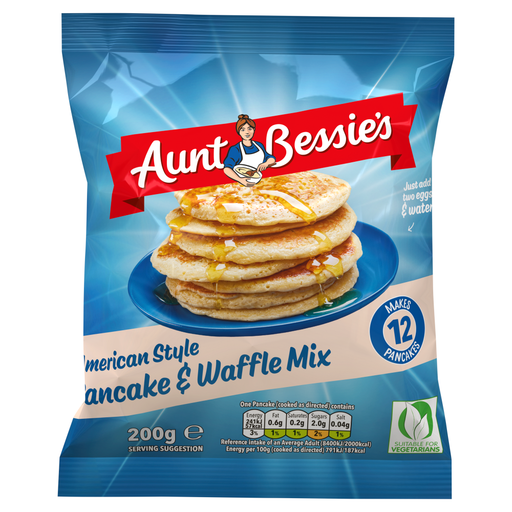 No image available
This mix requires preparation and cooking rather than opening a ready-made pack. Check the ingredients and the prepared pancake's sugar, salt and allergen information before serving.
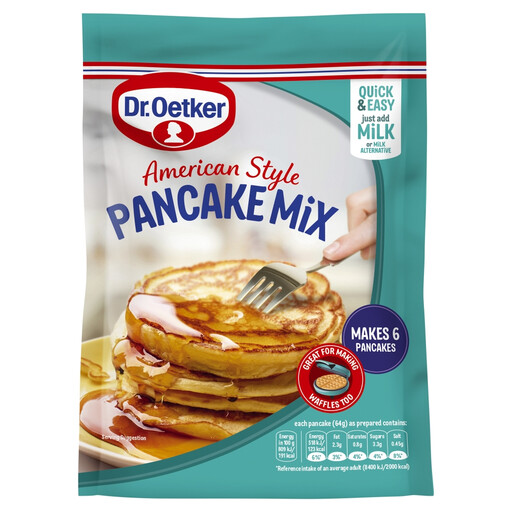 No image available
For home-cooked pancakes, check the preparation directions and nutrition for the finished portion. Pay particular attention to salt, added sugars and allergens when deciding whether to serve it to a baby.
The NHS advises starting solid foods at around six months, when the baby is ready. Consider the pancake's size and texture for self-feeding, and supervise throughout the meal.
Do not assume a plain ready-made pancake is suitable as an everyday choice: the supermarket packs described here include sugar or syrup and salt. The NHS says babies do not need sugar or sweeteners and should not eat much salt, so read the ingredients and nutrition per pancake.
Check the exact current label for wheat, egg, milk and precautionary allergen statements. The ASDA, Sainsbury's, Tesco and Waitrose pancake packs described here contain wheat, egg and milk; other declared allergens vary by product.
Not necessarily. The Genius Scotch pancakes listed by ASDA are labelled gluten free and milk free but contain egg, so check each exclusion you need against the current pack.
Offer food with a size, shape and texture the baby can manage, with the baby seated upright and supervised throughout. These checks apply to both homemade and bought pancakes, as set out in NHS food-preparation guidance.