
24/7 Customer Support

Free returns

Same-day & Next-day Delivery

Quality Guaranteed

Unlock Your Welcome Offers: FREE Delivery | Up to 80% OFF | Free 30-day JoyPlus trial
Download the APP
Navigating the world of pre-made baby meals can feel overwhelming. Shelves are filled with colourful pouches and jars, all promising wholesome goodness for your little one. Yet, many parents find themselves with a cupboard full of meals their baby refuses, or worse, discover that a seemingly healthy option isn't as balanced as the packaging suggests. As the Joybuy Product Recommendation Officer, my role is to help you see past the marketing and make informed choices.
Before you add another pouch to your basket, let's look at the common pitfalls that can lead to wasted money and mealtime frustration.
organic baby meals can still contain high levels of naturally occurring sugars (especially fruit-heavy recipes) or have salt levels that are pushing the recommended limits for a baby.stage 2 weaning meal too early can lead to gagging and food refusal, while sticking with smooth purées for too long can delay the development of chewing skills.To avoid these traps, focus on three core parameters. Understanding these will empower you to choose suitable and nutritious baby meals every time.
The age guide on the front of the pack is your first and most important clue. It corresponds directly to the texture inside, which is designed to support your baby's development.
7 month baby food with soft, manageable lumps.10 month baby food is designed to properly teach chewing and prepare your baby for family meals.Turn the pack over and look at the 'per 100g' column. This allows for a fair comparison between different products, regardless of their total pack size.
baby spaghetti bolognese, you want to see tomato, vegetables and beef appear before starches or water.The format you choose often comes down to convenience and lifestyle.
Here are a few options that align with our selection criteria, matched to different parental needs and baby stages.
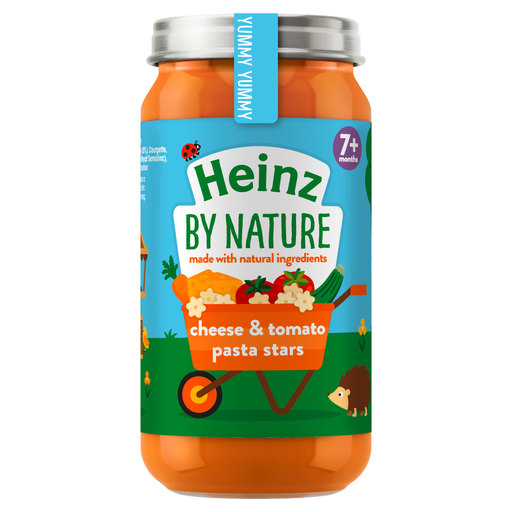
Why This Fits Their Persona: Ideal for parents introducing the first real textures. The familiar, gentle flavour of cheesy tomato pasta is often well-received, and the soft star shapes are a fun, manageable way to encourage those first chews. The glass jar is convenient for warming and serving at home.
This meal is clearly labelled for 7+ months and has a soft mashed texture, perfectly avoiding the "texture mismatch" for babies moving on from smooth purées. It has no added sugar and is low in salt.
Made with natural ingredients and contributes to one of your baby's five-a-day. The classic recipe is a reliable starting point for savoury meals.
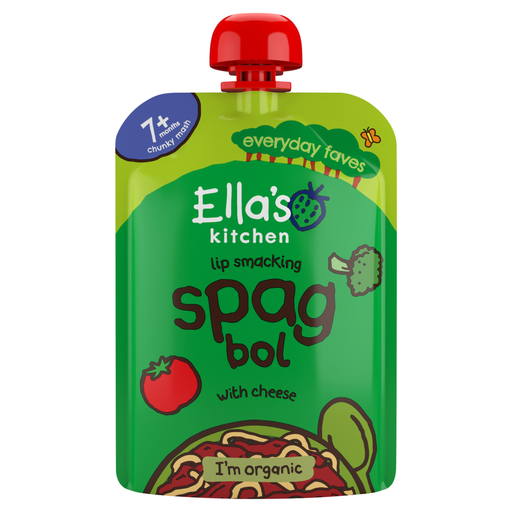
Why This Fits Their Persona: For parents who prioritise 100% organic ingredients from a trusted brand. This `Ella's Kitchen meal` offers a classic family favourite flavour profile, introducing beef and a mix of six different vegetables in a convenient pouch format.
This pouch avoids the "organic halo" trap by providing clear nutritional information. Despite being organic, it maintains very low salt (0.11g/100g) and contains no added sugar, relying on vegetables for flavour.
Protein-rich from organic beef and cheese. The texture is specifically designed for the 7+ month stage to encourage chewing without being overwhelming.
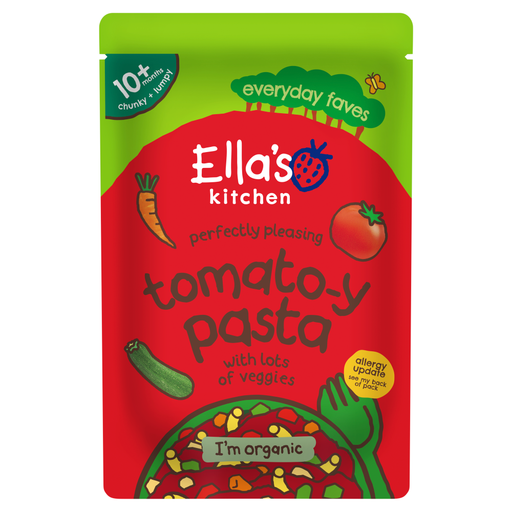
Why This Fits Their Persona: Perfect for older babies who are confident eaters and ready to tackle more challenging textures. This meal helps bridge the gap between baby food and family meals, with soft chunks that require proper chewing.
This meal directly addresses the need for texture progression. Its chunky and lumpy consistency is a deliberate feature for the 10+ month stage, preventing the "texture mismatch" that can happen if a baby stays on smoother foods for too long.
Packed with five different organic vegetables for flavour variety. The meal is a source of protein and contains no added salt, relying on herbs for a more grown-up taste.
We have compiled a complete, real-time list of products that fully satisfy these strict selection criteria and UK safety regulations.
Look for developmental cues. If your baby is managing smooth purées with ease and has started to make chewing motions, they are likely ready to try a Stage 2 (7+ months) meal with a mashed texture. When they are comfortable with lumps and have perhaps started mashing soft foods with their gums or first teeth, they are ready to progress to chunkier Stage 3 (10+ months) meals. Always supervise your baby when introducing a new texture.
It is generally not recommended to freeze leftovers from commercially prepared baby food pouches or jars, especially if the baby has eaten directly from the container, as bacteria can be introduced. Most manufacturers advise refrigerating leftovers in a clean, covered container and using them within 24 hours. Always check the packaging for specific storage instructions.
Organic certification ensures the ingredients are grown without synthetic pesticides and fertilisers, which many parents value. However, 'organic' is not a synonym for 'healthy'. It is still essential to read the nutritional label to check for salt and sugar content and to ensure the meal is nutritionally balanced. A non-organic meal with low salt, no added sugar and a good mix of vegetables and protein can be just as good a choice as an organic one.