
24/7 Customer Support

Free returns

Same-day & Next-day Delivery

Quality Guaranteed

Unlock Your Welcome Offers: FREE Delivery | Up to 80% OFF | Free 30-day JoyPlus trial
Download the APP
Starting self-feeding can be exciting, but choosing baby melty snacks involves more than picking a colourful packet. UK parents are often comparing age guidance, texture, allergens, ingredients and portion sizes while trying to avoid products that create unnecessary mess or do not suit their baby’s stage.
This guide explains the practical details to check before buying, followed by our top recommendations for babies aged 6 to 9 months and older.
A snack described as melt-in-the-mouth still needs to match your baby’s development. Some products are labelled 6 months+, while others are intended for 7 months+ or 9 months+. The age guidance reflects the manufacturer’s intended use, but every baby develops at a different pace.
Always offer snacks when your baby is sitting upright and properly supported, and supervise them throughout eating. No packaged snack can remove choking risk entirely.
Many baby finger foods contain naturally occurring sugars from fruit or vegetables. “No added sugar” means that additional sugar has not been included; it does not necessarily mean the product contains no sugar.
Check the ingredients and nutrition panel rather than relying only on front-of-pack wording. For a savoury option, tomato, basil, sweetcorn and carrot flavours can provide variety without added sugar or salt.
Organic baby snacks may appeal to families looking for certified organic ingredients, but organic status does not automatically indicate a particular texture, nutritional profile or allergen suitability.
Equally, “gluten-free” or “dairy-free” claims must be checked against the current packaging. Look for precautionary statements such as “may contain”, especially where your baby has a diagnosed allergy or your family is managing allergen introduction.
For early baby snacks 6 months+, look for pieces that are easy to grasp and designed to soften or dissolve readily. Chunky sticks can be easier for a beginner to hold, while smaller buttons may suit babies developing a more precise pincer grip.
Products labelled baby snacks 7 months+ often offer a wider choice of flavours and shapes. At 9 months and beyond, some babies may manage smaller pieces, but readiness should be judged by your baby’s development rather than age alone.
For regular weaning snacks, consider products with:
Melty snacks should complement meals rather than replace varied foods such as vegetables, fruit, pulses, eggs, fish, meat and suitable grains.
Individual portions are useful for a changing bag, nursery days or journeys, as they can help reduce waste after opening. Larger bags may offer more food per pack but need to be resealed carefully to preserve texture.
Check storage instructions and the recommended period for consuming the product after opening. Fragile puffs and buttons can break during transport, so consider where and how you will carry them.
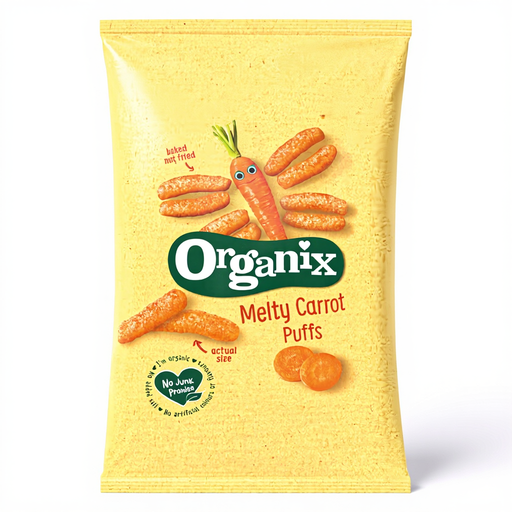
Why This Fits Their Persona: A four-pack format gives families starting weaning several portions to use at home or during short outings. The chunky shape is designed for little hands to hold.
It carries a 6+ months age indication and provides clear ingredient information. Parents should still note that the listed ingredients contain cereals containing gluten.
Organic corn-based puffs; no added salt or artificial colours and flavours; four 18g bags.
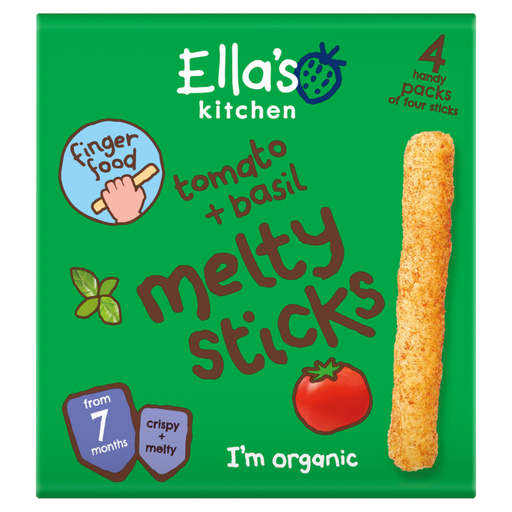
Why This Fits Their Persona: Families wanting organic ingredients and savoury flavour variety may appreciate the tomato and basil profile, with four individually packed portions for controlled serving.
The listing states no added sugar or salt and identifies possible gluten, soya and milk cross-contact. This makes label checking more straightforward.
Organic maize-based sticks; tomato and basil flavour; four 6g packs; suitable from 7 months.
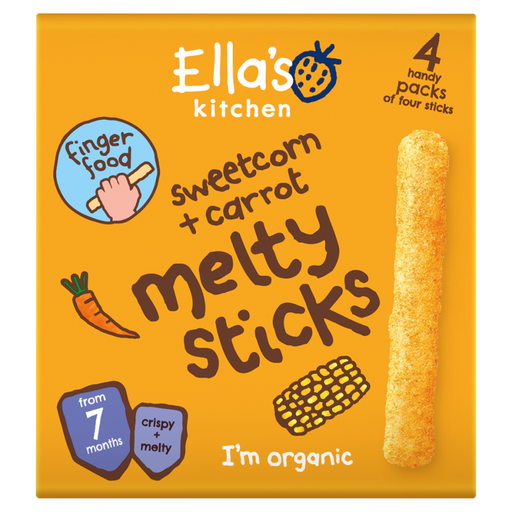
Why This Fits Their Persona: A practical choice for frequent snack use, nursery bags or family days out, with individual packs that help limit exposure to moisture after opening.
The pack format addresses the common problem of a large bag going stale. Its savoury vegetable ingredients also avoid relying solely on sweet fruit flavours.
73% organic maize flour; organic sweetcorn and carrot; no added salt or sugar; four 6g packs.
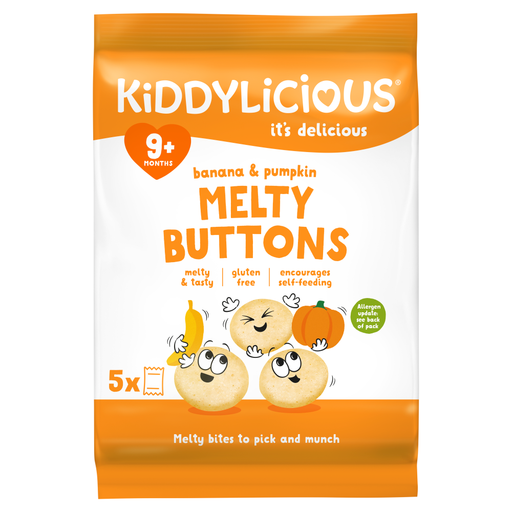
Why This Fits Their Persona: Intended for children aged 9 months and older, these smaller rice-based buttons offer a different shape and a fruit-and-vegetable flavour combination for babies progressing through weaning.
The five individual 6g sachets help with portion planning and reduce the need to carry an opened larger packet during outings.
Gluten-free and dairy-free according to the listing; no added salt; banana and pumpkin powders; five 6g portions.
We have compiled a complete, real-time list of products that fully satisfy these strict selection criteria and UK safety regulations.
Some products are labelled for babies from 6 months, while others begin at 7 or 9 months. Follow the age guidance on the packaging and consider whether your baby can sit upright, reach for food and manage soft finger foods. Always supervise eating.
This varies by product. Reseal pouches and store them in a cool, dry place. Some products recommend consuming an opened portion immediately, while others advise using the contents within a few days. Check the individual pack rather than assuming all snacks have the same shelf life.
No. A gluten-free statement does not cover every possible allergen, and cross-contact warnings still matter. Read the full ingredient list and precautionary allergen statement each time. If your baby has a diagnosed allergy, follow advice from your GP or allergy team before introducing packaged snacks.