
24/7 Customer Support

Free returns

Same-day & Next-day Delivery

Quality Guaranteed

Unlock Your Welcome Offers: FREE Delivery | Up to 80% OFF | Free 30-day JoyPlus trial
Download the APP
Choosing baby musical toys can seem straightforward until you compare age labels, sound levels, battery requirements and safety warnings. A colourful toy may attract attention in a product photo, but that does not always mean it will suit your child’s stage of development or your home.
The right choice should offer engaging play without unnecessary noise, awkward storage or features your child cannot use yet. This guide explains the main buying traps, the specifications worth checking and our top recommendations for babies and toddlers aged 6 months to 5 years.
Some listings mention several ages, but the toy may only be practical for one particular stage. A floor-play panel can suit a baby during tummy time, while a standing musical activity table may be more useful once a child can pull themselves up.
Check:
A toy labelled for ages 6 months to 3 years may provide different activities at each stage, rather than one feature being equally suitable throughout.
Light-up musical toys and interactive baby toys can attract attention, but too many simultaneous effects may make it difficult for a young child to focus on one action. A simple button that produces a clear response can support cause-and-effect learning more effectively than a crowded control panel.
For toddler musical toys, look for a balance of:
Battery-powered toys need more than the initial purchase price. Check whether batteries are included, how many are required and whether the battery compartment is secured with a screw. Toys with fabric or plush components may also require surface cleaning rather than machine washing.
For gifts, practical details such as battery type, cleaning instructions, storage size and replacement-part availability can make a greater difference than an impressive feature list.
For babies aged 6 to 18 months, suitable options often include rattles, suction-cup toys, tummy-time toys and floor-play panels. Babies benefit from being able to reach, press, shake and track an object safely while supervised.
From around 1 to 3 years, a baby activity cube, drum set or standing activity table may offer more suitable physical interaction. Children aged 3 and above may enjoy character toys with speech and songs, although always check warnings about small parts.
Look for clearly stated materials and smooth construction. Several products in this guide specify ABS plastic, rounded edges and BPA-free materials. These details are useful, but parents should still inspect the toy after delivery for cracks, loose components or damage.
Stability is particularly important for a musical activity table or toddler drum set. A broad base, anti-slip feet and secure assembly can help reduce tipping during energetic play. Do not rely solely on a product description’s safety wording; read the packaging and instructions supplied with the item.
The CE marking indicates that the manufacturer declares conformity with applicable European product requirements. EN71 refers to European toy safety standards covering areas such as mechanical and physical properties, flammability and certain chemical elements. These markings are useful checks, but they do not replace age guidance or supervision.
For musical toys, use the lowest comfortable volume and avoid placing speakers directly beside a child’s ears. A volume dial or mute function is especially practical for indoor use. Remember that batteries can be hazardous if swallowed. Keep spare and used batteries away from children and follow the disposal instructions.
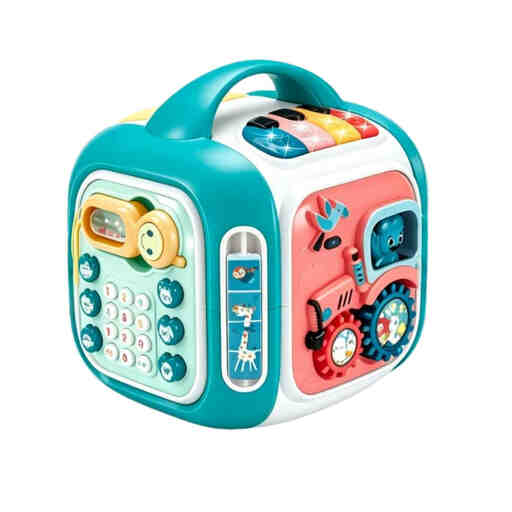
Why This Fits Their Persona: A compact option for families wanting several activities without buying multiple toys. Its 23 x 23 x 24 cm size is convenient for shelves, play corners and travel.
It combines piano, guitar, phone, gears and other activities in one cube, reducing the need for separate novelty toys. The stated age range is 1 to 3 years.
ABS construction, rounded edges and a carry handle are listed. Multiple hands-on controls support varied sensory play.
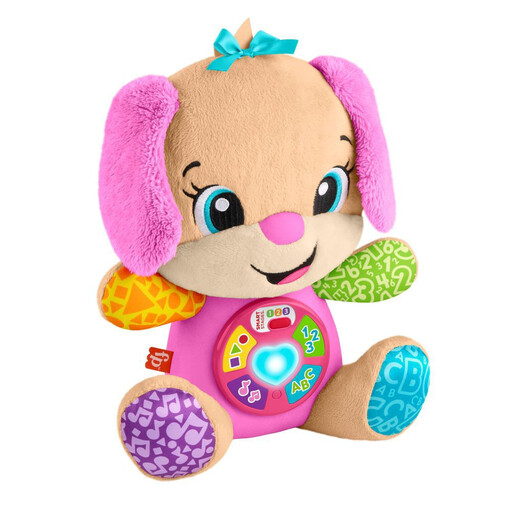
Why This Fits Their Persona: Suitable for families seeking a plush, character-led toy with a broad selection of audio content for regular home play.
Three learning levels and five interactive buttons provide more than one activation method. It is listed for 6 to 36 months.
The product details list 80+ songs, sounds and phrases, three AA batteries included and a surface-washable design.
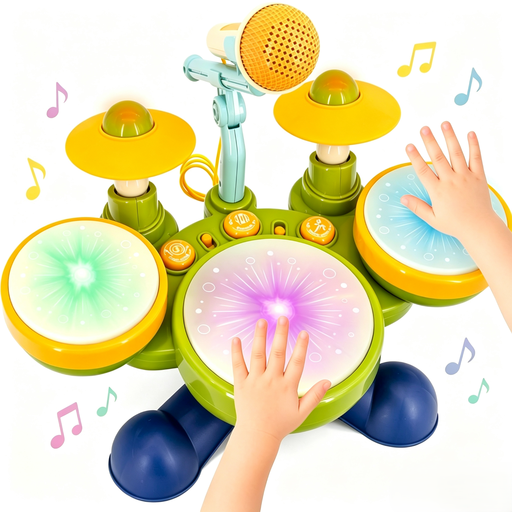
Why This Fits Their Persona: Designed for energetic toddlers who enjoy making noise, singing and active floor play, including families needing volume control indoors.
An adjustable volume dial addresses the common problem of fixed, loud audio. The removable stand also allows flat floor play.
The set includes three light-up drum pads, liftable cymbals and a working microphone. Batteries are not included.
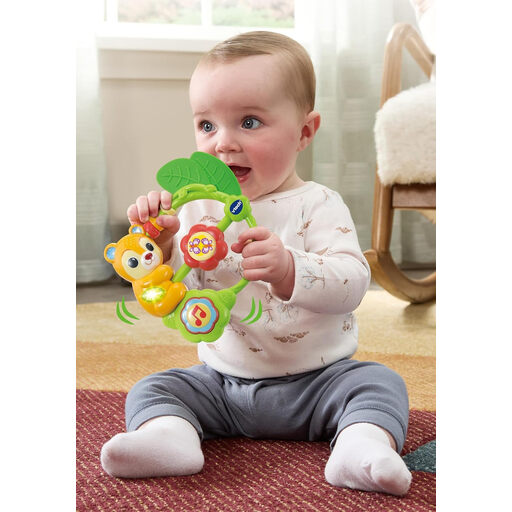
Why This Fits Their Persona: A portable sensory toy for prams, pushchairs, car seats or visits to family, particularly for babies from 3 months.
It combines a soft rattle with touch and motion activation, rather than relying on a single button. The electronic module is removable for cleaning.
A hook-and-loop strap supports travel use, while the product listing states that one AAA battery is included for demonstration purposes.
We have compiled a complete, real-time list of products that fully satisfy these strict selection criteria and UK safety regulations.
Montessori toys for toddlers should not be selected solely because the term appears in a title. Focus on the actual activity: sorting, matching, turning, sequencing or open-ended musical play.
Yes, provided the toy is suitable for the child’s age and used as directed. Choose simple, washable designs for younger babies and check all small-parts warnings. Adult supervision is recommended, particularly for battery-powered toys and products with detachable components.
Use the lowest volume that allows your child to hear the response clearly. Avoid placing the speaker close to the ears and switch to mute or quiet mode when available. If a toy has no volume control and sounds uncomfortably loud, it may not be practical for regular indoor play.
Many electronic toys do. Product listings should state the battery type and whether batteries are included, but check the packaging on arrival. Remove batteries before cleaning where instructed and keep both new and used batteries securely away from children.