
24/7 Customer Support

Free returns

Same-day & Next-day Delivery

Quality Guaranteed

Unlock Your Welcome Offers: FREE Delivery | Up to 80% OFF | Free 30-day JoyPlus trial
Download the APP
Preparing for a newborn often means buying several soft, washable textiles before you know which ones will become part of your daily routine. Baby muslin essentials can help with swaddling, feeding, burping, bathing and travel, but product descriptions do not always make the important differences clear.
A low-cost pack may be useful, while a thicker or larger design may suit frequent feeding and washing. The right choice depends on the fabric, construction, dimensions and intended use rather than the appearance of the print.
“Muslin” describes a lightweight woven fabric, not one fixed thickness or performance level. A single-layer square may dry quickly but offer limited coverage for substantial spills. Multi-layer cotton muslin bibs or burp cloths can provide more absorbency, although they may take longer to dry.
Check the number of layers, fabric weight where stated, and whether the product is designed specifically for feeding. A decorative swaddle is not necessarily a suitable replacement for a structured bib.
Bamboo viscose and bamboo-cotton blends can feel smooth and lightweight, but “bamboo” alone does not explain the complete manufacturing process. Look for the actual fibre composition, such as 100% viscose derived from bamboo or 70% bamboo viscose and 30% cotton.
If organic cotton matters to you, check for a recognised certification on the product listing. Avoid assuming that a natural-sounding material automatically carries an organic certification.
A comforter, swaddle or muslin square may be washable, but care requirements vary. Some products allow machine washing and low tumble drying, while others recommend hand washing and air drying. Frequent washing is part of normal baby care, so an item that is difficult to clean may be less practical than it first appears.
Also remember that soft comforters, bibs and loose muslin fabrics are not suitable for unsupervised sleep. Follow the product warning and current NHS safe-sleep guidance. Stop swaddling when your baby shows signs of rolling, and keep the face and head uncovered.
For everyday newborn essentials, cotton muslin is widely used because it is lightweight, washable and breathable. Organic cotton muslin may appeal to shoppers seeking a certified fibre, but certification should be stated clearly rather than inferred from marketing language.
Bamboo muslin squares often have a smoother hand feel. For example, the Little Bamboo packs listed here use 70% bamboo viscose and 30% cotton. Bamboo-derived fabrics may feel silky and wick moisture effectively, but they still need careful washing to protect the fibres.
Dimensions affect how useful a muslin is:
Never use a large muslin as an improvised cot cover or leave it loose around a sleeping infant.
Three-layer snap bibs can offer a balance between absorbency and a relatively compact shape. Four-layer burpy bibs are designed for fuller coverage and can be worn as a bib or draped over the shoulder.
For UK households managing frequent laundry, check whether the item is machine washable, whether it can be tumble dried, and whether the instructions prohibit bleach or dry cleaning. Hanging loops on washcloths can also help the fabric dry properly between baths.
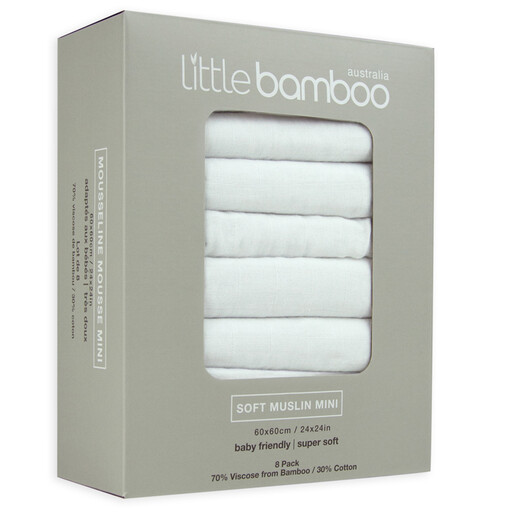
Why This Fits Their Persona: An eight-pack gives new parents several reusable cloths for the changing bag, nursery and feeding area without buying separate products for every task.
The stated 60cm x 60cm size and fibre breakdown make the product easier to compare than a vague “multi-use” description.
Eight 70% bamboo viscose and 30% cotton squares; suitable for burping, wiping, washcloth use and changing surfaces.

Why This Fits Their Persona: A suitable option for parents who want a more structured feeding accessory with generous coverage and certified organic cotton.
The product specifies four layers, a 57cm x 28cm size and GOTS-certified organic cotton, rather than relying only on softness claims.
Two-in-one use as a full-coverage bib or shoulder burp cloth; 100% organic cotton muslin with snap closure.

Why This Fits Their Persona: Parents managing frequent dribbles, bottle feeds or messy mealtimes may value a larger textile that covers both baby and shoulder.
Its four-layer construction and stated dimensions address coverage and absorbency more directly than a thin, decorative square.
Four layers of 100% cotton muslin; snap-on bib and no-slip shoulder burp-cloth formats.
For wrapping, compare baby muslin swaddles by size, weave and safe-use instructions. The aden + anais Essentials Cotton Muslin Swaddles 2 Pack is designed for multiple everyday uses, while the Boutique Cotton Muslin Swaddles 2 Pack uses a stated thicker construction and open weave.
For a softer bamboo option, the aden + anais Essentials Silky Soft Muslin Swaddle 2 Pack uses 100% viscose made from bamboo and measures 112cm x 112cm. It can also be used as a nursing cover, burp cloth or changing-pad cover, subject to safe supervision.
Smaller muslin squares for babies are useful for quick clean-ups and changing bags. Washcloths are more convenient for bathing because their 30cm x 30cm format and hanging loops support regular drying. A muslin comforter, such as the Winnie the Pooh Always & Forever Muslin Comforter, should be treated as a supervised comfort item and not left in a cot with an unattended infant under 12 months.
We have compiled a complete, real-time list of products that fully satisfy these strict selection criteria and UK safety regulations.
A practical starting point is several muslin squares, two or more bibs, a couple of swaddles and a small set of washcloths. The number depends on how often you wash clothes and whether your baby feeds or dribbles heavily. Multi-packs reduce the need to wash an item immediately after every use.
Bamboo-cotton and bamboo-viscose products are commonly selected for their smooth feel and moisture-wicking properties. Check the stated fibre composition, wash according to the label and supervise your baby during use. Do not use loose squares as unattended cot bedding.
Wash new items before first use and follow the individual care label. Many cotton muslins can be machine washed, while bamboo blends may require a gentle, cool cycle and careful drying. Avoid harsh bleach unless the instructions specifically allow it, and inspect products regularly for loose threads, damaged snaps or thinning fabric.