
24/7 Customer Support

Free returns

Same-day & Next-day Delivery

Quality Guaranteed

Unlock Your Welcome Offers: FREE Delivery | Up to 80% OFF | Free 30-day JoyPlus trial
Download the APP
For many UK parents, baby muslin squares quickly become one of the most frequently used items in a changing bag. They can help with feeding spills, burping, light cover-ups and everyday clean-ups. However, choosing a suitable set involves more than picking the softest-looking fabric or the largest pack.
Marketing descriptions can make all muslin cloths appear interchangeable. In practice, differences in material, size, weave, absorbency and care requirements affect how useful they remain after regular washing. This guide explains the main buying pitfalls and compares suitable options for different household needs.
A pack containing eight squares may sound more economical than a three-pack, but individual cloths can be considerably smaller. Small cotton muslin squares are convenient for wiping milk and placing over a shoulder, while larger squares are more suitable for swaddling muslin, a breastfeeding cover or a pram cover.
Always check the measurements of each square rather than relying on the pack count alone. A 60cm x 60cm cloth and a 120cm x 120cm cloth serve noticeably different purposes.
Muslin becomes softer with washing, but fibres and construction still matter. Cotton offers a familiar, practical texture, while a bamboo and cotton blend may feel smoother and more silky. A higher thread count or thicker construction may improve the hand feel and absorbency, but it can also affect drying time.
Look for clear information about fibre composition, rather than relying only on words such as “luxurious”, “cloud-like” or “ultra-soft”.
An open weave may allow air to pass through, but a muslin square is not automatically suitable for unsupervised sleep. Loose cloths should not be left in a cot with a sleeping infant, and a baby’s face must remain uncovered. When used over a pram, keep airflow clear and supervise your child.
These are versatile baby textiles, not safety-certified sleep products unless the manufacturer specifically states otherwise and the item is designed for that use.
For everyday muslin cloths for babies, compare:
If your baby has sensitive skin, wash the cloths before first use with a mild detergent and follow the care label. Avoid assuming that a natural fibre automatically suits every child.
The right size depends on your routine:
A muslin used as a pram cover should never block ventilation or fully enclose the pram. For swaddling, follow current NHS safe-sleep guidance and stop swaddling when your baby shows signs of rolling.
Newborn essentials are washed frequently, so care instructions are important. Check whether the item can be machine washed, whether it requires a gentle cycle and whether tumble drying is permitted. Some bamboo blends advise cold washing, shade drying and avoiding wringing or soaking.
A practical set should also have hems that remain intact after repeated laundering. Trimming loose threads when they appear can help prevent them becoming a snagging hazard. Keep all textiles away from naked flames and inspect them regularly for damage.
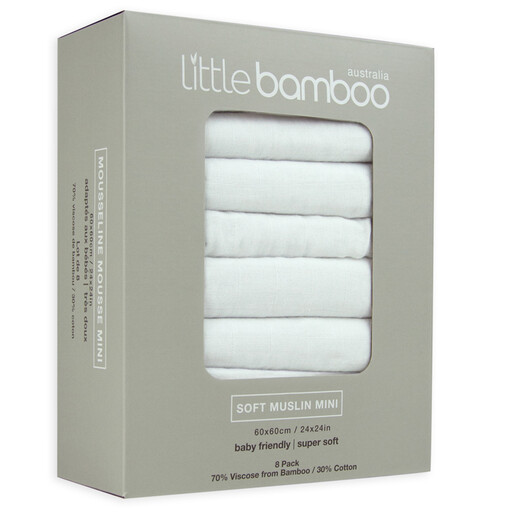
Why This Fits Their Persona: Eight 60cm x 60cm squares give first-time parents several cloths for feeding, nappy changes and the baby bag without committing to a single large cover.
The listing states the individual size and fibre blend clearly, avoiding vague pack-size comparisons.
Eight pieces; 70% bamboo viscose and 30% cotton; suitable for burping, bibs, wipes and change mats.
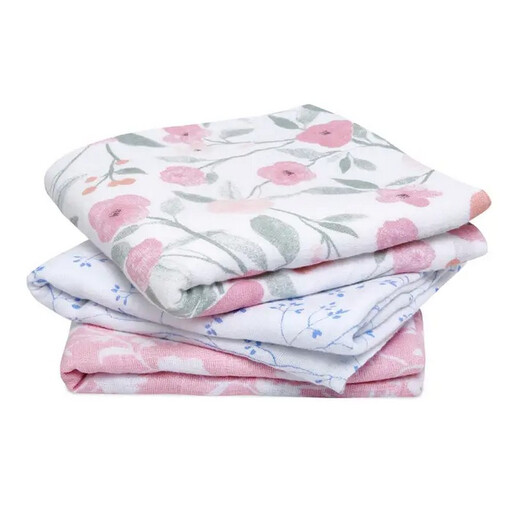
Why This Fits Their Persona: This three-pack suits shoppers who prefer a more substantial cotton cloth with a decorative finish for a nursery or practical present.
The product information specifies 100% cotton muslin, 70cm x 70cm sizing and a construction described as 25% thicker than standard muslin.
Open-weave design; higher thread count described for absorbency; machine-washable care instructions.
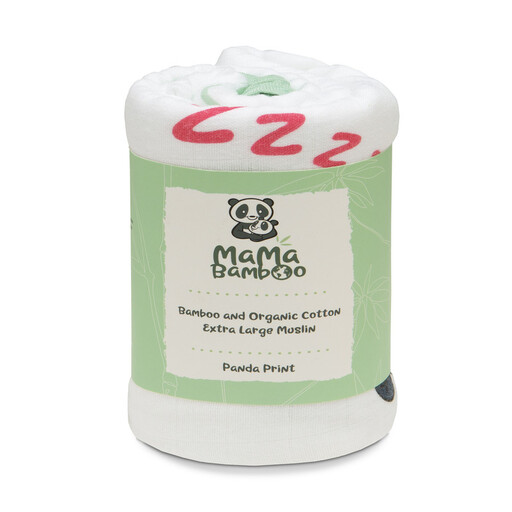
Why This Fits Their Persona: The generous 120cm x 120cm format is designed for parents who want one large cloth for supervised swaddling, feeding cover use, pram shade or tummy-time surface.
The exact dimensions and bamboo-and-organic-cotton blend are stated, so the larger format is not confused with standard baby burp cloths.
Lightweight muslin; large 120cm x 120cm size; listed as machine washable and suitable from 0+ months.
We have compiled a complete, real-time list of products that fully satisfy these strict selection criteria and UK safety regulations.
A small starter supply of six to ten squares is practical for many households, particularly during the early feeding months. Larger quantities may be useful if you want separate cloths for the nursery, changing bag and overnight use. Choose by intended use as well as pack size.
Bamboo blend muslin squares can be suitable from birth when the product is labelled for 0+ months and used according to its instructions. Check the fibre composition, wash before use and monitor your baby’s skin. Material alone does not replace safe supervision.
Their lifespan depends on washing frequency, drying method and fabric construction. Regularly inspect hems and fabric after laundering. A well-maintained set can remain useful beyond the newborn stage as washcloths, cleaning cloths or light cover cloths, but damaged textiles should be discarded.