
24/7 Customer Support

Free returns

Same-day & Next-day Delivery

Quality Guaranteed

Unlock Your Welcome Offers: FREE Delivery | Up to 80% OFF | Free 30-day JoyPlus trial
Download the APP
For new parents, baby muslin swaddles can quickly become one of the most useful items in a changing bag. They may be used for supervised swaddling, nappy changes, feeding privacy, burping, pram outings and tummy time. However, product descriptions often focus on softness or attractive prints while leaving out the details that affect everyday usability.
The most common buying pitfalls are:
Cotton muslin swaddle blankets are popular because their open weave is lightweight and allows air to circulate. Look for clear material information, such as 100% cotton muslin, rather than vague descriptions such as “premium fabric”.
Bamboo muslin swaddles made from viscose derived from bamboo can offer a smooth hand feel and moisture-wicking properties. They may suit families who prioritise a silky texture, although care instructions should be checked carefully. Breathability still depends on the construction and how the wrap is used, not just the fibre name.
Some boutique designs are described as 25% thicker than standard muslin. This may offer a more substantial feel and increased absorbency, but it also means parents should consider the room temperature and the baby’s clothing underneath.
Large baby muslin squares are generally more versatile than small receiving blankets. Common sizes in this range include 112cm x 112cm and 120cm x 120cm. A larger square can be useful for wrapping, use as a pram cover under supervision or creating a clean surface for nappy changes.
For parents who prefer a shaped product, newborn swaddle wraps with hook-and-loop fasteners can provide a more consistent fit than learning a traditional fold. Features worth checking include:
A swaddle 3 pack or swaddle 4 pack is practical for regular use, especially during the early weeks when washing is frequent. Check whether the product is machine washable, suitable for tumble drying and pre-washed for softness.
Age labels should be treated as a guide, not a substitute for checking the fit. A baby swaddle 0-3 months should not be used if it has become tight or if the baby is beginning to roll. Similarly, a baby swaddle 4-6 months must be checked against the baby’s development and the manufacturer’s instructions before use.
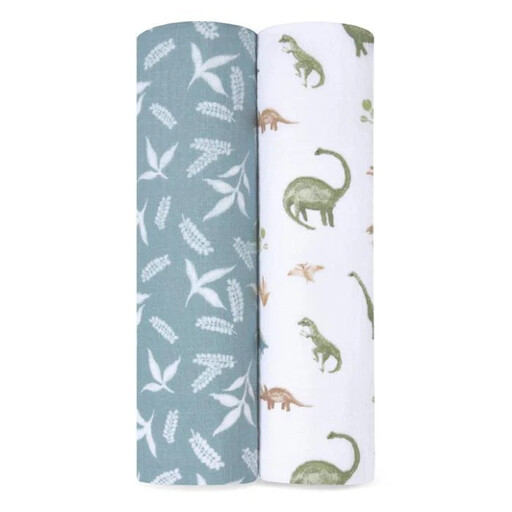
Why This Suits Their Persona: A straightforward two-pack for new parents building a practical starter kit for home and short trips around the UK.
The breathable cotton muslin construction avoids relying on vague “warm” claims, while the two-pack provides a clean spare.
100% cotton muslin; machine washable; suitable for swaddling, nappy changes, nursing privacy and playtime.

Why This Suits Their Persona: Suitable for gift buyers and families wanting a more substantial cotton wrap for feeding, strolls and daily care.
The product states its cotton composition, open weave and 120cm x 120cm size, making the practical specification easier to assess.
100% cotton muslin; open-weave design; described as 25% thicker than standard muslin; pre-washed softness.

Why This Suits Their Persona: A four-pack suits households using muslins throughout the day for feeding, spills, pram use and supervised tummy time.
The larger pack reduces the need to reuse a damp or soiled cloth, and the stated 120cm x 120cm dimensions offer flexibility beyond newborn wrapping.
Four 100% cotton muslin squares; machine washable; portable; suitable for burping, nursing cover use and changing surfaces.
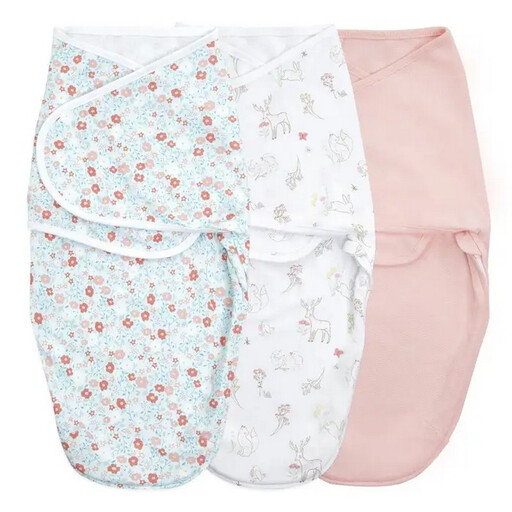
Why This Suits Their Persona: A shaped option for parents considering a baby swaddle 4-6 months, provided the baby is not rolling and the fit remains appropriate.
The 1.0 TOG rating, arms-in or arms-out configuration and bottom zip provide clearer information than a generic “cosy” claim.
Three-pack format; adjustable hook-and-loop fasteners; roomy lower design; bottom zip for nappy changes.
Wash new swaddles before first use and follow the care label. Check the fabric and seams regularly for thinning, loose threads or damage. Retire any item that no longer holds its shape or has become worn.
For traditional wrapping, keep the fit snug around the chest but not tight, with room for natural movement around the hips and legs. Always place a swaddled baby on their back and avoid loose bedding in the cot. Stop swaddling as soon as the baby shows signs of rolling, even if the printed age range has not been reached.
Bamboo and cotton muslin swaddles can also work as multi-use baby swaddles for burping, feeding privacy or a clean changing surface. These uses should remain supervised, particularly when a cloth is placed near a baby’s face.
We have compiled a complete, real-time list of products that fully satisfy these strict selection criteria and UK safety regulations.
Many households find a three-pack or four-pack more practical than a single wrap because muslins are frequently used for feeding, spills and nappy changes. A two-pack can be a reasonable starting point if you already have other baby muslin squares.
Lightweight, breathable fabrics can be useful in warmer rooms, but suitability depends on the baby’s clothing, room temperature and the specific product. Do not add layers solely because a wrap feels thin, and check for signs of overheating. Follow the product instructions and UK safer-sleep guidance.
Stop when your baby shows signs of rolling or can roll independently. This applies whether you use flat cotton muslin swaddle blankets, bamboo muslin swaddles or a shaped newborn swaddle wrap. Once rolling begins, review the product instructions and move to an appropriate arms-free sleep option.