
24/7 Customer Support

Free returns

Same-day & Next-day Delivery

Quality Guaranteed

Unlock Your Welcome Offers: FREE Delivery | Up to 80% OFF | Free 30-day JoyPlus trial
Download the APP
Baby muslin swaddles can become one of the most frequently used items in a newborn’s changing bag. They may serve as swaddling cloths, feeding covers, burp cloths, lightweight pram covers, changing mat layers and clean surfaces for tummy time. However, not every muslin square offers the same size, weave, absorbency or care requirements.
For expectant parents, carers and gift buyers, the main challenge is separating useful specifications from vague softness claims. This guide explains what to check before buying cotton muslin swaddle blankets, bamboo muslin swaddles and related baby-care cloths for everyday use in the UK.
Muslin is generally known for its open weave, but thickness and construction vary. A very lightweight cloth may be comfortable in warmer weather yet offer limited coverage or absorbency. Conversely, a thicker cloth may be more useful for spills and pram use but needs careful handling to avoid overheating when wrapped around a baby.
Look for clear information about the material, dimensions and weave, rather than relying only on phrases such as “luxuriously soft” or “premium feel”.
Newborns can require several cloth changes each day, particularly when feeding, burping or dealing with nappy leaks. A 1 pack or 2 pack may be suitable for occasional use or as a gift addition, but a 2 pack and 4 pack swaddles selection can be more practical for regular laundry routines.
The number of cloths needed depends on washing frequency, drying space and how many uses you expect from each item. In cooler or wetter UK weather, drying time is also worth considering.
A muslin swaddle is not a substitute for loose bedding. Current UK safe-sleep guidance advises placing babies on their backs and keeping loose items, pillows and duvets out of the cot. Swaddling should stop when a baby shows signs of rolling, and the cloth should be snug around the chest but not tight around the hips or breathing area.
Always follow the product instructions and current guidance from trusted UK sources such as the NHS or The Lullaby Trust.
Cotton muslin swaddle blankets are widely used because cotton is washable, lightweight and familiar in baby-care products. Open-weave cotton can provide airflow while remaining useful for burping, nappy changes and covering a pram.
Bamboo muslin swaddles are often made from viscose derived from bamboo rather than raw bamboo fabric. This distinction matters because the finished textile is a regenerated fibre. The practical features to compare are softness, moisture handling, washing instructions and drying requirements—not the material name alone.
A soft hand-feel is useful, but check for loose threads, rough seams, strong odours or damaged fabric before use. Wash all new textiles according to the care label.
Large squares around 112cm x 112cm or 120cm x 120cm provide more fabric for wrapping and can continue to be useful as a nursing cover, tummy-time layer or changing mat cover. Smaller muslin squares for babies may be easier to fold and carry for wiping or feeding.
A bath towel is a different product from a swaddle. For example, a 70cm x 140cm towel provides broad coverage after bathing, while a 25cm x 50cm cloth is more convenient for wiping or use as a smaller burp cloth. Consider buying baby bath towels separately if post-bath drying is a priority.
A higher thread count or multi-layer construction may improve absorbency, but it can also affect drying time. Six-layer cotton cloths, for example, are designed for repeated wiping and bathing use, while a lightweight open-weave swaddle may dry more quickly.
Check whether the product can be machine washed, whether tumble drying is permitted and whether the fabric may shrink. This is especially important for parents without a tumble dryer. Avoid assuming that “machine washable” means every wash setting is suitable.
The following selections match different household routines rather than claiming one product suits every family.
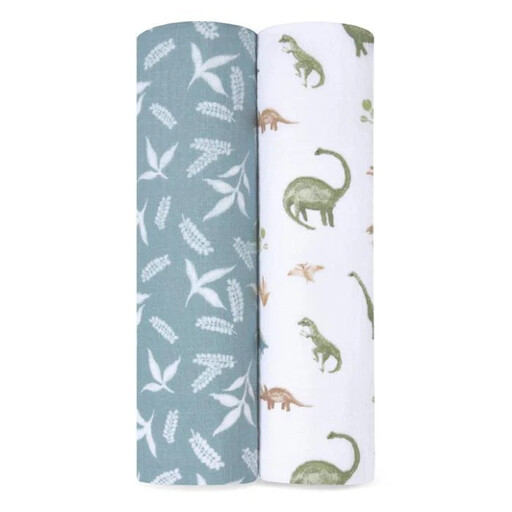
Why This Fits Their Persona: A manageable starting pack for parents building a newborn kit gradually or family members seeking a practical baby-shower gift.
The two-piece format avoids committing to a large bundle before the family knows how often it will use and wash muslins.
Cotton muslin construction; lightweight and machine washable; suitable for nappy changes, feeding and wiping.
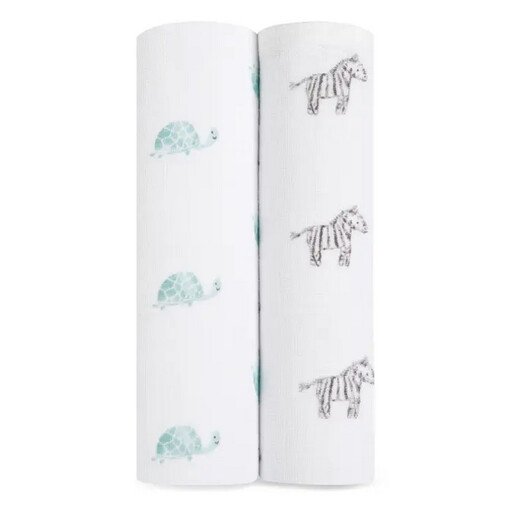
Why This Fits Their Persona: Suitable for buyers prioritising a more substantial cotton cloth, coordinated prints and a gift-ready presentation.
The product description specifies a 25% thicker construction and open-weave design, giving buyers clearer information than an unspecified “thick” label.
Cotton muslin; 2 pack; higher thread count stated in the listing; suitable for swaddling, spills and pram use.
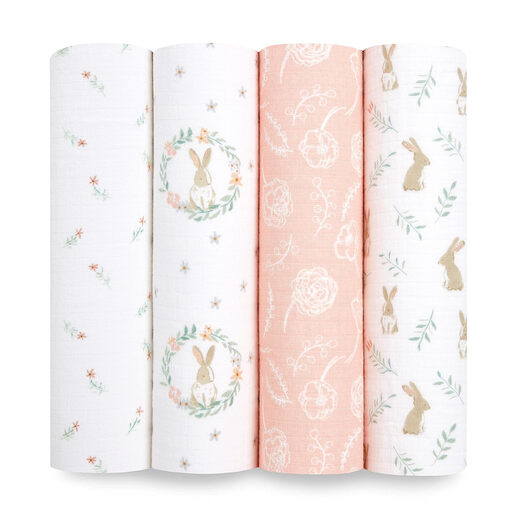
Why This Fits Their Persona: Four coordinated cloths suit parents who rotate muslins throughout the day and want spares available during laundry.
The four-piece format reduces the need to reuse one cloth repeatedly between washes, while the 112cm x 112cm size supports several everyday tasks.
100% cotton muslin; four swaddles; generous dimensions; machine washable and suitable for nappy changes, feeding and play surfaces.
We have compiled a complete, real-time list of products that fully satisfy these strict selection criteria and UK safety regulations.
A 2 pack may work for occasional use, while a 4 pack gives more flexibility for feeding, spills, nappy changes and laundry days. Families using muslins as baby burp cloths, changing layers and pram covers may prefer several cloths in rotation.
Not automatically. Breathability depends on the fabric construction, thickness and how the cloth is used. Compare the listed material, weave, size and care instructions. Never use a swaddle as a loose blanket in a cot or add layers based only on the fabric name.
Smaller muslin squares are useful for wiping and gentle washing, but a dedicated large towel offers more coverage after a bath. Check the dimensions: a 70cm x 140cm towel is designed for broader drying, while smaller cloths are easier to carry in a changing bag.