
24/7 Customer Support

Free returns

Same-day & Next-day Delivery

Quality Guaranteed

Unlock Your Welcome Offers: FREE Delivery | Up to 80% OFF | Free 30-day JoyPlus trial
Download the APP
Choosing baby nappies is rarely as simple as picking the biggest pack. A low unit price can become poor value if the fit causes leaks, while an advanced-looking feature may not be useful for your child’s routine. UK parents also need to compare weight ranges, materials, pack sizes and specialist designs such as swim nappies or pull-up pants.
This guide explains the main buying pitfalls and highlights practical options for newborns, active babies, toddlers and older children.
Nappy sizes are not fully standardised between brands. A Size 3 product may cover a slightly different weight range depending on its cut and design. For example, some Size 3 nappies are intended for 4–9kg, while others are listed for 6–10kg or 6–11kg.
A nappy that is too large may gape around the legs and back. One that is too small can leave red marks, restrict movement and leak because the absorbent core is not positioned correctly. Always check the manufacturer’s weight range first, then assess the fit around the waist and thighs.
“Up to 12 hours” is a product-use claim, not a recommendation to leave a wet or soiled nappy unchanged. Babies’ routines vary, and nappies should be changed regularly, particularly after a bowel movement. Overnight nappies can be useful for longer sleep periods, but fit and absorbency still need to match the child.
Pull-up nappy pants are convenient for standing changes and active toddlers, but taped disposable nappies may be easier for newborns. Similarly, swim nappies are designed for water play and are not a substitute for everyday nappies. Buying the wrong style can mean spending more while gaining little practical benefit.
Use baby nappies by size as a starting point, not the only deciding factor. Check that:
If leaks occur repeatedly despite correct fastening, it may be time to try the next size or a different cut.
For everyday use, look for an absorbent core, moisture-distribution channels and leak barriers. Products marketed as leak-proof nappies should still be judged by practical design details such as double leg cuffs, stretchy side wings or a back pocket.
For overnight use, choose a design with a higher-capacity core or an extra dry layer. However, “overnight nappies” are not necessarily suitable for every child or every night. Daytime activity, fluid intake and fit all affect performance.
Parents looking for sensitive skin nappies may prefer products listed as fragrance-free, lotion-free, chlorine-free or latex-free. Certifications such as OEKO-TEX Standard 100 or Allergy UK certification can provide useful information about the product’s stated manufacturing or testing status, but they do not guarantee that every child will tolerate the materials.
If redness or irritation develops, stop using the product. Change nappies promptly, follow the pack instructions and seek medical advice if irritation persists.
A jumbo pack is not automatically more economical. Divide the total price by the number of nappies, then consider whether the size is likely to fit for long enough. Smaller packs are useful when trying a new brand or checking whether a particular material suits your child.
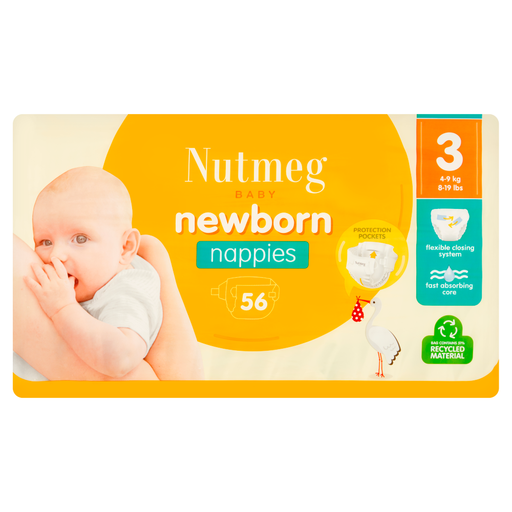
Why This Fits Their Persona: A practical everyday option for families comparing pack quantity and core features for babies in the 4–9kg range.
Its stated weight range and taped design make it easier to check fit rather than relying on a generic age label.
56 nappies per pack, fast-absorbing core, flexible leg cuffs and a wetness indicator.
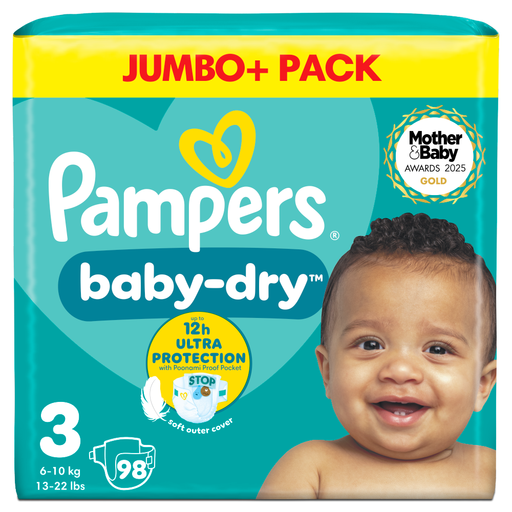
Why This Fits Their Persona: Suits parents seeking a larger everyday pack with features aimed at daytime movement and overnight routines.
The listed 6–10kg range, Stop & Protect Pocket and leg cuffs give buyers specific details to compare instead of vague dryness promises.
98-pack format, extra dry layer, flexible side wings and OEKO-TEX Standard 100 certification listed in the product details.
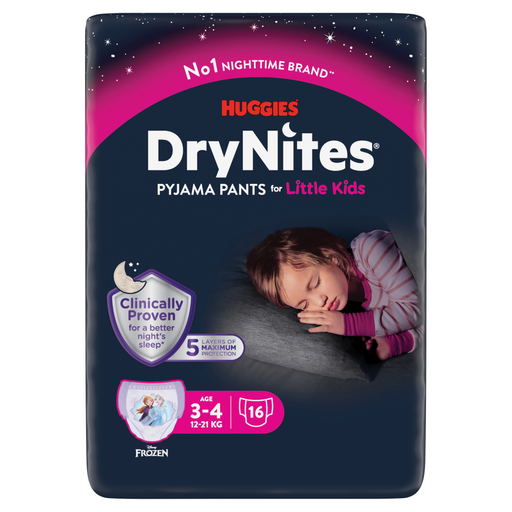
Why This Fits Their Persona: Designed for children aged 3–4 years who need discreet night-time or potty-training support rather than standard baby nappies.
It is clearly positioned as protective pyjama pants, helping avoid using ordinary pull-ups that may not provide the required overnight coverage.
Five-layer absorbent construction listed, soft waistband, tear-away sides and underwear-style fit.
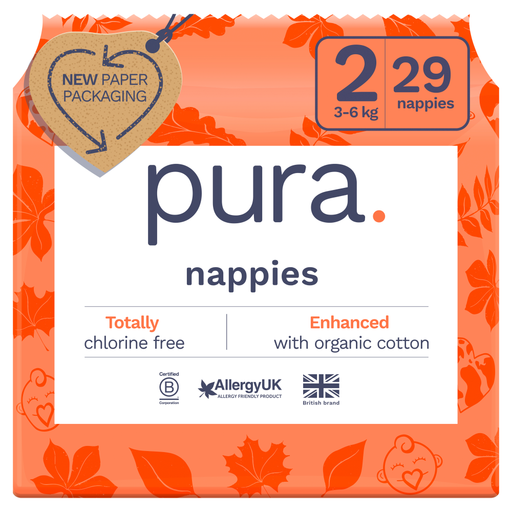
Why This Fits Their Persona: A suitable consideration for families comparing plant-based materials and a smaller size range for young babies.
The product information identifies its 3–6kg range and lists organic cotton, plant-based materials and no added perfume or lotion.
FSC-certified wood pulp is listed, with organic cotton and a chlorine-free absorbent construction.
We have compiled a complete, real-time list of products that fully satisfy these strict selection criteria and UK safety regulations.
Many young babies use several nappies each day, while the number often reduces as feeding and toileting routines change. Buy a smaller trial pack when switching brands, then compare the cost per nappy before committing to a jumbo pack.
Move up when the nappy leaves persistent marks, fastens near the end of the tabs, gaps around the legs or leaks despite correct positioning. Compare the next size’s weight range with your child’s current weight rather than relying on age alone.
No. Disposable nappies, nappy pants, swim nappies and DryNites pyjama pants should not be flushed. Roll used products securely and dispose of them with household waste according to local UK guidance.