
24/7 Customer Support

Free returns

Same-day & Next-day Delivery

Quality Guaranteed

Unlock Your Welcome Offers: FREE Delivery | Up to 80% OFF | Free 30-day JoyPlus trial
Download the APP
Choosing baby nappies is rarely as simple as picking the largest pack on the shelf. A nappy that fits well at three months may become tight during a growth spurt, while a product marketed for overnight use may still leak if the size or leg fit is wrong.
For UK parents, carers and expectant parents, the practical priorities are usually clear: dependable absorbency, comfortable materials, easy changes and a sensible cost per nappy. This guide explains the details worth checking before buying, then matches selected products to different household needs.
Age guidance can be useful, but babies of the same age can have very different body shapes. Weight ranges and the actual fit around the waist and thighs are more useful indicators.
For example, nappies size 3 may suit babies around 4–9 kg, while a size 4 product may be designed for approximately 9–14 kg. Always check the pack because ranges vary between brands. If tabs are difficult to fasten, red marks appear, or the nappy leaves gaps around the legs, it may be time to move up a size.
Some Pampers nappies and other disposable products describe protection for up to 12 hours. This is a product-use claim under stated conditions, not a recommendation to leave a wet or soiled nappy unchanged for that entire period. Babies should be checked regularly and changed promptly when wet or soiled.
Overnight nappies can be useful for longer sleep periods, but correct sizing, positioning and regular checks remain important. A highly absorbent core cannot compensate for a loose waistband or folded leg cuff.
A jumbo pack may reduce how often you need to shop, but a large quantity is poor value if the size or shape does not suit your baby. Buy a smaller pack first when trying a new brand, particularly if you are comparing Nutmeg Baby nappies, Pampers nappies, eco nappies or a different style of nappy pants.
Look for the manufacturer’s stated weight range rather than relying only on “newborn”, “toddler” or age labels. Common stages include:
Check that the back waistband sits comfortably, the tapes fasten without stretching excessively and the cuffs sit outside the nappy rather than folded inwards.
A practical nappy should distribute moisture through its absorbent core instead of allowing liquid to collect in one area. Features to compare include:
Marketing phrases such as “leak-proof nappies” should be treated cautiously. No disposable nappy can guarantee a perfect result for every baby, especially when the product is overfilled, incorrectly fitted or used beyond its intended size range.
If your child is prone to irritation, compare the ingredient and material information rather than relying only on phrases such as “soft” or “gentle”. Some products are described as dermatologically tested, latex-free, fragrance-free or free from particular allergens. These are product attributes, not a guarantee that every child will tolerate them.
Pura Eco Nappies, for example, are described as using plant-based materials in skin-contact layers and as being free from chlorine, fragrance and parabens. Nutmeg Baby products state that their pulp is sourced from PEFC-certified managed forests and controlled sources. These details may help families comparing eco nappies, but also check the complete packaging information and disposal instructions.
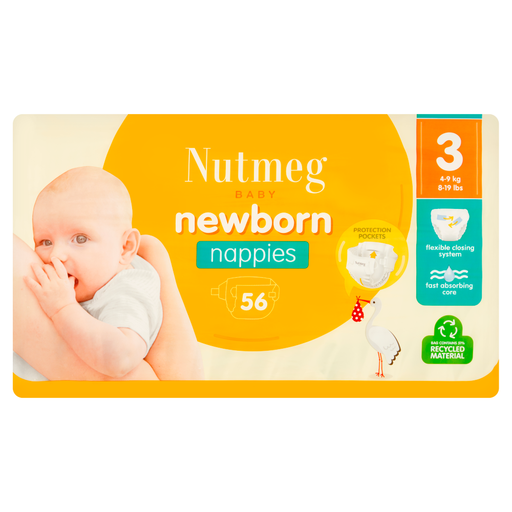
Why This Fits Their Persona: A practical starting option for families needing taped nappies for a baby weighing approximately 4–9 kg, with 56 nappies for regular daytime and night-time changes.
The stated weight range helps shoppers select by fit rather than age alone. Flexible tapes and anti-leak leg cuffs can also be adjusted around a wriggly baby.
Fast-absorbing channel technology, breathable materials and pulp sourced from PEFC-certified forests, according to the product information.
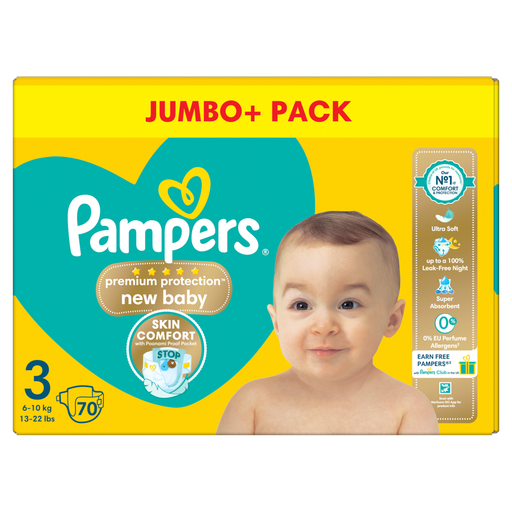
Why This Fits Their Persona: Suitable for parents prioritising a soft-feel design, airflow features and a larger pack for frequent changes during the early months.
The product information specifies micropores, flexi-side wings and a three-way protection design, giving shoppers tangible features to compare instead of vague comfort wording.
70-pack format, ultra-soft flexi side wings and stated freedom from EU perfume allergens.
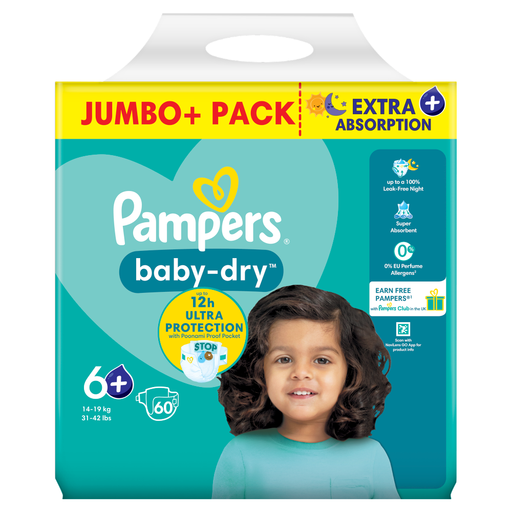
Why This Fits Their Persona: Designed for children around 13–18 kg, this option suits families looking for size 6 nappies with features aimed at longer overnight wear.
The Stop & Protect Pocket, extra dry layer, flexi-side wings and safety leg cuffs are clearly identified features to inspect during fitting.
60-count jumbo+ pack, stated OEKO-TEX Standard 100 certification and a design intended to lock away wetness.
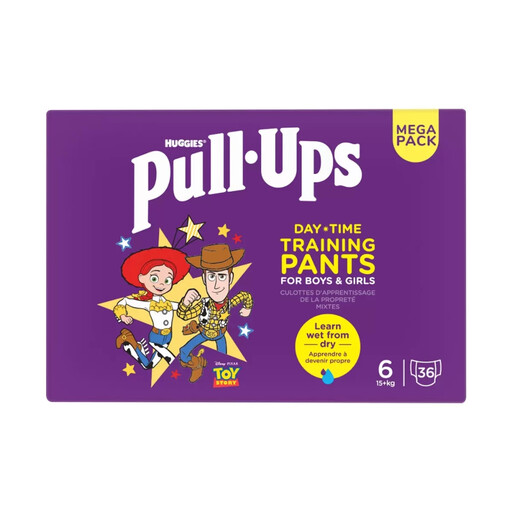
Why This Fits Their Persona: Pull-up training pants suit active toddlers learning to put on and remove underwear-style clothing during daytime toilet training.
The 360° stretchy waistband and tearable sides address the practical difficulty of changing a moving toddler.
Underwear-style design, wetness indicator and 36 pants per pack for daytime use.
We have compiled a complete, real-time list of products that fully satisfy these strict selection criteria and UK safety regulations.
Compare the cost per nappy, not only the pack price. A larger pack may offer convenience, but only when the fit is reliable and your child is likely to use the full pack before moving up a size. Keep unopened packs in a cool, dry place and avoid storing them in damp areas.
For toddlers, nappy pants can simplify changes but may cost more per item than taped nappies. Use taped products when your child is mostly lying down and consider pull-up styles when standing changes or potty training becomes the priority.
Used nappies and nappy pants should be wrapped and placed in household waste. Do not flush them, as absorbent materials can block drains.
Check regularly and change a wet or soiled nappy promptly. Newborns commonly need frequent changes, while older babies may have a different routine. Follow the product directions and monitor your baby’s comfort and skin.
Move up when the current nappy leaves persistent marks, the fastening tabs no longer meet comfortably, or leaks occur despite correct positioning. Use the next size’s stated weight range as a guide rather than relying on age alone.
They can be useful for children who sleep for longer periods, particularly when they include features such as an absorbent core, leg cuffs or a back barrier. They still need regular checking and should not replace prompt changes when the nappy is wet or soiled.