
24/7 Customer Support

Free returns

Same-day & Next-day Delivery

Quality Guaranteed

Unlock Your Welcome Offers: FREE Delivery | Up to 80% OFF | Free 30-day JoyPlus trial
Download the APP
Buying baby nappies is a regular expense, but choosing the right pack is not simply a matter of selecting the lowest price. A poor fit can cause leaks, discomfort and wasted nappies, while an oversized jumbo pack may be uneconomical if your baby quickly moves into the next size.
This guide explains the practical details to check when comparing newborn nappies, taped nappies and nappy pants in the UK. It also highlights suitable options for different household needs, from early newborn changes to overnight use and toilet training.
Nappy sizes are generally based on weight, not age. A six-month-old baby and a ten-month-old baby may require different sizes, while children of the same age can have very different body shapes.
Check the manufacturer’s weight range before buying size 1 nappies, size 2 nappies, size 3 nappies, size 4 nappies, size 5 nappies, size 6 nappies, size 7 nappies or size 8 nappies. If the nappy leaves persistent marks, gaps appear around the legs or fastening tabs no longer meet comfortably, it may be time to move up.
Terms such as “up to 12 hours” describe a stated maximum under particular conditions. They do not mean every child can wear one nappy for that entire period. Wet or soiled nappies should be changed promptly, particularly if your baby has sensitive skin.
For night-time use, look for a super absorbent core, a secure waist, leg cuffs and a design that suits your child’s sleeping position. Absorbency alone cannot correct a nappy that is too large or too small.
A jumbo pack can reduce how often you reorder, but it may create unnecessary waste if the size is wrong. Newborns can move through the first few sizes quickly, so a smaller pack may be more practical at the beginning. Consider the price per nappy rather than the pack price alone.
Weight guidance is the starting point, but the shape of your baby also matters. After fastening, check that:
For newborns, a cord-friendly or navel-friendly front can be useful while the umbilical area is healing. Nutmeg Newborn Nappies Size 1 and Pampers New Baby Premium Protection Nappies Size 0 include features designed around smaller babies.
A nappy normally combines cellulose or wood pulp with super absorbent polymer (SAP). The core draws liquid away from the surface and holds it within the nappy. Channel technology may help distribute moisture, while protection pockets and anti-leak leg cuffs provide additional barriers.
These features are useful for leakproof nappies searches, although no disposable nappy can remove every risk of leakage. A correct fit, timely changes and properly positioned cuffs remain important.
If your child is prone to irritation, compare the materials and product information rather than relying on vague terms such as “natural” or “gentle”. Look for details such as:
Products described as sensitive skin nappies should still be monitored individually. Stop using a product if irritation develops and seek appropriate healthcare advice if symptoms persist.
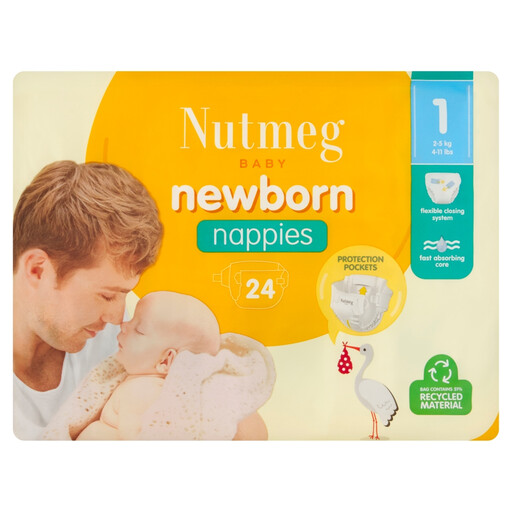
Why This Fits Their Persona: A smaller 24-pack gives expectant parents and new carers an opportunity to check the fit before committing to a larger supply.
The size 1 format and modest pack size reduce the risk of storing too many nappies before your newborn’s fit changes.
Wetness indicator, cord-friendly comfort, breathable materials and protection pockets.

Why This Fits Their Persona: Suitable for families seeking newborn-focused features and a larger supply for frequent early changes.
Its stated weight range helps prevent choosing a size based only on age, while the navel-friendly shape addresses an early-stage fit concern.
Wetness indicator, flexible fastening system and a listed weight range of approximately 4–8 kg.
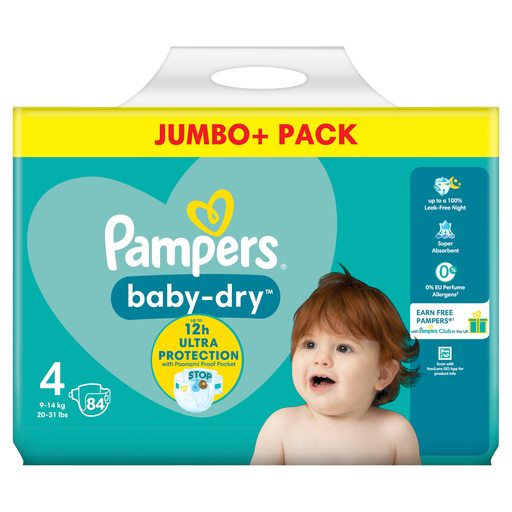
Why This Fits Their Persona: The 84-count pack suits households using several nappies each day and wanting to compare cost per nappy.
A stated 9–14 kg range and flexible sides make fit checking more straightforward than relying on a generic age label.
Extra dry layer, breathable leak barrier, stretchy sides and a Stop & Protect pocket.
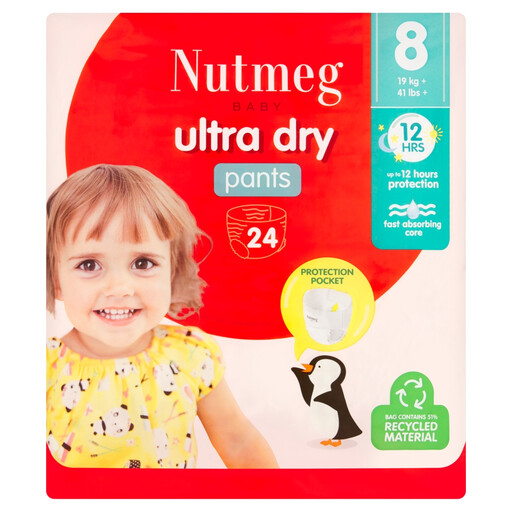
Why This Fits Their Persona: Pull-up styling can simplify changes for toddlers who wriggle, stand or are beginning to practise using the toilet.
The 360° waist and tearable sides address the inconvenience of taped changes when a child is standing or moving.
Pull-up design, tearable sides, absorbent core and PEFC-certified pulp stated in the product information.
We have compiled a complete, real-time list of products that fully satisfy these strict selection criteria and UK safety regulations.
Many newborns need frequent changes, so families may use around eight to twelve nappies per day, although actual use varies. A smaller pack can be sensible initially because newborns may change size quickly.
Some overnight nappies and nappy pants include absorbent cores, flexible waistbands and leak barriers designed for longer wear. However, check the fit regularly and change the product when wet or soiled rather than relying solely on an advertised duration.
There is no fixed age. Pull-up nappies can be useful when a child is active, standing or starting toilet training. Choose based on weight, waist comfort and whether your child can move freely without gaps or excessive tightness.