
24/7 Customer Support

Free returns

Same-day & Next-day Delivery

Quality Guaranteed

Unlock Your Welcome Offers: FREE Delivery | Up to 80% OFF | Free 30-day JoyPlus trial
Download the APP
Choosing baby nappies is rarely just a matter of picking the largest pack. The wrong size can cause leaks, a poor fit can leave red marks, and a product designed for daytime may not provide enough protection overnight. Parents also need to compare disposable nappies, pull-up nappy pants, eco-friendly nappies and swim nappies without relying on vague marketing language.
This guide explains the practical details to check before buying, followed by our top recommendations for different household needs.
Age ranges are only a rough guide because babies grow at different rates. A size 3 nappy may fit one baby at four months and another later. Always check the weight range, then assess how the nappy sits around the waist and thighs.
For example, the Bc Babycare Royal Nappies Size 3 covers 6–11 kg, while Pura Eco Nappies Size 3 is designed for 4–9 kg. Both are labelled size 3, but their recommended weight ranges differ.
Long-duration claims generally refer to absorbency capacity under specified conditions, not a reason to leave a wet or soiled nappy unchanged. Frequent changes remain important for hygiene and comfort, particularly during the day.
For overnight nappies, look for features such as a high-absorbency core, stay-dry channels, secure leg cuffs and a back leak barrier. These features can help, but fit remains just as important.
Standard disposable nappies are not designed for swimming. They absorb water and can become heavy. Swim nappies use a water-resistant construction intended to contain solids while allowing movement in the pool. They should be changed after water activities and should not replace an everyday nappy.
Pull-up nappy pants are also different from tab-fastened nappies. They can be practical for active toddlers or standing changes, but may be less convenient for very young babies who need frequent lying-down changes.
The most important parameter is the recommended weight range. After putting on a nappy, check that:
If leaks occur despite correct fastening, the size or cut may not suit your baby’s body shape. If the waistband leaves marks or the nappy appears too short, move up a size even if the stated weight range still overlaps.
Most disposable nappies use a combination of wood pulp and super-absorbent polymer (SAP). SAP helps lock in liquid, while the outer layers and elastic cuffs help contain it. A thinner core may feel less bulky, but thickness alone does not indicate performance.
For babies who sleep for longer stretches, compare products with:
A wetness indicator is a convenience feature rather than a substitute for checking the nappy regularly.
For sensitive skin nappies, compare the actual material and exclusion statements rather than relying only on words such as “natural” or “gentle”. Some products specify that they are free from fragrance, lotion, chlorine, latex, dyes or phthalates. Others use plant-based layers, bamboo viscose or organic cotton against the skin.
Certifications can help clarify a product’s stated standards. For example, OEKO-TEX Standard 100 relates to tested textile components, while Allergy UK certification and dermatological testing are product-specific claims that should be checked on the packaging or listing.
Eco-friendly nappies can reduce reliance on certain materials, but disposable nappies still require household-waste disposal. Do not flush them down the toilet.
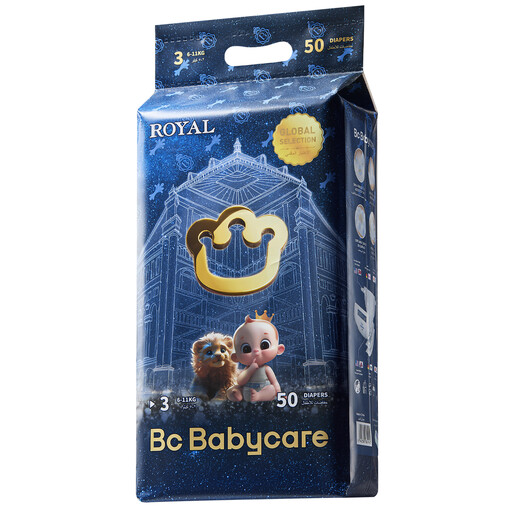
Why This Fits Their Persona: A practical option for families starting to compare size 3 nappies and seeking a 50-pack for regular daytime use.
The stated 6–11 kg range helps shoppers compare by weight, while three indicator strips make wetness easier to monitor.
50 nappies per pack; SAP and wood-pulp absorbent core; breathable PE back layer; BPA- and phthalate-free according to the product specification.
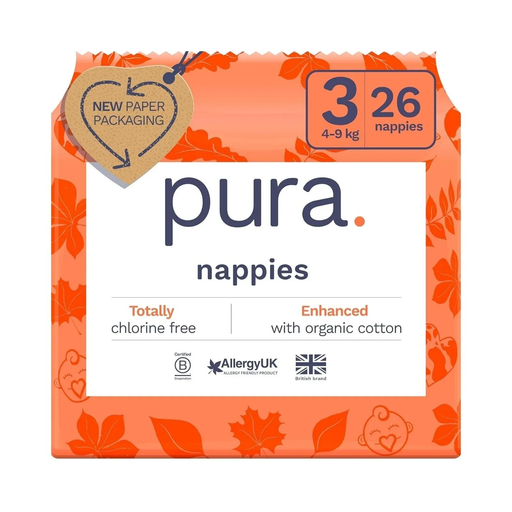
Why This Fits Their Persona: Suits parents comparing eco-friendly nappies and sensitive skin nappies, particularly for babies within the 4–9 kg range.
Its listing identifies plant-based materials, organic cotton and no chlorine, fragrance or lotions, making the material comparison more transparent.
Organic cotton skin-contact layer; FlashDry and stay-dry channels; Allergy UK certification stated in the product information.
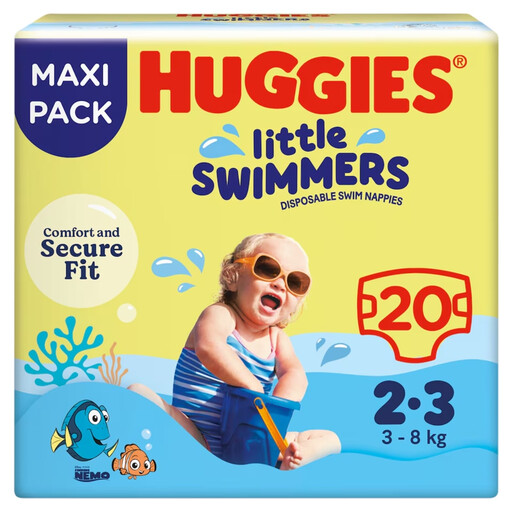
Why This Fits Their Persona: Designed for families attending swimming lessons, holidays or regular pool sessions with babies weighing 3–8 kg.
It is clearly labelled as a disposable swim nappy, not an everyday product, and is designed not to swell in water.
Stretch side panels; adjustable tabs; leak-guard construction for water activities; 20 nappies per pack.
Other options include Pampers nappies for pull-on changes and overnight use, Naty bamboo pull-on pants for a bamboo viscose back sheet and Nutmeg Baby Ultra Dry Size 3 for a 56-pack format. For older toddlers, Bc Babycare Royal Pants Size 6 and Pura Eco Nappies Size 6 provide pull-up designs for children weighing 15–25 kg or 15 kg and above respectively.
We have compiled a complete, real-time list of products that fully satisfy these strict selection criteria and UK safety regulations.
Check the weight range first, then look for repeated leaks, fastened tabs that sit too close to the edge or red marks around the waist and legs. A larger size may be appropriate when the current nappy feels tight or does not cover the bottom securely.
Change a nappy when it is soiled or wet rather than relying solely on a stated duration. Babies may need frequent daytime changes, while overnight nappies can offer additional absorbency. If redness or irritation persists, stop using the product and seek medical advice.
Bamboo viscose refers to a material used in part of some nappies; it does not mean the complete disposable nappy will biodegrade in household conditions. Check the manufacturer’s disposal guidance and place used nappies in household waste.