
24/7 Customer Support

Free returns

Same-day & Next-day Delivery

Quality Guaranteed

Unlock Your Welcome Offers: FREE Delivery | Up to 80% OFF | Free 30-day JoyPlus trial
Download the APP
Buying baby nappies online should be straightforward, but pack sizes, weight ranges and bold protection claims can make comparisons surprisingly difficult. A large jumbo pack may appear economical until your baby moves into the next size, while an “overnight” or “ultra-dry” label does not guarantee a leak-free result for every child.
This guide helps UK parents, guardians and carers compare disposable nappies and nappy pants using practical criteria rather than marketing language.
Age guidance is only a rough reference. Babies of the same age can have very different body shapes and weights. A nappy that is too small may leave red marks and gaps around the legs, while an oversized nappy can sag or leak.
Always check the weight range first. For example:
The correct size is the one that fits securely around the waist and thighs without excessive pressure.
Terms such as overnight nappies, “ultra-dry” and “up to 12 hours” usually describe product design or a stated maximum under particular conditions. They are not a guarantee for every baby, especially where the nappy is heavily soiled, incorrectly fitted or due for a change.
Look instead for practical features such as an absorbent core, a wetness indicator, flexible leg cuffs, breathable outer materials and a back leak barrier. Change wet or soiled nappies promptly, including during the night where needed.
A jumbo pack reduces how often you need to reorder, but it can create waste if your baby is close to moving up a size. Compare the price per nappy, not just the overall pack price. It is also sensible to buy a smaller pack before committing to a new brand or size.
Pack quantities vary considerably. The products below include 22-, 28-, 32-, 40-, 62-, 64-, 68-, 72-, 76- and 84-pack formats, so calculating the unit cost can make comparisons clearer.
The waistband should sit comfortably without digging in, and the leg cuffs should lie flat against the skin rather than being tucked inside. After fastening taped nappies, run a finger around the waistband to check that it is secure but not overly tight.
For babies who crawl, walk or resist changes, pull-up nappies may be more convenient. Nappy pants are pulled on like underwear and usually have tearable sides for removal. They can be useful for toddlers, nursery changes and toilet-training routines, but taped nappies may offer easier positioning for younger babies who lie still.
A core containing super-absorbent polymer (SAP) is designed to lock away liquid. Channels can help distribute moisture, while wider cuffs and back pockets may help reduce leaks around the legs and rear.
Do not judge performance by the number of technical terms alone. Check whether the product is intended for daytime, overnight or active use, and ensure the size matches your child’s current weight. An effective absorbent core cannot compensate for a poor fit.
Parents seeking sensitive skin nappies may wish to check whether the product is dermatologically tested, latex-free or free from specified perfume allergens. These details describe product composition or testing status; they should not be treated as a medical endorsement.
Some options include soft, breathable non-woven materials, petrolatum-based lotion ingredients or plant- and forest-sourced pulp. If irritation or persistent redness develops, stop using the product and seek appropriate healthcare advice.
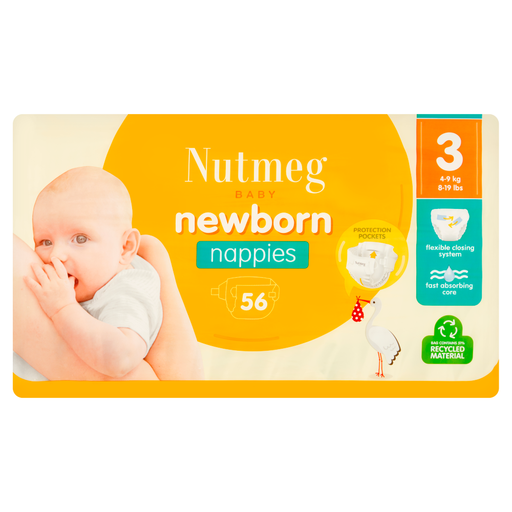
Why This Fits Their Persona: A practical taped option for families comparing everyday Size 3 nappies and wanting a moderate pack before buying in larger quantities.
The stated 4–9kg range makes weight-based selection clearer than relying on age alone. Compare the 56-pack price per nappy before ordering more.
Channel technology, flexible anti-leak cuffs and dermatological testing are listed features. The pulp is stated to be PEFC certified.

Why This Fits Their Persona: Suitable for babies weighing 9–14kg, with a larger taped pack for families wanting comfort-focused features for daily use.
Its specified size range and taped fastening help buyers prioritise fit. The pack also lists a rear STOP & PROTECT POCKET rather than relying only on broad “leakproof” wording.
The product lists 1,000+ absorbent micropores, soft materials, overlapping fasteners and OEKO-TEX Standard 100 certification.
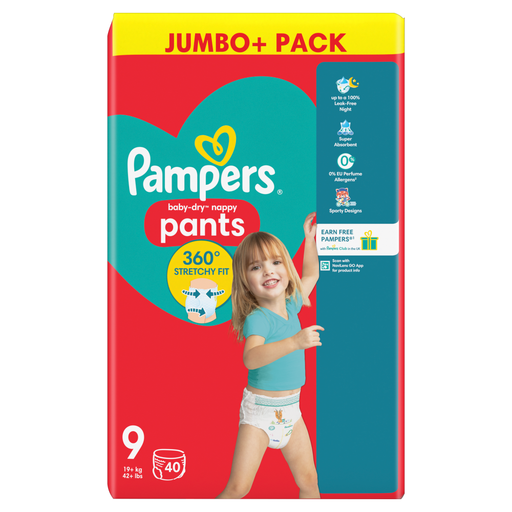
Why This Fits Their Persona: Designed for children weighing 19kg or more, making it a pull-up option for larger toddlers who are active during the day or night.
The product specifies a larger weight range and a 360° waistband. This helps shoppers avoid forcing a smaller taped nappy onto a mobile toddler.
Pull-on application, tearable sides, wider leg cuffs and a rear protection pocket are listed. The stated absorbent core is intended for day and night use.
For very small babies, consider features such as a navel-friendly shape, wetness indicator and a narrower fit. The Pampers New Baby Premium Protection Size 0 and Size 2 ranges are designed around these requirements, with the listed Size 2 product suitable for approximately 4–8kg.
For toddlers, options include Nutmeg Baby Ultra Dry Pants Size 7, BC Babycare Royal Pants Size 4 or 5, and Pampers Baby-Dry Nappy Pants in Sizes 4–9. Check the product’s exact weight guidance, particularly when comparing brands such as Pampers nappies, Nutmeg baby nappies and BC Babycare nappies.
We have compiled a complete, real-time list of products that fully satisfy these strict selection criteria and UK safety regulations.
Change a nappy when it is wet or soiled, and promptly after a bowel movement. Newborns may need frequent changes, while older babies can have longer intervals. Follow the product instructions and monitor your baby’s skin and comfort.
Store unopened disposable nappies in a cool, dry place away from direct sunlight, heat and moisture. They do not have a typical food-style expiry date, but damaged packaging, unusual odour or deterioration of materials are reasons not to use them.
The answer depends on the pack price, number of changes and whether the design suits your child. Compare the cost per nappy pant, not only the pack total. Nappy pants may reduce changing time for active toddlers, while taped nappies can be more economical for babies who are changed lying down.