
24/7 Customer Support

Free returns

Same-day & Next-day Delivery

Quality Guaranteed

Unlock Your Welcome Offers: FREE Delivery | Up to 80% OFF | Free 30-day JoyPlus trial
Download the APP
Choosing baby nappies is rarely as simple as selecting a familiar brand and the lowest price. A nappy that works well for one baby may leak, sag or rub on another. UK parents also need to consider changing routines, overnight use, skin sensitivity and how quickly a child is moving between sizes.
This guide explains the practical details that matter when comparing disposable nappies, from newborn nappies to toddler pull-up pants, followed by product recommendations matched to different shopping needs.
Nappy sizes are generally based on weight ranges, not age alone. Babies of the same age can need different sizes, and a nappy that is too large may leave gaps around the legs. One that is too small can feel tight, leave marks and become saturated more quickly.
For example, Size 3 and Size 4 nappies may suit children at different stages, but the correct choice depends on your child’s current weight, body shape and the fit around the waist and thighs.
Claims such as “up to 12 hours” describe the product’s stated maximum performance under particular conditions. They should not be interpreted as a recommendation to leave a wet or soiled nappy unchanged for that long.
A baby’s nappy should be checked regularly and changed promptly after bowel movements. Overnight nappies can be useful for reducing night-time disruptions, but regular checking remains important.
Jumbo pack nappies can reduce the number of shopping trips, but the cost per nappy should be calculated before buying. A child may also outgrow a size before the pack is finished. Buying a smaller pack when trying a new brand or fit can reduce waste and help you identify whether the product suits your baby.
Start with the manufacturer’s stated weight range. Size 3 nappies, for instance, may be suitable for babies around 4–9 kg, while many size 4 nappies are listed for approximately 9–14 kg. These ranges vary by product, so check the packaging or product listing rather than relying on a universal size chart.
Taped nappies offer adjustable fastening and are practical for babies who are still mostly lying down. Nappy pants have a pull-on design that can be more convenient for crawling, walking or wriggly toddlers. Tearable side seams are useful when a quick change is needed.
Look for an absorbent core, liquid-distribution channels and flexible leg cuffs. These features can help move moisture away from the skin and reduce gaps around the thighs. A back pocket or raised rear barrier may be useful for babies who sleep on their backs or move frequently.
For overnight use, compare products described as baby-dry nappies or overnight nappies, but treat stated duration as an upper limit rather than a fixed changing schedule.
If your child is prone to irritation, check whether the product is described as dermatologically tested, latex-free or free from particular perfume allergens. These statements describe product characteristics; they do not guarantee that every child will tolerate the materials.
Products carrying certifications such as OEKO-TEX Standard 100 should be checked against the current packaging and certification information. Stop using a nappy if irritation or discomfort develops and seek appropriate medical advice if symptoms persist.
Also check disposal instructions. Disposable nappies and pull-up pants must be placed in household waste and should never be flushed.
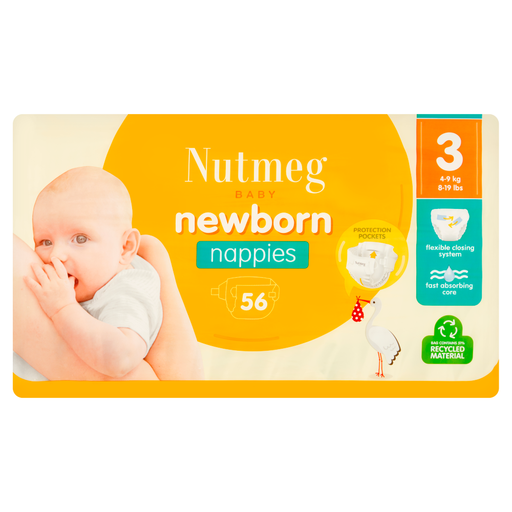
Why This Fits Their Persona: A practical option for families starting with Size 3 nappies and looking for a moderate pack quantity before committing to a larger purchase.
The stated 4–9 kg range makes weight checking easier, while the 56-count pack avoids overbuying during a fast-growing stage.
Fast-absorbing channel technology, flexible side tapes, breathable materials and anti-leak leg cuffs.

Why This Fits Their Persona: Suits parents prioritising soft materials, adjustable fastening and additional features for an active baby in the 9–14 kg range.
The weight range is clearly specified, and the overlapping fastening system can be adjusted instead of relying on a fixed fit.
Listed with absorbent micropores, a STOP & PROTECT POCKET, soft materials and OEKO-TEX Standard 100 certification.
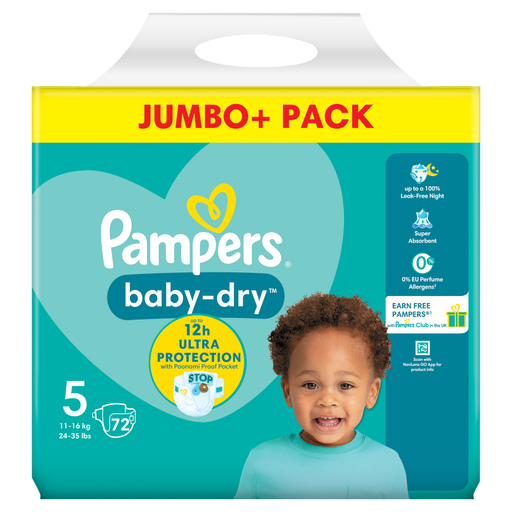
Why This Fits Their Persona: Designed for families needing a larger supply of Size 5 nappies for regular daytime use and longer sleep periods.
The pack count is stated clearly, while flexi-side wings and safety leg cuffs address common causes of gaps and side leaks.
Includes an extra dry layer, a back pocket design and a listed absence of EU perfume allergens.
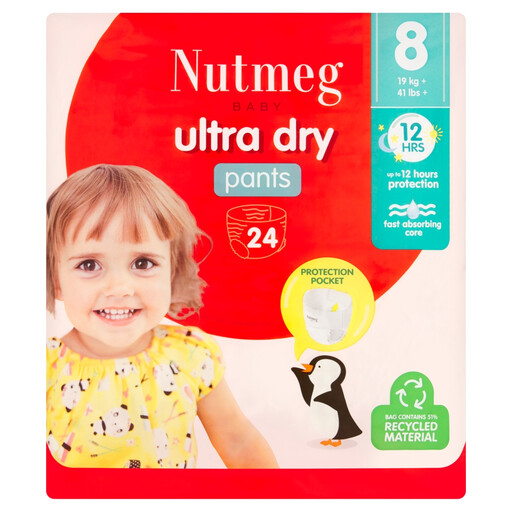
Why This Fits Their Persona: Pull-up pants are suitable for toddlers who are learning to dress themselves or resist taped nappy changes.
The pull-on format avoids relying on adhesive tabs, while tearable sides allow removal after accidents or before bedtime changes.
Stretchy waist, anti-leak leg cuffs and a stated fit for children weighing 6 months+; check the individual weight guidance before ordering.
We have compiled a complete, real-time list of products that fully satisfy these strict selection criteria and UK safety regulations.
Newborn nappies should be selected by your baby’s weight and body shape. Some products include a navel-friendly cut-out or contoured front, which can be useful during the early weeks. A wetness indicator may also help new carers recognise when a change is needed. Always check the specific size guidance, particularly for smaller or premature babies.
Change nappies regularly and promptly after a bowel movement. Wet nappies should also be checked frequently, including before sleep and after waking. The correct routine depends on your baby’s age, feeding pattern and skin condition, so product claims about extended dryness should not replace checking.
The answer depends on pack price, pack quantity and how many changes your child needs each day. Nappy pants can save time for active toddlers, but taped nappies may offer more adjustment during earlier stages. Compare the cost per nappy or pant, then consider whether the size is likely to remain suitable long enough to use the full pack.