
24/7 Customer Support

Free returns

Same-day & Next-day Delivery

Quality Guaranteed

Unlock Your Welcome Offers: FREE Delivery | Up to 80% OFF | Free 30-day JoyPlus trial
Download the APP
Choosing between baby nappies and pull-up pants is not simply a matter of picking the largest pack or the most familiar packaging. The right option depends on your child’s weight, movement, changing routine and whether protection is needed during the day, overnight or for bedwetting.
Marketing language can also make comparisons difficult. Here are the buying details that matter most, followed by practical recommendations for different household needs.
Age ranges are only a rough guide because children grow at different rates. A nappy that is too small may leave red marks around the waist and legs, while one that is too large can allow leaks. Always compare your child’s current weight with the manufacturer’s range under nappies by size and weight.
For example, BC Babycare Royal Size 1 is listed for 2–5 kg, Size 3 for 6–11 kg and Size 5 for 12–17 kg. These ranges are more useful than assuming a particular size suits every three-month-old or toddler.
Terms such as ultra-absorbent nappies, leak-proof nappies and “all-night protection” describe design intentions, not a promise that leaks cannot occur. Fit, sleeping position, changing frequency and liquid intake all affect performance.
For long sleep periods, check the absorbent core, waistband, leg cuffs and recommended weight range. A night product may be useful, but it still needs to be changed promptly when wet or soiled.
Bamboo nappies and eco-friendly nappies can differ considerably. Look at what the environmental statement actually covers: the absorbent core, packaging, pulp sourcing or biodegradability. Disposable nappies still require household-waste disposal, and used nappies or nappy pants should not be flushed.
Disposable baby nappies normally use fastening tabs, making them useful when your baby is lying down. Baby nappy pants have an elasticated waist and can be pulled on while a toddler is standing, which may simplify changes for an active child.
Check for:
A close fit should not leave deep marks. If the waist gaps, the leg openings are loose or leaks occur repeatedly, try a different size or style.
Absorbent cores commonly combine wood pulp and superabsorbent polymer (SAP). Some products publish additional core information; BC Babycare Royal sizes 2–7 list a composite core weighing 460 g/m², with 14.5 g of SAP. This gives a useful specification to compare, although it does not predict identical results for every child.
For overnight nappy pants, look for a high-absorbency core, liquid-distribution channels and barriers at the back and legs. For older children, bedwetting pants and pyjama pants are shaped more like underwear and are designed around discretion, movement and easy disposal.
Parents looking for nappies for sensitive skin should check the top-sheet material, fragrances, colourants and any stated skin-contact features. Some BC Babycare Royal products specify a pH 5.5 surface, while other products list different materials and additives. A skin-friendly claim is not a medical endorsement, so stop using any product that causes persistent redness or irritation and seek medical advice where appropriate.
Also check the pack for:
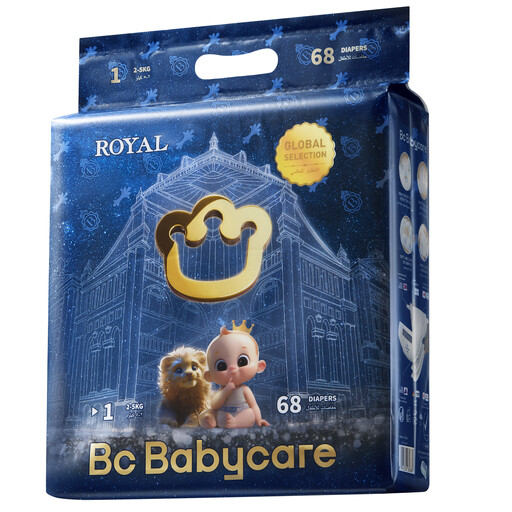
Why This Fits Their Persona: A 68-pack option for newborns and small infants, suitable for parents building an everyday supply while checking fit and comfort.
The product lists a 2–5 kg range, three wetness indicator lines and a breathable PE backsheet, so key specifications are visible rather than based only on packaging language.
68 nappies per pack; wood pulp and SAP absorbent core; BPA-free and phthalate-free information is provided.

Why This Fits Their Persona: A mid-size disposable nappy with a thin-core design and stated skin-contact features for families prioritising softness and fit details.
The listed 9–14 kg range helps avoid sizing by age, while the waist, leg adjustment guidance and three indicator lines support more informed use.
40 nappies per pack; 360-degree barrier design is listed; composite core includes SAP.
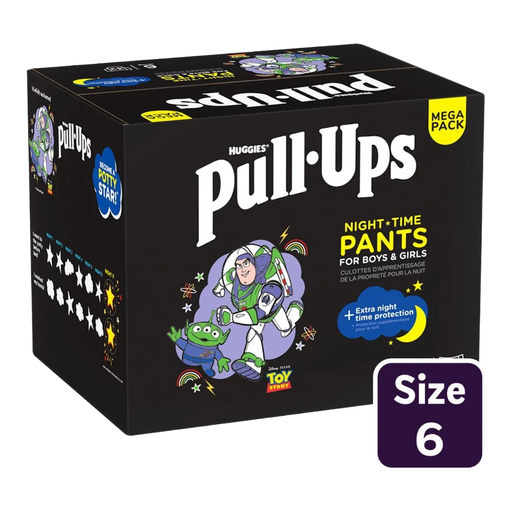
Why This Fits Their Persona: Designed for toddlers aged 2 years and over who need pull-up convenience and additional overnight absorbency during potty training.
It is clearly positioned as a night-time training pant, with stretchy sides for pulling up and down and tearable seams for removal.
32 single-use pants; unisex design; extra absorbent layer and flexible waistband are specified.
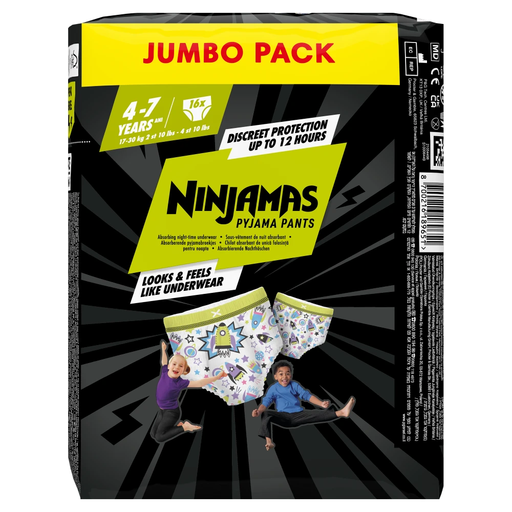
Why This Fits Their Persona: A discreet option for children aged 4 and over who need underwear-style overnight protection, including during sleepovers or travel.
The product lists a 360-degree flexible belt, quiet-cloth construction and side-tear removal, addressing fit, discretion and practical changes separately.
16 pants per pack; OEKO-TEX Standard 100 certification is listed; dermatologically tested and free from EU perfume allergens according to the product information.
We have compiled a complete, real-time list of products that fully satisfy these strict selection criteria and UK safety regulations.
Yes. Potty training pants are useful when a child is learning to pull underwear up and down independently. They provide some disposable protection while supporting a more underwear-like routine. They are not a replacement for toilet training, and the correct size remains important.
The duration depends on the product, the child and the amount of urine. Some products advertise protection for up to 12 hours, but this should not be treated as a universal lifespan. Change wet or soiled pants as soon as practical, and use the fit and wetness indicator to guide decisions.
Toddler pull-up pants are generally designed for daytime movement and potty training. Bedwetting pants, including DryNites pyjama pants, are aimed at older children and tend to focus on overnight absorbency, quiet materials and an underwear-like appearance. Check the listed age and weight range before ordering.