
24/7 Customer Support

Free returns

Same-day & Next-day Delivery

Quality Guaranteed

Unlock Your Welcome Offers: FREE Delivery | Up to 80% OFF | Free 30-day JoyPlus trial
Download the APP
Choosing baby nappies and training pants is rarely as simple as picking the largest pack. The right option depends on your child’s weight, movement, skin needs and daily routine. A newborn may need a soft nappy with a wetness indicator, while an active toddler may benefit from pull-up training pants. Families visiting a pool also need swim nappies rather than ordinary disposable baby nappies.
The following guide highlights common buying traps, the specifications worth checking and suitable options for different household needs.
Age ranges on packaging are only a guide. Children of the same age can have very different body shapes, and a poor fit can cause gaps, rubbing or leaks. Always compare your child’s current weight with the manufacturer’s range.
For example, size 1 nappies may suit babies weighing 2–5 kg, while size 2 nappies commonly cover approximately 4–8 kg. Larger options, including size 5, size 6, size 7 and size 8 nappies, can vary considerably between brands.
Daily nappies are designed to absorb urine, but swim nappies are made differently. A disposable swim nappy is intended to limit leakage during water play without becoming heavy and swollen in the pool. It is not a replacement for a standard nappy and should be changed after swimming.
Likewise, daytime pull-up training pants may not provide the same level of protection as overnight training pants. Check whether the product is designed for daytime use, night-time use or both.
Terms such as “natural”, “gentle” or “eco” do not explain the full product construction. Look for specific information, such as fragrance-free materials, chlorine-free processing, plant-based components, recyclable paper packaging or recognised certifications.
For sensitive skin nappies, also check whether the product contains fragrance, lotion, latex or other ingredients your child has previously reacted to. Stop using any product that causes persistent redness or irritation and seek medical advice where appropriate.
A well-fitting nappy should sit securely around the waist and thighs without leaving deep marks. For taped nappies, check that the fastening system allows small adjustments. Flexible side panels can be useful for wriggly babies, while 360-degree stretchy waistbands are practical for toddlers who are learning to dress themselves.
Pull-up training pants should be easy to put on like underwear and have tearable side seams for changes while standing or lying down.
Look for an absorbent core, leg cuffs and leak guards. A fast-absorbing core can help move moisture away from the surface, while raised cuffs around the legs help reduce side leakage. These features are particularly useful for active toddlers and overnight use.
However, no disposable product removes the need for regular changes. Follow the packaging directions and change a wet or soiled nappy promptly.
Nappies with wetness indicators can be helpful during the newborn stage, when frequent changes are part of the routine. Some products use a colour-changing strip to show that moisture is present.
For newborns, an umbilical cord cut-out may help keep the front edge away from the healing cord area. For older toddlers, fadeable designs or learning layers may support potty-training routines, although each child progresses at a different pace.
Disposable nappies and training pants should be placed in household waste and never flushed. Keep plastic packaging away from babies, children and animals because it may present a suffocation hazard.
Families comparing eco-friendly nappies should review the complete materials list rather than relying on front-of-pack wording. Plant-based materials, responsibly sourced wood pulp and paper packaging can be useful considerations, but the product remains disposable and should be disposed of responsibly.
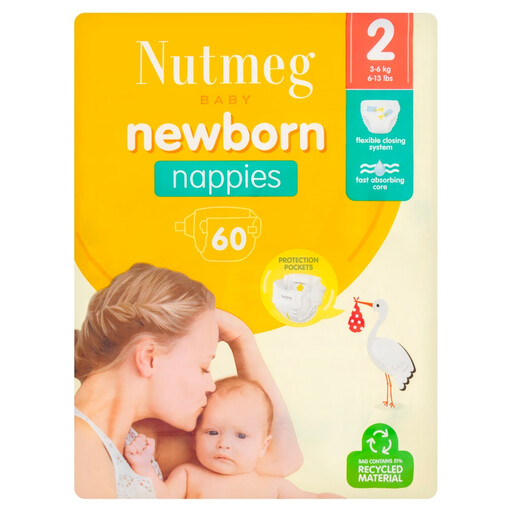
Why This Fits Their Persona: A practical pack size for families building a newborn changing station or comparing everyday size 2 nappies for regular home use.
The listed weight range is 4–8 kg, and the wetness indicator gives a visible changing prompt instead of relying on guesswork.
Fast-absorbing core, protection pockets, breathable materials and a 60-nappy pack.

Why This Fits Their Persona: Suitable for parents prioritising newborn-focused details, a larger pack and a navel-friendly shape for babies typically weighing 4–8 kg.
The product details state the size range and identify a wetness indicator, rather than leaving fit and change timing unclear.
Navel-friendly front, soft stretchy sides, Stop and Protect Pocket and a 76-pack format.
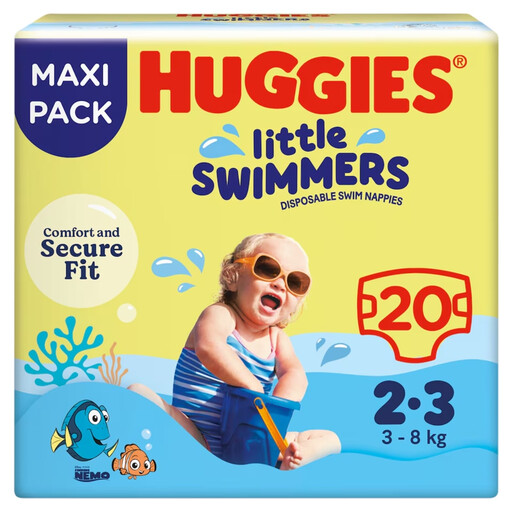
Why This Fits Their Persona: Designed for babies weighing 3–8 kg who attend swimming lessons, family pool sessions or water play in the UK.
Its water-resistant structure is intended for swimming, avoiding the mistake of using an ordinary daily nappy in the pool.
Stretchy side panels, adjustable tabs and leak guards for water activities; single-use only.
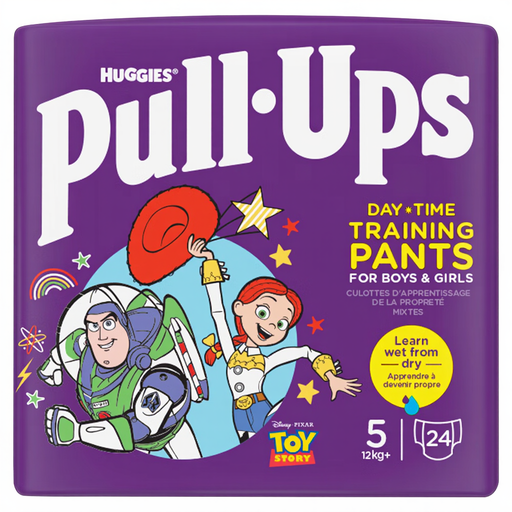
Why This Fits Their Persona: A daytime option for toddlers learning to pull clothing up and down and recognise when they may need the potty.
The product is labelled for daytime training and includes easy-tear sides, avoiding confusion with overnight training pants.
360-degree stretchy waistband, learning layer and graphics that fade when wet.
We have compiled a complete, real-time list of products that fully satisfy these strict selection criteria and UK safety regulations.
Buy enough for the first few days, but avoid overstocking one size. Newborns can move through size 1 and size 2 nappies quickly, and body shape differs between children. A smaller trial pack can help you check fit before purchasing a larger quantity.
Some products are specifically designed as overnight training pants, but daytime pull-ups may have different absorbency and coverage. Check the product description, weight range and stated use. Change the pants promptly if they are wet or soiled.
No. Swim nappies are designed for water activities and should not replace ordinary disposable baby nappies. Use a fresh swim nappy for each water session, remove it after swimming and dispose of it in household waste.