
24/7 Customer Support

Free returns

Same-day & Next-day Delivery

Quality Guaranteed

Unlock Your Welcome Offers: FREE Delivery | Up to 80% OFF | Free 30-day JoyPlus trial
Download the APP
A baby play mat can turn a hard floor into a more comfortable space for tummy time, crawling, building and quiet play. However, the cheapest-looking option is not always the most practical for a busy UK home, nursery or playroom. Before buying, check the material, actual coverage and cleaning requirements rather than relying on phrases such as “extra safe”, “premium” or “developmental”.
This guide explains the common buying traps, the specifications worth checking and our top recommendations for 2026 based on different household and usage needs.
A pack may contain several pieces but still cover only a small area. Six 12 × 12-inch tiles provide a compact surface for a corner, under a small activity station or beside a sofa. They will not create the same play space as a large foldable baby play mat.
Always calculate the assembled dimensions and coverage area. Consider whether your child will mainly sit in one place or move between crawling, rolling and standing activities.
Foam thickness, density and construction all affect how a mat feels under hands, knees and feet. A thin foam tile can be useful for basic cushioning, but it may feel less comfortable over hard flooring than a 1.5cm XPE crawling mat.
“Non-toxic” should also be treated as a product description, not a substitute for checking documentation. Look for clearly stated material information, age guidance and any relevant conformity or safety information supplied by the seller. For products used by babies, avoid mats with strong persistent odours, damaged surfaces or loose detachable parts.
Food spills, milk, washable paint and muddy socks are normal parts of family life. A surface that cannot be wiped easily may become inconvenient after only a few uses. Similarly, a large mat that cannot be folded or stored neatly may spend more time obstructing the room than providing useful play space.
A waterproof or water-resistant play mat is generally more convenient for wipe-clean maintenance, while interlocking foam floor mats can be separated for cleaning or stored in sections.
Common options include EVA foam, XPE foam and fabric-covered mats. EVA foam play mats are often supplied as puzzle-style tiles, allowing you to build a custom shape. XPE is commonly used in larger foldable mats, which can provide a continuous surface with fewer joins.
Check whether the product description states the material clearly, whether the surface is water-resistant and whether the texture is likely to be slippery on your flooring. An anti-slip texture can help the mat stay in place, but it does not remove the need to supervise young children.
For babies learning to crawl, sit or walk, cushioning is a practical consideration. The AIYAPLAY mat listed below has 1.5cm padding, while the supplied Benrita tile products use EVA foam sections. Thickness alone does not indicate overall performance, so also consider the firmness of the foam and the condition of the floor underneath.
Do not place a play mat over unstable rugs, wet flooring or surfaces with exposed sharp edges. A cushioned floor mat is intended to make play more comfortable; it should not be treated as fall protection.
Measure the intended area before ordering. A large mat may suit a children’s playroom, while smaller playroom floor tiles can be expanded gradually as your space or budget allows.
For homes with limited storage, a foldable baby play mat can be lifted away after playtime or taken to a relative’s house. Interlocking tiles offer a different advantage: you can assemble only the number required and replace or rearrange the layout more easily.
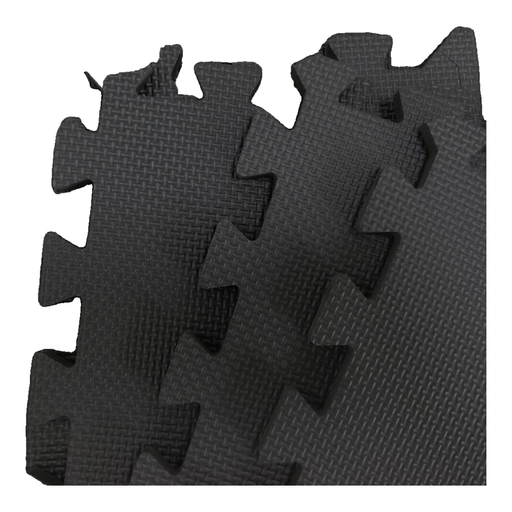
Why This Fits Their Persona: Six 12 × 12-inch black EVA foam tiles suit families creating a small play, reading or exercise area without committing to a large floor covering.
The tile count and individual dimensions are stated clearly, helping you judge the coverage before purchase rather than relying on pack size alone.
EVA foam construction; interlocking assembly; includes six squares and ten edge pieces.
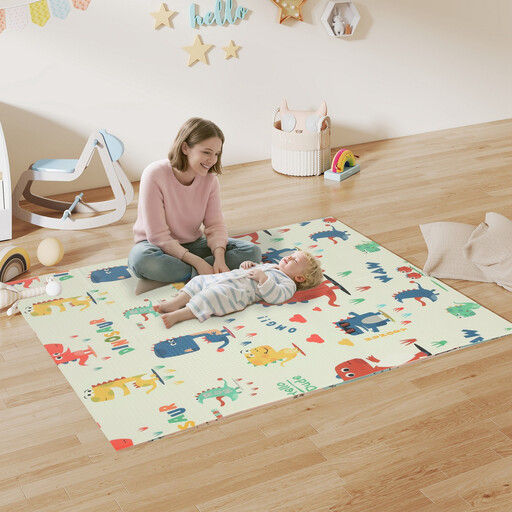
Why This Fits Their Persona: Families wanting a larger continuous surface for crawling, tummy time and indoor or outdoor activities may prefer its 2.57m² coverage and foldable design.
Its stated 177 × 146cm dimensions make the usable area easier to compare with your room, while the foldable format addresses storage concerns.
1.5cm XPE foam; reversible dinosaur designs; water-resistant surface; foldable construction.
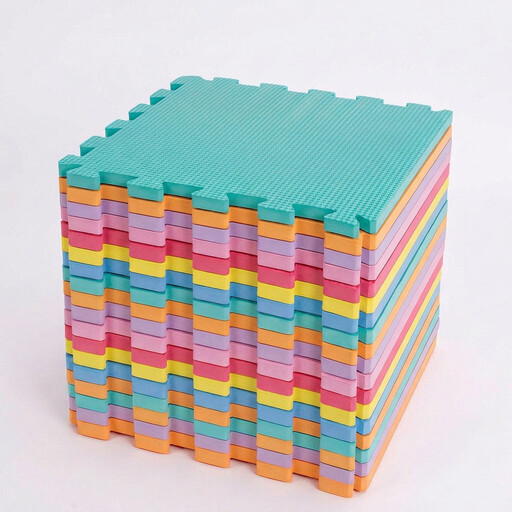
Why This Fits Their Persona: This larger colourful set is suited to playrooms, classrooms, nurseries or households that need wider coverage for active play and exercise.
The 18-piece configuration provides more scope for covering a larger area, while the interlocking format lets you adjust the shape to suit the room.
18 EVA foam squares; 27 edge pieces; suitable for playroom, classroom, yoga and exercise use.
We have compiled a complete, real-time list of products that fully satisfy these strict selection criteria and UK safety regulations.
There is no single thickness suitable for every room or activity. For crawling and early movement, compare the mat’s thickness with the hardness of the floor, its stability and how easily it can be stored. The AIYAPLAY model in this guide specifies 1.5cm padding; tile-based options may have different specifications, so check each listing.
Many foam play mats can be wiped with a damp cloth, but cleaning performance depends on the surface finish and construction. A waterproof play mat or water-resistant XPE surface is convenient for spills. Interlocking tiles can be separated, although liquid may collect around joins if the area is not cleaned and dried properly.
Lifespan depends on frequency of use, footwear, pets, storage and exposure to sunlight or moisture. Rotate heavily used areas where possible and replace a mat if the foam becomes brittle, the surface peels or joins no longer stay secure. Choosing a size and material suited to the room can reduce unnecessary wear and avoid an early replacement.