
24/7 Customer Support

Free returns

Same-day & Next-day Delivery

Quality Guaranteed

Unlock Your Welcome Offers: FREE Delivery | Up to 80% OFF | Free 30-day JoyPlus trial
Download the APP
A baby play mat can create a softer area for tummy time, crawling and floor-based play, but the wrong design may quickly become inconvenient. Parents and carers often discover that a mat is too small, difficult to clean or unsuitable for the room where it is needed.
Before buying, look beyond colourful prints and phrases such as “extra safe”. Check the actual dimensions, material information, cleaning method, age guidance and whether the mat suits your floor and routine.
A small mat may work for a young baby during supervised tummy time but leave little space once a child begins rolling, crawling and walking. Check the total coverage area rather than judging size from product photographs.
For comparison, a 177 x 146cm foldable mat covers approximately 2.57m², while a six-tile foam mat made from 12 x 12-inch squares covers a much smaller area. The right choice depends on available floor space and how freely the child needs to move.
“Foam play mat” describes a broad category. Tile thickness, foam density, surface texture and the way pieces connect can differ considerably. A thin tile may provide a little separation from a hard floor, while a thicker foldable mat may feel more cushioned during crawling and early steps.
No play mat removes every risk of falls. Use it on a level surface, keep it away from stairs and supervise children according to their age and abilities.
Spills can collect in tile joins, while fabric mats may absorb liquids. If you expect frequent food and drink mess, a waterproof crawling mat or water-resistant surface may be more practical. For any mat, check the care instructions and avoid harsh cleaning products unless the manufacturer permits them.
Look for clear material details, such as non-toxic EVA foam or XPE foam, and check the product documentation before purchase. “Non-toxic” is useful information, but it should not replace checking age suitability, warnings and safety markings.
For products intended to be toys, look for relevant UK information such as CE or UKCA marking where applicable, the manufacturer or importer details and age warnings. A play surface is not a substitute for a certified sleep product, and babies should not be left unattended on it.
Measure the intended area before ordering. Leave enough clearance around furniture and doors so the mat does not create a trip point. Compare:
Interlocking foam floor mats are useful when you want to expand or reshape a play area. A foldable baby play mat is generally more convenient when the mat needs to be stored or transported regularly.
A wipe-clean surface is valuable for nurseries, playrooms and homes where the mat is used daily. Foldable designs can be stored in a cupboard or taken to a relative’s home, while individual foam tiles are easier to replace or rearrange if one section becomes damaged.
For outdoor use, check that the product is described as suitable for indoor and outdoor play. Avoid leaving foam or fabric mats exposed to prolonged rain, damp or strong sunlight unless the care guidance specifically permits it.
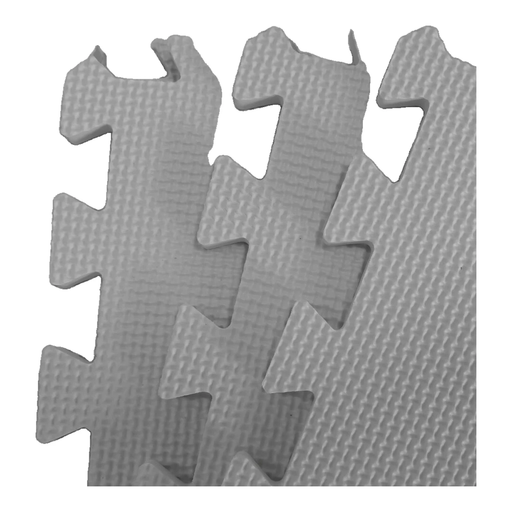
Why This Fits Their Persona: A compact starting point for a small flat, nursery corner or supervised tummy-time area. The neutral light grey colour can suit a range of home interiors.
The six separate 12 x 12-inch tiles make the coverage clear, avoiding vague sizing claims. The interlocking format can also be taken apart for storage.
Listed as non-toxic EVA foam; includes six square tiles and ten edge pieces; suitable for simple indoor assembly.
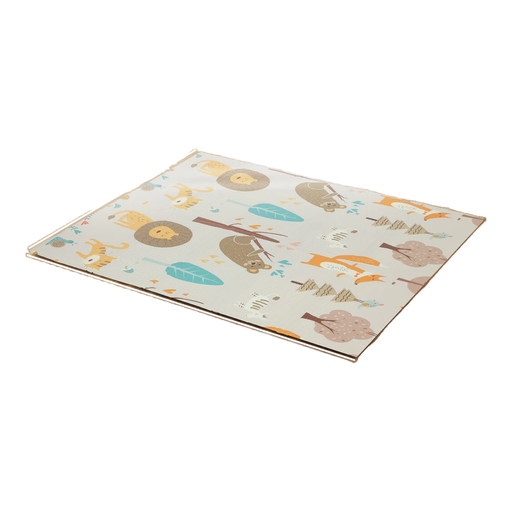
Why This Fits Their Persona: Suitable for families wanting a larger, more finished-looking surface for a playroom, lounge or occasional picnic.
The stated dimensions and 2.57m² coverage make the available space easy to assess. Its water-resistant surface addresses the common problem of difficult spill clean-up.
1.5cm XPE foam; reversible animal designs; foldable construction; listed for ages 0+ with a recommended age range of 0.5–6 years.
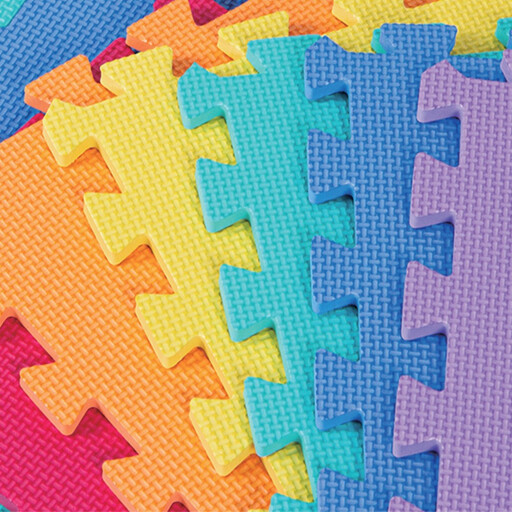
Why This Fits Their Persona: A practical option for a larger children’s playroom, nursery, classroom or mixed-use activity space where flexible coverage is important.
An 18-pack offers more pieces than a starter set, so buyers can plan a broader surface instead of joining several small mats unexpectedly.
Includes 18 12 x 12-inch squares and 27 edge pieces; colourful non-toxic EVA foam; pieces can be assembled and separated as needed.
Place the mat on a dry, level floor and connect every tile firmly. Check the edges after moving furniture or changing the layout. For a foldable mat, unfold it fully and allow creases to settle if required by the instructions.
Wipe spills promptly, especially around interlocking joins. Inspect regularly for torn foam, loose sections or damage caused by pets and toys. Replace a mat if it can no longer lie flat or if pieces become a choking hazard. Outdoor use should be followed by thorough drying before storage.
We have compiled a complete, real-time list of products that fully satisfy these strict selection criteria and UK safety regulations.
For tummy time, a compact mat may be sufficient. Once a child crawls or walks, a larger surface gives more room for movement. Measure the available floor area first and compare the product’s stated length, width and coverage in square metres.
They can be used as a cushioned play surface when assembled correctly and used with supervision. Check the material information, age guidance, warnings and relevant safety documentation. Inspect the joins and edges regularly, particularly if the child is likely to pull or chew the pieces.
Most water-resistant surfaces can be wiped with a soft cloth and mild soapy water, then dried fully. Always follow the product instructions. Avoid soaking foldable mats or allowing moisture to remain between foam tiles, as this can lead to odours and deterioration.