
24/7 Customer Support

Free returns

Same-day & Next-day Delivery

Quality Guaranteed

Unlock Your Welcome Offers: FREE Delivery | Up to 80% OFF | Free 30-day JoyPlus trial
Download the APP
Choosing a baby pushchair involves more than picking a colour or comparing a headline discount. The right model needs to fit your child’s age, your daily routes and your storage space. It should also be manageable on pavements, through doorways and in your car boot.
Marketing language can make this harder. A pushchair described as “travel-ready” may still be awkward to lift, while a “from birth” label may not tell you whether the seat reclines sufficiently for a newborn. Before buying, focus on the details that affect everyday use.
A lightweight baby stroller can be useful for public transport, stairs and car journeys, but weight is only one part of portability. Check the folded dimensions, carry handle, wheel design and whether the folded frame locks securely.
A compact pram that is light but difficult to fold may become frustrating after a few weeks. Also measure your boot, hallway cupboard or storage area before ordering.
A stroller from birth should offer an appropriate reclined position and a secure harness arrangement. Some models have a fully reclining seat, while others may require a carrycot or separate newborn insert. Always check the manufacturer’s age and weight guidance and follow the instruction manual.
Do not use a seat in an upright position for a newborn simply because the product listing states “0+”. The recline mechanism, head support and harness adjustment all matter.
A newborn-to-toddler stroller may be suitable for several years, but the maximum load varies significantly. One model may support up to 22kg, while another may be limited to 15kg. Remember that a basket also has its own capacity, and hanging heavy bags from the handle can affect stability.
Features such as UPF-rated canopies, suspension and storage are useful only when they suit your route. A large shopping basket may matter more to a city-based family than a decorative finish.
For regular car journeys or public transport, compare both the unfolded width and folded measurements. A pushchair around 6–8kg may be easier to lift, but a slightly heavier frame could offer a larger seat or greater usable storage.
An umbrella-fold pushchair can be convenient in narrow homes and car boots. Single-hand folding is also helpful when carrying a baby, although you should still confirm that all locking devices engage before placing your child in the seat.
Look for a multi-position reclining baby stroller if your child will nap while travelling. A flat or near-flat position can be useful for younger babies where the product instructions allow it. A five-point harness should be adjustable and used every time, with the straps fitted snugly without pressing uncomfortably.
Check whether the stated maximum weight refers to the child only and whether the storage basket has a separate limit. These figures are more practical than a general “long-lasting” claim.
Front swivel wheels can improve manoeuvrability in shops and on busy pavements, while lockable wheels may offer more control on uneven ground. Front and rear suspension can help reduce the effect of bumps, but no pushchair should be used for running, skating, stairs or unsafe slopes unless specifically designed for that purpose.
Look for clear warnings, operating instructions and relevant standards. Several models below are listed as meeting EN1888-1 & 2:2018 or EN1888 requirements. This should not replace checking the supplied instructions, harness, brakes, frame locks and wheels before every outing.
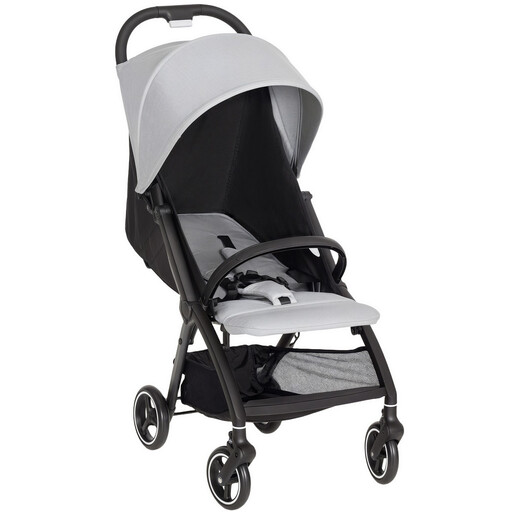
Why This Fits Their Persona: A practical choice for parents wanting a compact pram for everyday errands, car trips and urban pavements without carrying a bulky frame.
The listing gives a clear 6.3kg weight, 15kg maximum load, 40 x 40 x 74cm folded size and EN1888 information, making comparison easier.
6.3kg frame, one-hand fold, adjustable backrest and footrest, five-point harness and under-seat basket.
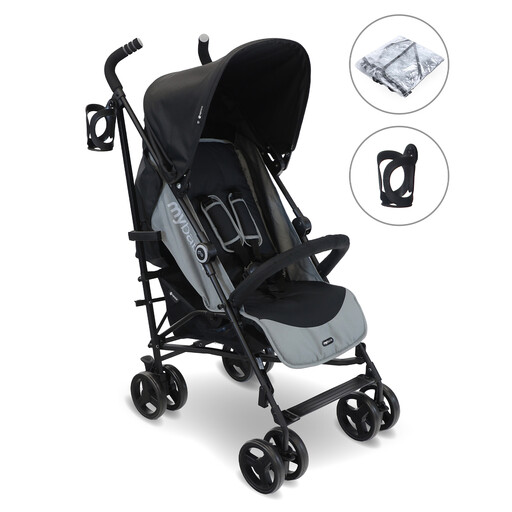
Why This Fits Their Persona: Suits parents who want a lightweight travel stroller with more comfort and weather features for frequent city and park use.
It combines an 8kg frame with stated unfolded and folded measurements, a fully reclining seat and a five-point harness, rather than relying only on style-led descriptions.
22kg maximum recommendation, umbrella fold, UPF50+ canopy, suspension, adjustable leg rest, raincover and cup holder.
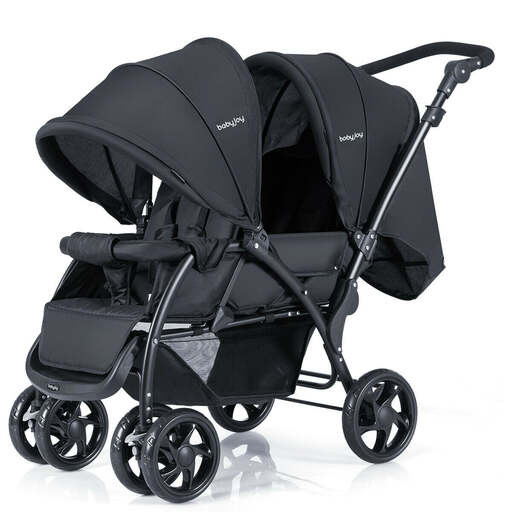
Why This Fits Their Persona: Designed for families travelling with two young children, including a baby from birth and an older child using the front seat.
The two-seat layout, separate 15kg limits and age guidance clarify how it is intended to be used, helping avoid buying a single pushchair for two children.
Front-and-rear seating, adjustable backrests and sunshades, linked rear brake, five-point belts and folding frame.
Accessories can improve convenience, but they should never compromise balance or ventilation. A stroller organiser is useful for nappies, keys and drinks; attach it securely and avoid overloading it. A portable pram fan should be used only under adult supervision, kept away from water and checked for damaged cables or batteries. Keep airflow gentle and do not leave it running unattended.
For families with an older toddler, a stroller board can extend the use of a single pushchair. Check the connector fit, weight limit and surface conditions, and keep a firm grip on the pushchair. A board is not suitable for running, skating or steep slopes.
A raincover, footmuff and cup holder may be included with some models, but confirm compatibility before adding universal accessories. Items attached to handles or canopies can affect stability if they are heavy.
We have compiled a complete, real-time list of products that fully satisfy these strict selection criteria and UK safety regulations.
Choose a model specifically labelled for newborn use and check that its seat reclines as instructed. A fully reclining seat may be suitable for some models, but always follow the product manual and harness guidance. If in doubt, look for a compatible carrycot or approved newborn accessory.
Lifespan depends on the frame, fabric, wheels, cleaning and frequency of use. Check the maximum child weight rather than relying on an age estimate. Inspect the brakes, folding lock, harness, wheels and suspension regularly, and stop using the pushchair if any safety-critical component is damaged.
Some are. For regular pavements and park paths, prioritise wheel suspension, reliable brakes, a supportive recline and a suitable canopy alongside low weight. If you frequently carry shopping or travel over uneven ground, compare basket capacity and wheel construction before choosing the lightest available model.