
24/7 Customer Support

Free returns

Same-day & Next-day Delivery

Quality Guaranteed

Unlock Your Welcome Offers: FREE Delivery | Up to 80% OFF | Free 30-day JoyPlus trial
Download the APP
A baby’s first toy is a special milestone. Among the many options available, the humble baby rattle remains a timeless choice for good reason. It’s more than just a noisemaker; it’s a foundational tool for development, helping your little one discover their senses and master new skills. But with so many styles, materials and features, choosing the right one can feel overwhelming.
As a Joybuy Product Recommendation Officer, my role is to help you navigate the market. This guide offers practical advice and highlights a few standout options to help you find a safe, engaging and developmentally appropriate rattle for your baby or as a thoughtful baby shower gift.
Before we look at specific products, here are a few key points to consider during your search. Focusing on these will help you select an infant toy that is both fun and beneficial.
In the UK, all toys sold must be UKCA or CE marked, indicating they meet stringent safety standards. Beyond this mark, check that the rattle is made from non-toxic, baby-safe materials. This includes BPA-free plastics, food-grade silicone, sustainably sourced wood with non-toxic finishes and soft fabrics with secure stitching. Ensure there are no small parts that could detach and pose a choking hazard.
A rattle’s effectiveness often depends on the baby’s age.
The material of a rattle influences its sensory properties, durability and cleaning method.
Based on our analysis of current market offerings, here are three distinct recommendations that cater to different preferences, from classic comfort to interactive play.
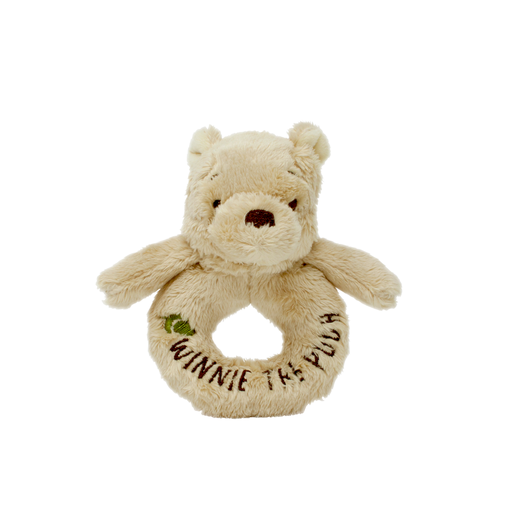
Why It Stands Out: This rattle captures the heart-warming charm of the classic Hundred Acre Wood stories. Made from exceptionally soft, textured plush, it is designed to be gentle on a newborn’s delicate skin. Its simple ring shape and gentle internal chime make it an ideal first toy for sensory discovery.
Pros:
Who is it for: Parents and gift-givers who value classic, heirloom-quality toys and are looking for a simple and safe soft rattle suitable from birth.
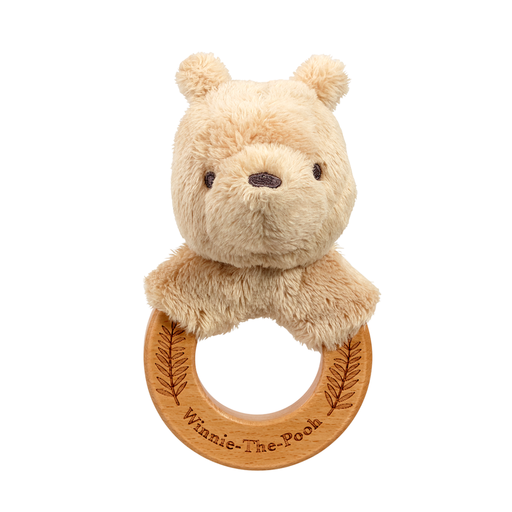
Why It Stands Out: This rattle beautifully blends natural materials with plush comfort. The smooth, solid ring is crafted from FSC-certified wood, offering a durable and sustainable choice. Paired with a soft Winnie the Pooh character head, it provides a rich tactile experience for curious babies.
Pros:
Who is it for: Families who prioritise sustainable and natural materials or those seeking a high-quality wooden baby rattle that combines modern aesthetics with classic character appeal.
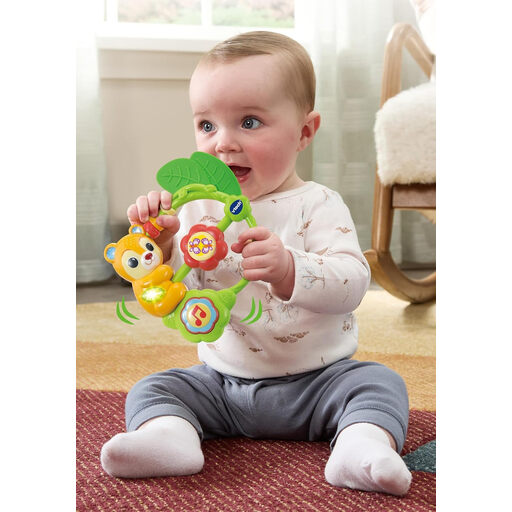
Why It Stands Out: This 2-in-1 toy is a complete sensory baby toy, merging a soft bear with an engaging electronic module. It is designed to teach cause and effect; shaking the bear activates sounds, while pressing the large heart button triggers lights and music. With over 40 songs, melodies and phrases, it offers extensive interactive entertainment.
Pros:
Who is it for: Parents looking for a highly interactive musical rattle to keep their baby engaged. It is particularly well-suited for infants aged 3 months and older who are ready for more dynamic play.
Our recommendations cover classic, sustainable and interactive choices, but the world of baby rattles is vast. If you're searching for different characters, materials or feature sets, we have a wider selection to explore.
Discover our full collection of baby rattles and find the perfect one for your little one.
While many rattles are marked as suitable from birth (0+ months), most babies will start to show interest and intentionally interact with a rattle at around 3 to 4 months of age. At this point, their grasping reflex develops and they begin to coordinate their hands and eyes. For newborns, a rattle can still be used by a parent to provide gentle auditory and visual stimulation.
Yes, provided they are well-made. A safe wooden baby rattle should be constructed from solid, natural wood that will not splinter. Any paints or finishes used must be certified non-toxic and baby-safe, as infants will inevitably put the toy in their mouths. Always check for the UKCA/CE mark to ensure it meets safety regulations.
Cleaning methods depend entirely on the material.