
24/7 Customer Support

Free returns

Same-day & Next-day Delivery

Quality Guaranteed

Unlock Your Welcome Offers: FREE Delivery | Up to 80% OFF | Free 30-day JoyPlus trial
Download the APP
Choosing baby sensory toys can be surprisingly difficult. Product pages often promise developmental benefits, multiple learning modes and long-term use, but attractive features do not always translate into practical everyday value.
For UK parents, carers and gift buyers, three common purchasing traps are worth avoiding:
Age guidance should be treated as a safety requirement, not merely a suggestion. Newborn-friendly rattles, crinkle toys and pram toys should be checked for loose threads, detachable clips, exposed filling and damaged seams.
For toys with batteries, such as baby musical toys and interactive plush products, check that the battery compartment is secure and that batteries are kept away from children. Products with small parts, including shape sorters and some electronic learning toys, may be unsuitable for children under three or under the stated minimum age.
A toy labelled for 6–36 months is not automatically suitable for a newborn. Match the product to your child’s current abilities, including reaching, sitting, mouthing and crawling.
Babies explore with their mouths, so look for clearly stated materials and smooth, well-finished surfaces. BPA-free silicone can be useful for teething toys for babies, while soft polyester or cotton can provide varied textures for tactile exploration.
Cleaning instructions matter just as much as material information. Some toys are surface-wash only; others may be dishwasher safe, while crochet products typically require cold hand washing. Avoid soaking electronic toys unless the instructions specifically allow it. Inspect toys regularly and stop using them if you notice splits, loose threads, damaged clips or weakened suction cups.
Toys sold in the UK should display appropriate safety information and relevant conformity marking. Check the packaging and product listing for details such as CE or UKCA marking, manufacturer information and warnings. These markings do not replace adult supervision or regular inspection.
The most useful developmental baby toys usually offer a clear reason for interaction: shaking creates a sound, pressing a button activates a light or matching two pieces produces a result. This cause-and-effect relationship can make play more understandable for young children.
Think about the setting too:
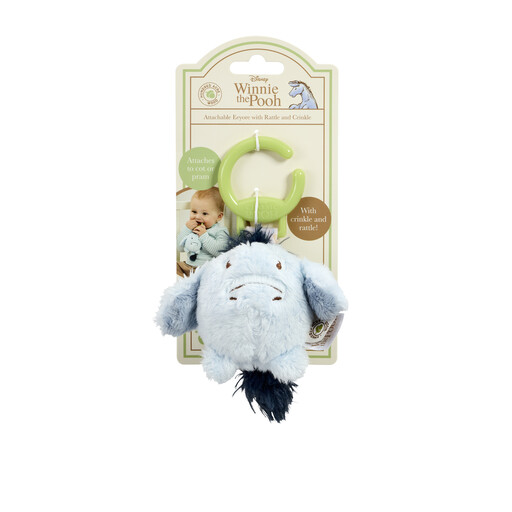
Why This Fits Their Persona: A straightforward first toy for families wanting tactile and auditory play without batteries. The plastic C-clip is designed for use on prams, car seats and cots.
It focuses on simple interactions rather than excessive electronic features. The surface-wash instruction is clear, helping buyers plan routine cleaning.
Suitable from 0+ months; combines crinkle fabric, a rattle and soft plush construction in a portable format.
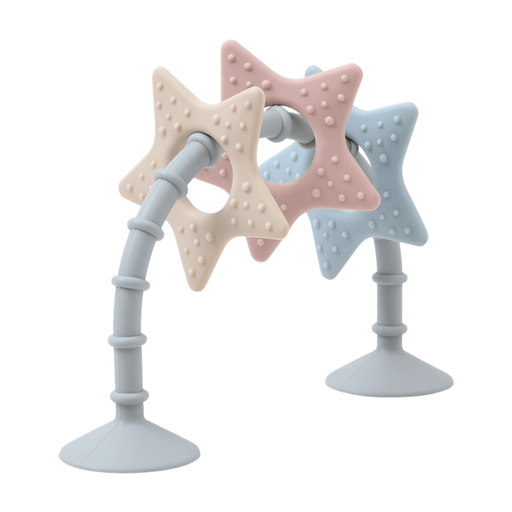
Why This Fits Their Persona: Suitable for households that value a reusable, multi-setting toy for highchairs, baths and travel, rather than a single-purpose nursery item.
Its three textured stars provide tactile play and teething use without relying on flashing lights or replaceable batteries.
Made from BPA-free, food-grade silicone; dishwasher safe and fitted with suction cups for smooth, non-porous surfaces.
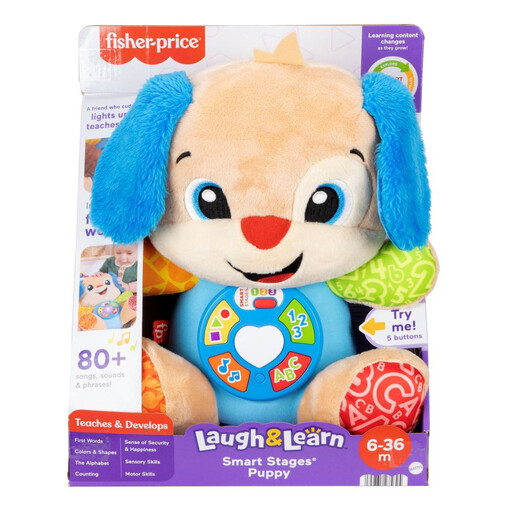
Why This Fits Their Persona: A choice for families looking for a soft interactive toy that can remain relevant from around six months through the toddler stage.
The three selectable learning levels make the age range more explicit than products with a vague “grows with your child” statement.
Five touch points, a light-up heart, 80+ songs, sounds and phrases and language selection in five languages.
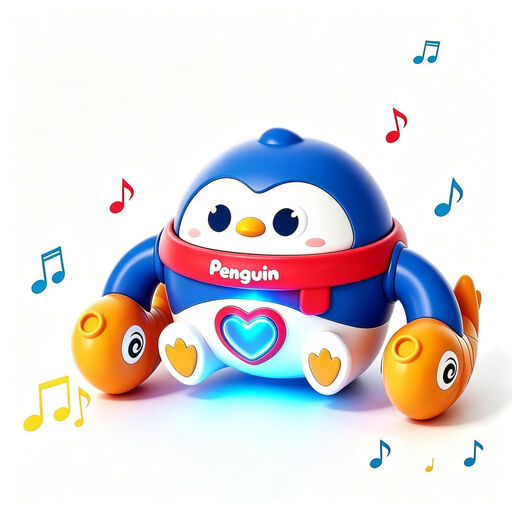
Why This Fits Their Persona: Designed for families seeking a more active option for floor play, visual tracking and supervised tummy-time sessions from six months.
Its purpose is clear: movement, sound and light encourage a child to follow the toy, rather than offering unrelated electronic functions.
360-degree rolling movement, a motion sensor and glowing heart; listed for children aged 6–36 months.
We have compiled a complete, real-time list of products that fully satisfy these strict selection criteria and UK safety regulations.
Keep play sessions supervised, particularly when a toy includes a clip, mirror, battery compartment, suction base or teething surface. Attachment toys should be removed if a baby starts trying to get onto their hands and knees, where stated in the instructions. Do not leave pram toys within reach in a cot unless the product guidance specifically permits it.
For electronic toys, factor in the cost and availability of replacement batteries. Remove batteries before cleaning and replace them if there is leakage or corrosion. For fabric rattles and activity books, follow the stated washing method rather than assuming they are machine washable.
Some are. Soft rattles, crinkle toys, high-contrast fabric books and attachable pram toys may be suitable from 0+ months, provided the product’s warnings are followed. Avoid toys with small parts or electronic features unless the minimum age clearly covers your baby.
Lifespan depends on construction, frequency of use and cleaning. Inspect toys before each session and replace any item with torn fabric, loose threads, damaged plastic, exposed filling or a faulty battery compartment. A toy’s age range indicates intended use, but it is not a guarantee of durability.