
24/7 Customer Support

Free returns

Same-day & Next-day Delivery

Quality Guaranteed

Unlock Your Welcome Offers: FREE Delivery | Up to 80% OFF | Free 30-day JoyPlus trial
Download the APP
Welcoming a new baby brings a whirlwind of joy, questions and a surprising amount of shopping. As you browse for essentials, you'll quickly encounter a vast world of baby sensory toys. With so many options, it can be challenging to know which ones are genuinely beneficial and which are just marketing noise.
This guide is designed to help new parents, family and friends cut through the clutter. We'll walk you through what to look for when choosing developmental toys for infants and share some of our top recommendations for 2026, helping you find a safe and engaging toy that supports a baby's early development.
Before diving into specific products, it’s helpful to understand the key features that make a sensory toy a worthwhile purchase. Keeping these points in mind will help you select items that are safe, practical and truly stimulating for a little one.
In the UK, all toys sold must be UKCA or CE marked, indicating they meet stringent safety standards. Always check the age recommendation on the packaging. For newborn toys (0-6 months), this is especially important. Look for toys made from non-toxic, baby-safe materials without small parts that could pose a choking hazard. Ensure there are no sharp edges and that any fabric components are securely stitched.
A good sensory toy engages more than one of a baby's developing senses:
Babies are not known for being tidy, so toys that are easy to clean are a must. Surface-washable or machine-washable options are always a practical choice. Additionally, consider where the toy will be used. Items with clips or straps, often called pram toys or cot toys, are highly versatile and can be attached to a pushchair, car seat or cot, ensuring your baby has a familiar source of entertainment on the go.
Based on our criteria of safety, sensory engagement and practicality, here are a few standout options that are popular with parents and make excellent baby gifts 0-6 months.
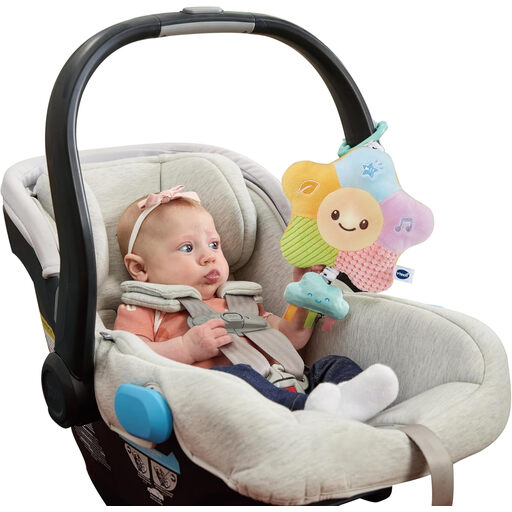
Why It Stands Out: This toy combines visual and auditory stimulation in a single, calming package. It’s designed not just for play, but to help soothe a baby, making it a valuable tool for naptime or bedtime routines. The versatile clip makes it a fantastic travel companion.
Pros:
Who is it for?: Parents looking for a multi-purpose toy that can both entertain and soothe their newborn. Its calming features make it a thoughtful baby shower gift.
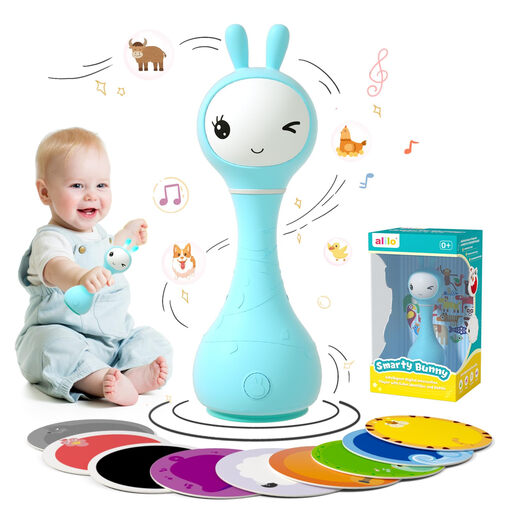
Why It Stands Out: This isn't just a simple rattle. The Smarty Bunny incorporates modern features like multiple music modes and a colour recognition function, offering layers of interaction that can grow with a child. Its light-up ears and easy-to-grip shape are designed specifically for infants.
Pros:
Who is it for?: Families looking for an interactive toy that goes beyond basic rattling. It’s a great option for engaging a baby from a few months old and introducing early concepts like colour.
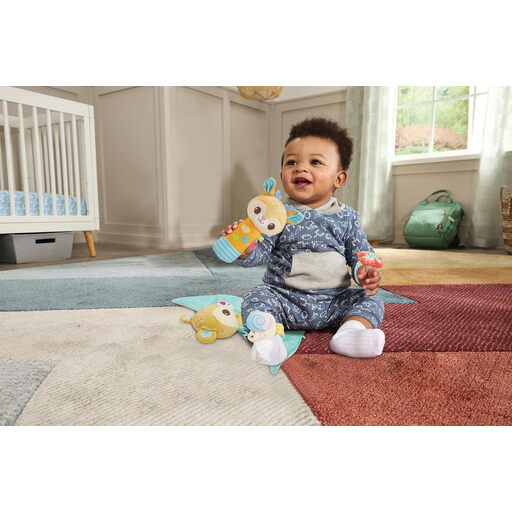
Why It Stands Out: For those who prefer classic, battery-free toys, this set from Vtech baby toys is an excellent choice. It focuses purely on tactile and auditory exploration with a soft comforter and three different animal rattles, each offering unique textures and sounds.
Pros:
Who is it for?: This set is a perfect first gift for a newborn. It’s ideal for parents who appreciate simple, effective toys that focus on fundamental sensory development without electronic features.
While these recommendations are excellent starting points for infants, a child's play needs change quickly as they grow. If you're searching for presents for a slightly older child or simply wish to browse a wider selection, you can explore our full range of toy gifts for toddlers.
1. What are the benefits of sensory toys for babies? Sensory toys are crucial developmental toys for infants. They help stimulate neural pathways in the brain, supporting the development of sight, hearing and touch. Interacting with these toys also helps babies practise fine motor skills, learn cause-and-effect (e.g., "when I shake this, it makes a noise") and can have a calming, soothing effect.
2. When should I introduce sensory toys to my baby? You can introduce simple sensory toys right from birth. For newborns (0-3 months), high-contrast cards, soft-textured comforters and toys with gentle sounds are ideal. As they grow and can grasp objects (around 3-6 months), you can introduce rattles, crinkly toys and items they can safely bring to their mouths for exploration.
3. How do I choose a safe sensory toy? Always check for the UKCA/CE mark on the packaging. Select toys that are labelled as suitable for your baby's age (e.g., "0m+"). Inspect the toy for any small, detachable parts, sharp edges or long cords. Choose items made from non-toxic, durable materials that can withstand being chewed on. Finally, regularly check toys for wear and tear.