
24/7 Customer Support

Free returns

Same-day & Next-day Delivery

Quality Guaranteed

Unlock Your Welcome Offers: FREE Delivery | Up to 80% OFF | Free 30-day JoyPlus trial
Download the APP
Introducing a cup can be a messy stage for babies and toddlers. A cup that leaks into a changing bag, has too many hidden parts or offers a flow your child cannot manage may quickly become an unused purchase. The right baby sippy cups should match your child’s age, drinking ability and everyday routine rather than simply promising to be “spill-proof”.
Terms such as no-spill sippy cups, “leak-proof” and “shake-proof” describe a design intention, not a guarantee for every situation. Valves can drip if they are incorrectly fitted, worn or not cleaned properly. Some cups also seal when upright but may release liquid when squeezed, thrown or carried upside down.
Before buying, check how the seal works, whether replacement parts are available and whether the manufacturer specifies limits such as no hot or carbonated drinks.
A soft spout, free-flow trainer, straw, 360° rim and open cup each require a different drinking action. A baby moving from breastfeeding or a bottle may initially find a free-flow spout easier, while another child may take naturally to a straw or open rim.
A cup that is too advanced can lead to frustration and spills. Conversely, relying on a restrictive valve for too long may not provide the open-cup practice you want. Age guidance is useful, but your child’s coordination and readiness also matter.
Hidden valves and narrow straws can retain milk or juice residue. A cup may have a dishwasher-safe body while still requiring a small brush or careful disassembly. For hygienic daily use, look for minimal parts, removable seals and clear cleaning instructions.
Avoid prolonged use with sugary drinks. The product warnings supplied with these cups also advise supervision, checking liquid temperature and inspecting components for damage before use.
Use the stated age range as a starting point. The products below cover options from 3 months+ through 18 months+, but a younger child may need help holding and tipping a cup.
Capacity affects portability and weight:
A larger cup is not automatically more practical if it becomes heavy for small hands.
Consider where the cup will be used. An open training cup may suit mealtimes at home, while a straw cup or valve-equipped option may be more convenient for travel.
Many BPA-free sippy cups use polypropylene, silicone or other food-contact plastics. BPA-free is a useful material specification, but it does not remove the need for proper cleaning and regular inspection.
Look for:
Some products state compliance with EN 14350, while others provide material and usage information without listing a specific standard on the product page. Always read the packaging and supplied instructions before use.
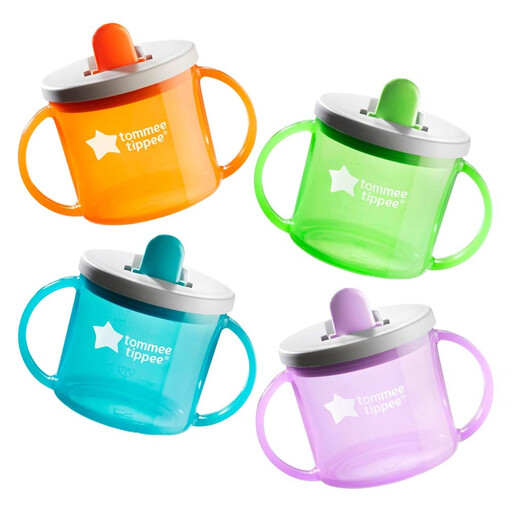
Why This Fits Their Persona: A compact first cup for families beginning weaning at home, at nursery or on short UK outings. Its handles are shaped for small hands and its 190ml capacity is manageable for early practice.
It uses a free-flow spout rather than an opaque, highly restrictive valve, so parents can introduce tipping and sipping gradually. The cup disassembles into two parts for cleaning.
Easy-grip handles; dishwasher and steriliser suitable according to the supplied directions; BPA, BPS, PVC, phthalate and nitrosamine-free materials are listed.
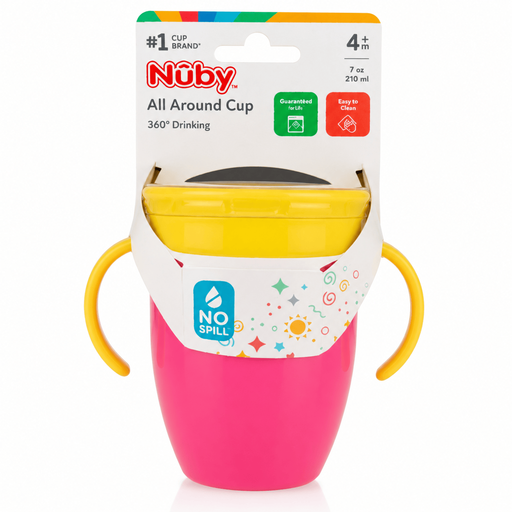
Why This Fits Their Persona: Suitable for parents who want a compact, spoutless design for practising rim drinking while keeping a familiar sealed format for everyday use.
The 360° rim opens when the child presses with their lips and closes when they stop sipping. Its minimal-part construction is designed to simplify cleaning.
BPA-free polypropylene, food-grade silicone and Tritan plastic are listed; a watertight cover helps protect the rim in a bag.
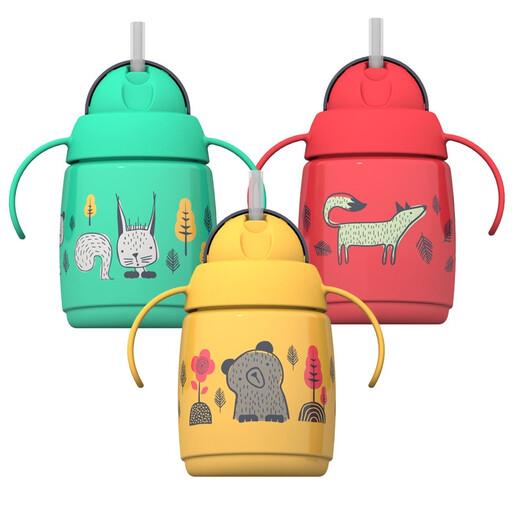
Why This Fits Their Persona: A practical choice for active babies using a pushchair, nursery bag or car journey, where drinking from different angles can be useful under supervision.
The weighted straw follows the liquid, while the flip cover protects it between uses. A cleaning brush is included to address residue inside the narrow straw.
300ml capacity; handles, measurement markers and dishwasher/steriliser-compatible detachable parts are listed.
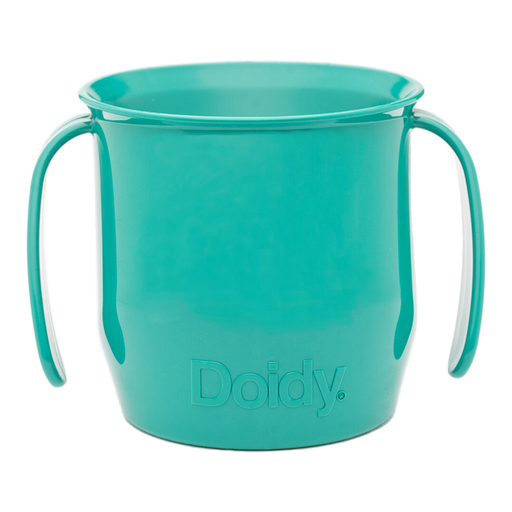
Why This Fits Their Persona: Families who prioritise direct open-cup practice at mealtimes may prefer this slanted design, using small amounts of liquid with close adult guidance.
There is no narrow spout or concealed drinking valve to clean. The open rim makes the drinking action clear, although it is less suitable for a spill-sensitive travel bag.
Two handles support small hands; the food-safe polypropylene cup is dishwasher safe according to the product information.
We have compiled a complete, real-time list of products that fully satisfy these strict selection criteria and UK safety regulations.
No. The age marking indicates the intended product stage, not that every child will be ready at exactly that age. Introduce small amounts, support the cup and watch how your baby manages the flow. The Doidy Cup is listed from 3 months+, while other options begin at 4, 6, 12 or 18 months+.
There is no fixed lifespan. Longevity depends on use, chewing, washing and exposure to heat. Inspect the cup before every use and replace it when any part is cracked, torn, warped or no longer fits securely. Silicone valves and straws may need replacing sooner than the main cup.
Open cups and designs with few parts are usually quicker to rinse. Straw cups can be convenient for travel but require thorough cleaning inside the straw; models supplied with a straw brush can make this task easier. Follow the manufacturer’s dishwasher and sterilisation instructions rather than relying on appearance alone.