
24/7 Customer Support

Free returns

Same-day & Next-day Delivery

Quality Guaranteed

Unlock Your Welcome Offers: FREE Delivery | Up to 80% OFF | Free 30-day JoyPlus trial
Download the APP
A baby sleeping bag can make bedtime simpler by replacing loose blankets with a wearable layer that stays in place. However, choosing one based only on a cute print or a low price can lead to poor fit, overheating, difficult nappy changes or a product that is quickly outgrown.
For UK parents, the most useful checks are TOG rating, fit, fabric, age range and zip design. This guide explains the practical details and highlights suitable options for different households.
A 1.0 TOG sleeping bag is not automatically suitable for every night. Room temperature, clothing underneath and your baby’s individual comfort all matter. A 0.5 TOG sleeping bag is a lighter option for warmer rooms, while higher TOG ratings are generally used in cooler conditions.
Always follow the manufacturer’s dressing guidance and check your baby regularly. A hot chest, flushed skin or sweating can indicate that your baby is too warm. Hands and feet may feel cooler without necessarily indicating a problem.
Age labels such as baby sleeping bag 0-6 months and baby sleeping bag 6-18 months are useful starting points, but babies grow at different rates. The neck and arm openings should be snug enough to prevent the bag from riding over the face, while the lower section should allow natural leg movement.
Do not buy a larger size for longer use if it creates excessive space around the neck or arms. Check the product’s size and weight information before ordering.
Muslin is typically lightweight and airy, but fabric descriptions can vary. Look for specific information such as single-layer cotton muslin, open-weave construction or a stated material composition. A cotton baby sleeping bag may feel comfortable, but the TOG rating and garment design remain important.
Organic claims should also be clearly supported. For example, the Earthly aden + anais option listed below is described as GOTS-certified organic cotton muslin and states conformity with BS EN 16781:2018.
TOG describes thermal resistance rather than a guaranteed sleeping temperature. As a practical comparison:
Never add loose blankets, quilts, pillows, cot bumpers or toys around a sleeping baby. Adjust the clothing worn underneath instead, following the product instructions.
A safe sleep baby bag should have:
Some products use a roomy sack shape to allow leg movement. This can be preferable to a restrictive cut, but fit must still be checked after every growth spurt.
A breathable baby sleeping bag made from cotton muslin can be useful for warmer rooms, while 100% cotton wearable blankets offer a more structured feel. Check the washing instructions, as regular washing is part of normal baby sleepwear use.
Features such as a bottom-opening or inverted zip can make night-time nappy changes easier. This may reduce the need to remove the entire garment, especially during frequent changes with a newborn.

Why This Fits Their Persona: A practical starting option for families preparing for a newborn, particularly where the bedroom is warm and a lightweight layer is needed.
The 0.5 TOG rating makes its intended lightweight use clear, helping avoid choosing a thick bag for a warmer room. The product is also listed as 100% cotton with a snug-fit warning.
Sleeveless design, inverted zip for nappy changes and a roomy sack shape for leg movement.

Why This Fits Their Persona: Suitable for parents seeking an organic cotton baby sleeping bag with clearly stated textile and safety information for the early months.
It specifies 100% organic cotton muslin, GOTS certification and conformity with BS EN 16781:2018, rather than relying only on a general “natural” fabric description.
Single-layer muslin, 1.0 TOG rating and an inverted bottom zip for easier nappy changes.
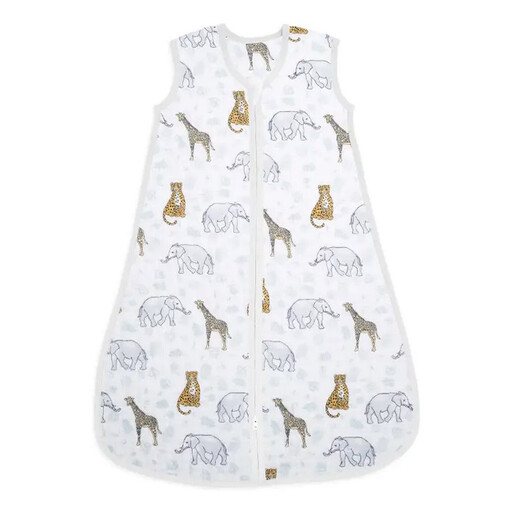
Why This Fits Their Persona: A useful match for families wanting a cotton baby sleeping bag for an older, more mobile baby, with regular washing and night-time changes in mind.
The 6-18-month sizing helps avoid using an unsuitable newborn cut, while the 1.0 TOG rating and stated room-temperature guidance provide clearer selection criteria.
100% cotton muslin, bottom-opening zip and machine-wash care instructions.

Why This Fits Their Persona: Designed for families moving beyond early baby sleepwear who want a lightweight wearable baby blanket with practical changing access.
Its 6-18-month size avoids automatically reusing a smaller newborn sleeping bag, and the product listing provides explicit guidance on fit, damage checks and avoiding extra bedding.
100% cotton construction, 0.5 TOG rating, sleeveless design and inverted zip.
Before first use, wash the garment according to its care label. Place your baby on their back in a clear cot or sleep space, with the head outside the bag and arms through the correct openings. Fasten the zip fully and check that the neck and armholes fit securely without being tight.
Use the sleeping bag over suitable sleepwear rather than adding loose bedding. Inspect seams, zips and fabric regularly, particularly after washing. Stop using it if it becomes damaged, stretched or too small. Do not use a bag if your baby can climb out of the cot, unless the manufacturer’s instructions specifically address the situation.
We have compiled a complete, real-time list of products that fully satisfy these strict selection criteria and UK safety regulations.
This depends on the room temperature, TOG rating and the manufacturer’s dressing chart. A short-sleeved or long-sleeved bodysuit may be appropriate under a lightweight bag, while cooler rooms may require additional sleepwear. Check your baby’s chest or back rather than relying on hands and feet alone.
It lasts until it is outgrown, damaged or no longer fits safely. A newborn sleeping bag may only be suitable for the first few months, while a 6-18-month design can cover a longer growth period. Check the neck, armholes and length after every noticeable growth spurt.
There is no universal running-cost difference because electricity, washing frequency, detergent and drying method vary. A washable cotton or muslin sleeping bag can be used repeatedly, but it still needs regular laundering. Following the care label and drying efficiently can help manage household costs.