
24/7 Customer Support

Free returns

Same-day & Next-day Delivery

Quality Guaranteed

Unlock Your Welcome Offers: FREE Delivery | Up to 80% OFF | Free 30-day JoyPlus trial
Download the APP
Navigating the baby food aisle can feel like a full-time job. Shelves are packed with colourful pouches and boxes, all promising wholesome, natural goodness for your little one. As a parent in the UK, you want convenient and healthy baby snacks, but it's easy to fall into common purchasing traps that are both costly and not ideal for your child's development.
As the Joybuy Product Recommendation Officer, my role is to help you see past the marketing clutter. Let's look at the most frequent pitfalls parents encounter and how to sidestep them.
no added sugar baby snacks, which is a great start. However, this label can be misleading. A product can be free from added table sugar but be loaded with fruit juice concentrates or purees. These are still "free sugars," the kind the NHS advises limiting in a child's diet. They can contribute to tooth decay and a preference for overly sweet foods.organic baby food is a positive step towards avoiding pesticides. But the organic label alone doesn't guarantee a snack is nutritionally superior. Some organic snacks are made from little more than refined corn or rice flour, offering minimal fibre or nutrients. It's what's in the ingredients list, not just the organic stamp, that counts.weaning snacks should match your baby's specific stage of development.To make a confident choice, focus on these two core parameters. They will empower you to look beyond the front-of-pack claims and understand what you are actually buying.
This is your single most important tool. Ignore the colourful characters and bold claims for a moment and turn the packet over.
healthy snacks for toddlers.The right texture is crucial for both safety and helping your little one develop their motor skills and chewing abilities.
baby finger foods, the priority is safety. Look for snacks described as "melty" or "dissolves in the mouth". Baby puffs and soft sticks are ideal 6 month baby snacks as they are easy to gum and break down quickly, minimising choking risk.snacks for 1 year old that still crumble easily but require a little more work from their gums and emerging teeth. This helps build jaw strength.Toddler snacks can have a chewier or crunchier texture. Soft oaty bars, wholegrain crackers and more robust baked snacks are excellent for this stage. They encourage proper chewing and are substantial enough for active toddlers.Based on these practical criteria, here are a few options that align with the needs of different parents and developmental stages.
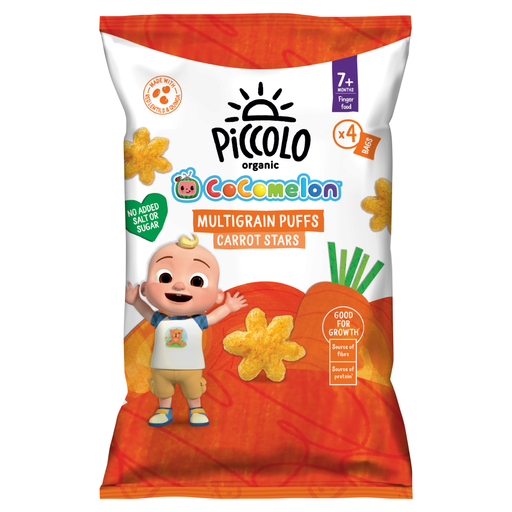
Why This Fits Their Persona: You're introducing first finger foods and safety is paramount. You want something organic, but also with more nutritional substance than a simple corn puff. These are designed for little hands and dissolve easily.
It sidesteps the "organic halo" trap by using red lentils and quinoa in its base, not just corn. This provides a source of protein and fibre, offering more nutritional value than many standard baby puffs.
The melt-in-the-mouth texture is ideal for babies from 7 months. It's baked, not fried and contains no added salt or sugar, making it a straightforward choice for health-conscious parents.
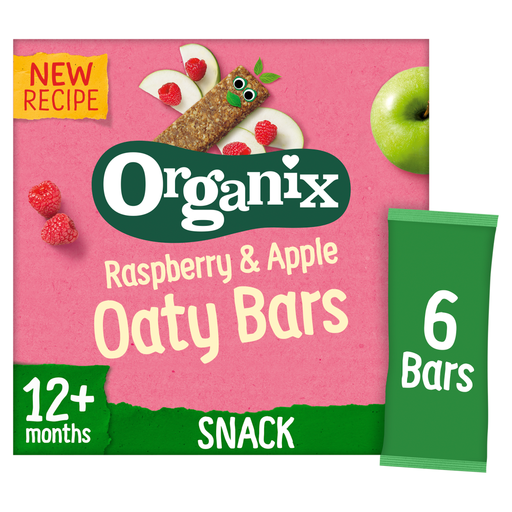
Why This Fits Their Persona: You have an active toddler and need convenient, substantial snacks for days out, nursery or playdates. You want something more filling than a puff, with the goodness of wholegrains.
While it uses fruit juice concentrate for flavour, its primary ingredient is 49% wholegrain oats. This high oat content provides fibre and sustained energy, moving beyond the simple refined flour base of less substantial snacks.
The soft, chewy texture is perfect for toddlers, and the individually wrapped bars are extremely convenient for on-the-go snacking. It's a classic example of a reliable `Organix snack`.
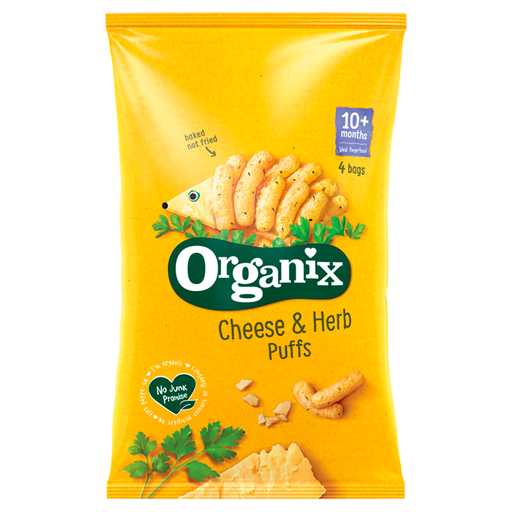
Why This Fits Their Persona: You want to introduce more savoury flavours to your baby's palate and move away from fruit-based snacks. Your little one is a confident eater (10+ months) ready for a light, puffy texture with a more complex taste.
This snack directly counters the hidden sugar trap by being savoury. It's flavoured with real cheese and herbs, not fruit concentrates, keeping the sugar content very low (1.8g per 100g).
It offers a gentle introduction to savoury flavours. The light, melty texture is appropriate for the 10+ month stage, helping to build chewing confidence without the risk of a hard, crunchy snack.
We have compiled a complete, real-time list of products that fully satisfy these strict selection criteria and UK safety regulations.
You can typically introduce baby finger foods once your baby is around 6 months old and has started the weaning process. They should be able to sit up unsupported and show an interest in food. Always start with snacks that have a very soft, melty texture to ensure they are safe for your baby to manage. And remember, always supervise your child while they are eating.
Organic baby food guarantees that the ingredients were grown without the use of synthetic pesticides and fertilisers, which many parents prefer. However, "organic" does not automatically mean "healthy." An organic biscuit can still be high in sugar, and an organic puff can still be low in nutrients. It's a good starting point, but you must still read the nutrition label to check for sugar, salt and the quality of the base ingredients.
The most effective way is to become an expert at reading the ingredients list. Look for terms like "juice concentrate," "syrup" or "fructose." A truly low-sugar snack will be made from just vegetables, grains and perhaps a small amount of whole fruit powder for flavour. Check the "of which sugars" value in the nutrition table; for savoury snacks, this should be very low. For fruit-based snacks, consider if the sugar is coming from whole fruit or concentrates.