
24/7 Customer Support

Free returns

Same-day & Next-day Delivery

Quality Guaranteed

Unlock Your Welcome Offers: FREE Delivery | Up to 80% OFF | Free 30-day JoyPlus trial
Download the APP
As a Joybuy Product Recommendation Officer, my role is to help you navigate the crowded aisles of baby and toddler snacks. The packaging is often bright and reassuring, but what’s inside can sometimes be a different story. Choosing the right baby snacks is about more than just keeping hunger at bay; it’s about supporting your little one’s development without falling into common purchasing traps.
Many parents find themselves overwhelmed by claims of "natural goodness" or "organic" ingredients, only to discover later that the product wasn't what they expected. Let's look at a few pitfalls to be aware of:
weaning snacks to crunchier toddler snacks needs to be managed carefully.organic baby food certification ensures ingredients are grown without certain pesticides, it doesn't automatically guarantee the product is low in sugar or nutritionally balanced. An organic biscuit can still be a biscuit with high sugar content.By understanding these points, you can become more discerning and choose snacks that are genuinely suitable for your child's needs.
To make a confident choice, focus on these three non-negotiable factors. They provide a clear framework for assessing any potential baby finger foods.
This is the most important check. When analysing the ingredients list, look for any form of added sugar, which can be listed as sucrose, glucose syrup or even concentrated fruit juice. For babies under 12 months, the NHS recommends avoiding foods with added sugar or salt altogether.
The right texture is crucial for safety and for helping your child develop motor skills.
snacks for 6 month old babies as they are gentle on the gums and minimise choking risk.Toddler snacks can be chewier or crunchier, encouraging jaw development. The shape should still be manageable for small hands to promote independent feeding.Always check the packaging for clear allergen labelling. Common allergens in snacks include milk, wheat (gluten), soya and eggs. Manufacturers are required to list these clearly. Pay close attention to "may contain" warnings if your child has a known allergy, as this indicates a risk of cross-contamination during production.
Based on the criteria of clear labelling, appropriate texture and sensible nutritional profiles, here are a few options matched to different parental needs.
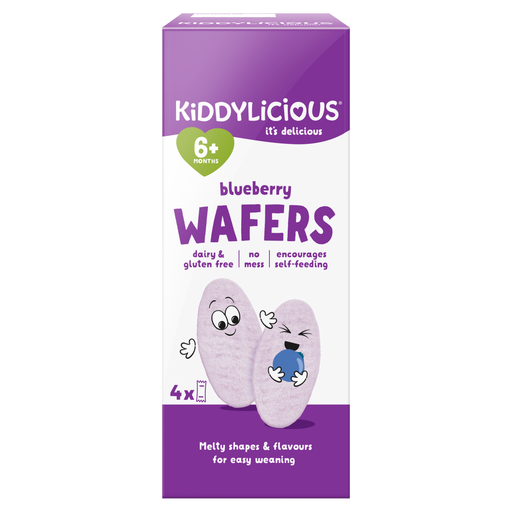
Why This Fits Their Persona: Ideal for parents introducing the very first finger foods. The focus is on safety, gentle ingredients and encouraging the first attempts at self-feeding.
It directly counters the "misleading texture" pitfall. The wafer is specifically designed to dissolve easily in the mouth, making it a suitable and gentle choice for a 6-month-old with few or no teeth.
Contains 0g of salt per 100g. The shape is perfectly sized for tiny hands to grasp, and the crumb-free texture means less mess to clean up.
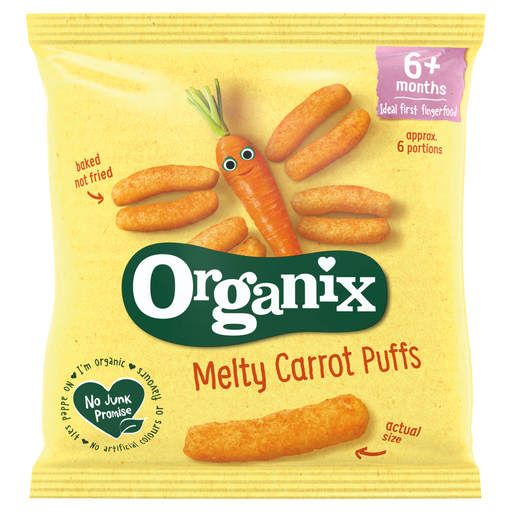
Why This Fits Their Persona: For parents who prioritise organic ingredients and a "clean" ingredients list with no artificial additives. This is a popular choice for those seeking `healthy baby snacks`.
This product avoids the "organic assumption" trap. It is not just organic, but also nutritionally sound, with no added salt and a low sugar content (5.9g per 100g, all naturally occurring).
These sticks are baked, not fried, and the chunky shape is designed to help babies practise their pincer grip, supporting motor skill development.
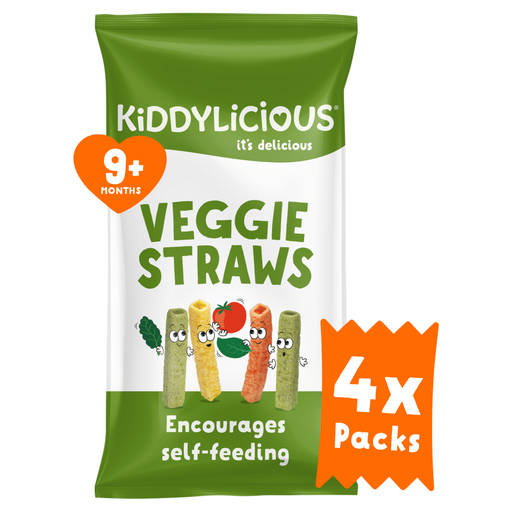
Why This Fits Their Persona: Perfect for busy parents with active toddlers who need convenient, mess-free snacks for days out, travel or simply to keep in the changing bag for emergencies.
The individually wrapped bags provide built-in portion control, preventing over-consumption. The savoury flavour also offers a welcome alternative to the many sweet snacks that fall into the "healthy halo" trap.
These `Kiddylicious snacks` are gluten-free and lactose-free, making them suitable for toddlers with sensitivities. The crunchy texture is satisfying for older babies and helps them practise chewing.
We have compiled a complete, real-time list of products that fully satisfy these strict selection criteria and UK safety regulations.
You can typically introduce first finger foods at around 6 months of age, once your baby can sit up with support and shows an interest in food. Start with soft foods that are cut into finger-sized sticks so your baby can hold them easily. Soft-cooked vegetables, pieces of banana and dissolvable wafers are excellent starting points.
While snacks made from 100% fruit are a better alternative to those with added sugars, they can still be very high in natural sugars. These sugars can contribute to tooth decay if consumed frequently. It's best to offer them in moderation, as part of a balanced diet that also includes savoury snacks and whole fruits and vegetables.
Always supervise your child while they are eating. A good rule of thumb for early weaning snacks is the "squish test" – if you can easily squash the food between your thumb and forefinger, it's likely soft enough for your baby. For any snack, check that it dissolves or breaks down easily in the mouth. Avoid hard, round foods like whole nuts, hard sweets and popcorn for young children.