
24/7 Customer Support

Free returns

Same-day & Next-day Delivery

Quality Guaranteed

Unlock Your Welcome Offers: FREE Delivery | Up to 80% OFF | Free 30-day JoyPlus trial
Download the APP
By Joybuy Product Recommendation Officer
Choosing baby soothers 0-6 months can look straightforward until you compare teat shapes, materials, shields, sterilisation methods and age labels. A newborn may accept one style but reject another, while a soother that looks attractive online may be awkward to clean or unsuitable for your preferred routine.
The following guide highlights common buying traps and explains which features matter when comparing newborn soothers, baby pacifiers and soothers 0+ months.
Age guidance is only a starting point. A Size 1 soother or 0-2-month design is generally made for smaller mouths, but babies can still prefer different shield sizes and teat shapes. A wide shield may feel less suitable on a very small face, while an extra-small design may be easier for a premature or very young baby to hold in place.
Check the stated age range, shield dimensions and whether the teat is round, anatomical or symmetrical rather than relying on the word “newborn” alone.
Round latex or silicone teats are often described as breast-like, and some may suit breastfed babies. However, no shape is accepted by every baby. Breastfeeding-friendly soothers should be introduced according to your feeding approach, and parents may need to try more than one shape.
A soother starter set containing different teats can be more practical than buying several identical packs before you know your baby’s preference.
Natural rubber latex soothers are soft and flexible, but they can change colour, expand or become sticky with use. Latex may also be unsuitable for babies with a known sensitivity. Silicone soothers are often chosen for their consistent shape and compatibility with some sterilising methods, but the care instructions still vary by product.
Always follow the individual manufacturer’s instructions. Do not assume that a microwave steriliser, dishwasher or boiling method is suitable for every teat.
For this age group, look for a clear 0-6 months, 0+ months or 0-2 months label. A shield should sit securely without pressing heavily on the nose or cheeks. Ventilation holes can help air circulate around the mouth and reduce moisture build-up, which may be useful for babies prone to damp skin around the lips.
Some MAM and BIBS designs use lightweight or curved shields. The practical benefit is reduced bulk and more airflow, but the final choice should be based on how your baby responds.
These descriptions refer to design features, not a guarantee of oral or dental outcomes. If you have concerns about feeding or oral development, speak with your midwife, health visitor or dentist.
Natural rubber latex provides a soft, flexible feel but should be kept away from prolonged heat and direct sunlight. Several BIBS latex products advise scalding rather than microwave sterilisation. Silicone is a useful alternative for families seeking a latex-free option, subject to checking the product label.
A travel case can simplify cleaning on trips. MAM newborn soothers, for example, include cases designed for microwave sterilisation with a measured amount of water. Check wattage instructions, cooling times and whether the case is intended for storage as well as sterilisation.
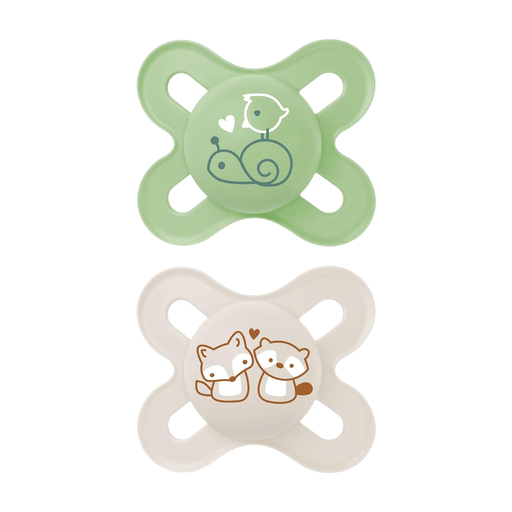
Why This Fits Their Persona: A practical twin pack for parents preparing a hospital bag or newborn changing station, with a steriliser and carry case included for home and travel use.
The extra-small shield and 0-2-month guidance make the age fit clearer than a generic “newborn” label.
Two silicone teats; included microwave steriliser and storage case.
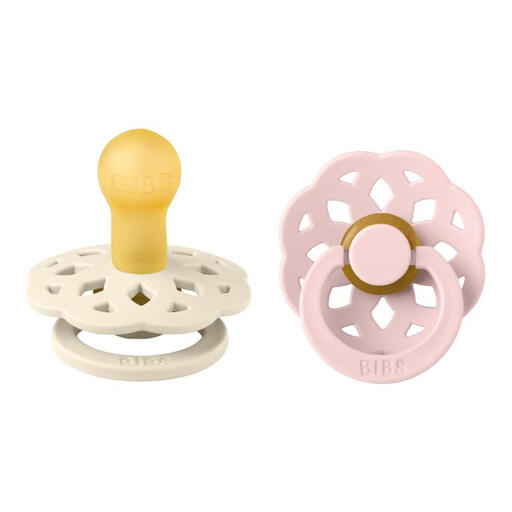
Why This Fits Their Persona: Suitable for parents who prefer a natural rubber latex teat and a classic round shield in a coordinated two-pack.
The material is clearly stated as natural rubber latex, with care instructions that do not suggest microwave use.
Round latex nipple; curved shield designed to reduce skin contact; BPA- and PVC-free construction.
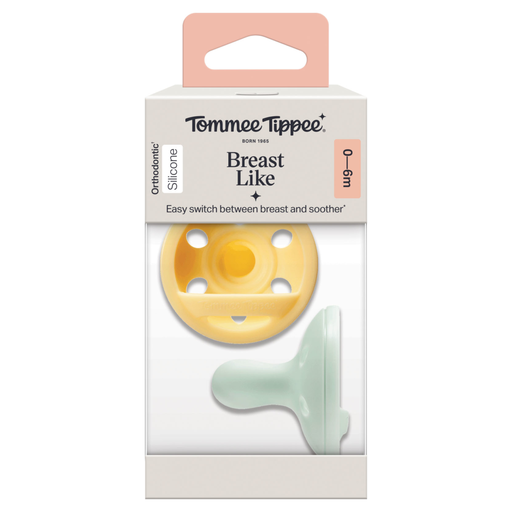
Why This Fits Their Persona: A useful option for families wanting one soother format across the early months, with broad sterilisation compatibility and a two-pack for rotation.
The 0-6-month range is explicit, while the care information lists steam, microwave, cold-water and dishwasher options.
Medical-grade silicone teat; symmetrical design; curved shield and flexible cleaning choices.
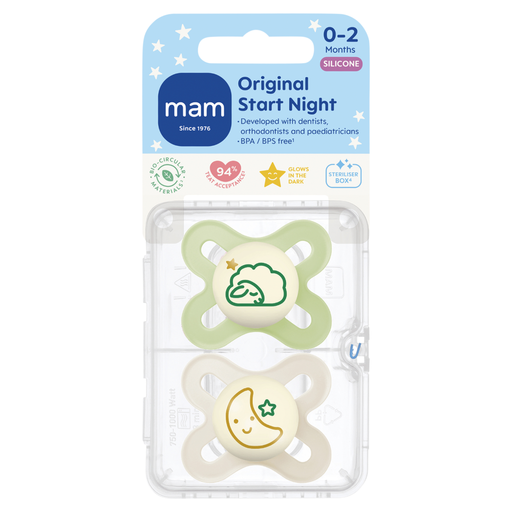
Why This Fits Their Persona: Designed for families who want to locate a soother in a dim nursery without switching on a bright light.
The glow feature has clear activation instructions, so it is not presented as a replacement for checking the baby or the product.
Glow-in-the-dark button; extra-small silicone design; self-sterilising travel box.
We have compiled a complete, real-time list of products that fully satisfy these strict selection criteria and UK safety regulations.
Some are marked 0+ months or from birth, while others begin at 0-2 or 0-3 months. Check the exact packaging and shield size. A soother intended for older babies may be unnecessarily large for a newborn.
A soother 2 pack provides one for use and one clean spare, which is useful for overnight feeds, pram trips and changing bags. If you are unsure which material or shape your baby will accept, a four-piece soother starter set can reduce the need to buy several separate packs.
Replace it at the first sign of damage and follow the manufacturer’s schedule. Latex often needs more frequent replacement because it can change shape or texture. Even an intact soother should not be kept indefinitely, as regular cleaning and use gradually affect materials.