
24/7 Customer Support

Free returns

Same-day & Next-day Delivery

Quality Guaranteed

Unlock Your Welcome Offers: FREE Delivery | Up to 80% OFF | Free 30-day JoyPlus trial
Download the APP
Choosing baby soothers 0-6 months can seem straightforward until you compare teat shapes, materials, shields, sterilisation methods and pack sizes. A newborn may accept one design immediately and reject another, so buying several identical soothers can become an unnecessary expense.
This guide explains the features that matter, the common marketing traps to avoid and which designs may suit different family routines.
“0+ months” or “newborn” indicates the intended age range, but it does not guarantee that every baby will find the teat comfortable. Size 1 designs are generally made for smaller mouths, while some newborn-specific soothers use an extra-small shield or lighter construction.
Check the complete product description rather than relying on the front of the packaging. For example, the MAM Start Night is specified for 0-2 months, while several Size 1 BIBS soothers are designed for 0-6 months.
The term orthodontic soothers usually describes a teat shape, often symmetrical or flatter, intended to sit in a particular way in the mouth. It is not a guarantee of a particular dental outcome. Shape, correct sizing, safe use and timely replacement all matter.
If your baby does not settle with a symmetrical teat, a round or anatomical alternative may be worth trying. This is one reason variety packs can be more practical than buying several identical dummies.
Natural rubber latex dummies and silicone baby soothers do not always have identical cleaning requirements. Latex can change shape, become sticky or weaken when exposed to heat, sunlight or prolonged use. Many latex designs should be scalded rather than placed in a microwave or dishwasher.
Silicone is generally more resistant to repeated sterilisation, but you should still follow the individual instructions. A convenient feature is only useful if it is compatible with the teat material.
Look for a clearly stated age range such as 0-3 months, 0-2 months or 0-6 months. The shield should sit comfortably without pressing heavily against the nose, cheeks or chin. Ventilation holes help air circulate around the mouth and can reduce moisture build-up.
For very small newborns, an extra-lightweight one-piece design may be easier to keep in the mouth. For older babies within the 0-6-month range, a standard Size 1 shield may provide a more familiar fit.
A soother multipack containing different shapes can reduce the risk of paying for a full pack that your baby refuses.
Natural rubber latex dummies are soft and flexible, which some babies may prefer. However, latex requires regular inspection and usually needs more frequent replacement. It can also cause irritation or an allergic reaction in sensitive individuals.
Silicone baby soothers offer a consistent texture and are often easier to clean. Silicone does not have the same natural rubber properties, so it may feel firmer to some babies. If latex sensitivity is a concern, choose a silicone option and monitor your baby’s skin and comfort.
For products sold in the UK, check the stated compliance information. EN 1400 is the European safety standard commonly associated with soothers, while EN 12586 applies to soother holders and clips. These standards do not replace the need for inspection and supervision.
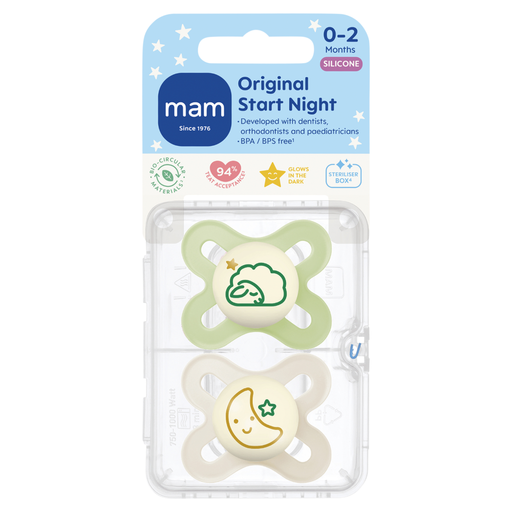
Why This Fits Their Persona: A practical newborn option for parents who want one compact design with a spare for night-time or changing-bag use.
Its extra-small, lightweight format is clearly specified for 0-2 months, avoiding a vague newborn label. The included case also supports the stated three-minute microwave sterilisation process.
Glow-in-the-dark button; SkinSoft silicone symmetrical teat; self-sterilising travel box.
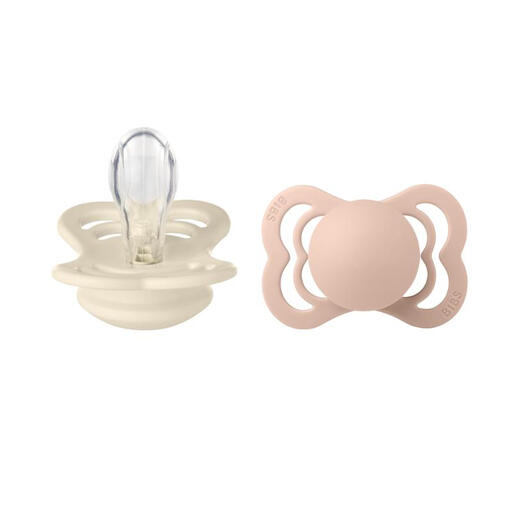
Why This Fits Their Persona: Suits parents prioritising a silicone teat, modern shield design and a two-piece rotation for home and outings.
The product specifies its material, Size 1 age guidance and ventilation openings, making it easier to compare with latex alternatives.
Food-grade silicone teat; symmetrical shape; wide shield with ventilation holes.
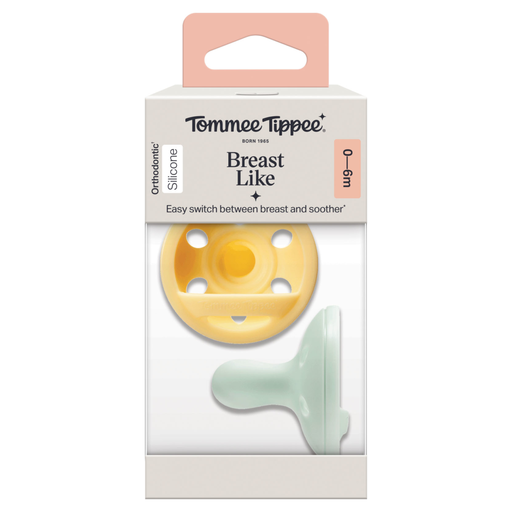
Why This Fits Their Persona: Designed for families moving between breastfeeding, bottles and soothers who want a flexible cleaning routine.
Its care instructions state compatibility with steam, microwave and cold-water sterilisation, unlike many natural rubber latex dummies.
Medical-grade silicone teat; symmetrical design; shield shaped to allow airflow around the face.
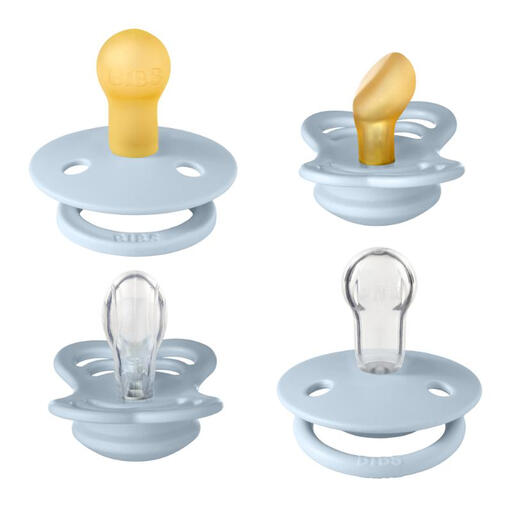
Why This Fits Their Persona: A useful starting point when you do not yet know whether your baby prefers latex or silicone, or a round, anatomical or symmetrical teat.
It avoids committing to one material or shape before you understand your baby’s preference, reducing the chance of unused multi-packs.
Four Size 1 soothers; three teat shapes; latex and silicone options in one collection.
We have compiled a complete, real-time list of products that fully satisfy these strict selection criteria and UK safety regulations.
Before first use, sterilise each soother according to its instructions. Then:
Glow-in-the-dark soothers can be useful during night feeds, but they still need charging according to the instructions, usually by exposure to daylight or a lamp. They should not replace safe supervision or routine inspection.
Many are designed from birth, but always check the stated age and size. A 0+ label is not the same as a specifically extra-small 0-2-month design. If your baby was premature or has particular feeding needs, ask a midwife or health professional about suitable products.
Replacement depends on the material and the manufacturer’s instructions. Latex often needs replacing every four to six weeks, while some silicone products specify one to two months. Replace any soother immediately when you notice damage, stickiness, enlargement or discolouration.
The purchase price is only one part of the cost. Latex may need more frequent replacement and has stricter heat-care requirements. Silicone can be convenient for families using regular steam or microwave sterilisation, but the correct choice depends on your baby’s preference and the product’s care instructions.