
24/7 Customer Support

Free returns

Same-day & Next-day Delivery

Quality Guaranteed

Unlock Your Welcome Offers: FREE Delivery | Up to 80% OFF | Free 30-day JoyPlus trial
Download the APP
Choosing baby soothers 0-6 months can seem straightforward until you compare teat shapes, materials, shields and sterilisation instructions. Newborn soothers are not interchangeable: a teat that suits one baby may be rejected by another, while an attractive feature may create extra cleaning or replacement requirements.
This guide explains the practical details to check before buying baby dummies, infant soothers or soother multipacks, with options for breastfeeding families, night-time use and parents who are still discovering their baby’s preference.
Age labels are useful, but they are only a starting point. A 0+ months label does not guarantee that the shield will suit every newborn’s face or that the teat will stay comfortably in the mouth. Check the stated age range, shield size and overall shape. Some products are designed specifically for 0-2 or 0-3 months, while others cover the broader 0-6 month stage.
Silicone soothers are generally easy to clean and may be suitable for boiling, steam or microwave sterilisation, depending on the product instructions. Natural rubber latex soothers feel soft and flexible, but they can be affected by heat, sunlight and prolonged storage. They may also cause irritation in babies with a latex sensitivity.
The important point is not to treat silicone and latex as care-equivalent. Always follow the instructions supplied with the individual product.
A glow-in-the-dark handle can make glow-in-the-dark soothers easier to locate during night feeds, but it needs to be charged according to the instructions and is not a substitute for safe supervision. A sterilising carry case can be useful for travel, but only if your microwave setup and cleaning routine make it practical.
Likewise, buying a large pack of one style may be wasteful if your baby has not yet shown a preference. Soother trial sets can offer a more measured way to compare shapes and materials.
For babies aged 0-6 months, look for a clearly stated Size 1 or equivalent age range. The main teat shapes include:
If you are looking for soothers for breastfed babies, remember that individual acceptance varies. Some babies move easily between breast, bottle and a soother, while others prefer one particular shape or material. If breastfeeding is being established, consider discussing dummy use with your midwife or health visitor.
Common choices include food-grade silicone and natural rubber latex. Silicone is synthetic, smooth and usually consistent in shape. Latex is naturally flexible and soft, but it can change over time and needs careful inspection.
Check the product listing for the teat and shield materials, as they may differ. Parents concerned about latex sensitivity may prefer a silicone option. Avoid dipping any soother in sugar, honey, medicine or other sweet substances, as this can damage teeth and create additional safety concerns.
A shield should be large enough to remain outside the baby’s mouth and include ventilation openings. These openings allow airflow around the mouth and may help reduce moisture accumulation, although they do not eliminate the need for regular cleaning and skin care.
Look for clear safety information and conformity with EN 1400, the European standard covering soothers for babies and young children. Before each use, pull the teat gently in all directions and discard the soother immediately if it is cracked, sticky, enlarged, torn or weakened. Never attach a cord or ribbon around a baby’s neck; use only a suitable soother clip that complies with relevant safety requirements.
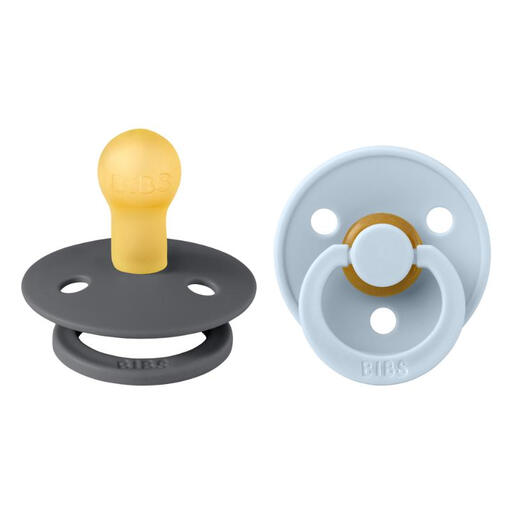
Why This Fits Their Persona: A straightforward two-pack gives new parents one soother for home and one for a changing bag, with a round latex teat and ventilated shield.
The listing clearly identifies natural rubber latex, so parents can account for latex sensitivity and avoid applying silicone sterilisation methods.
Round cherry-shaped teat; two-pack format; outward-curved shield with ventilation openings.
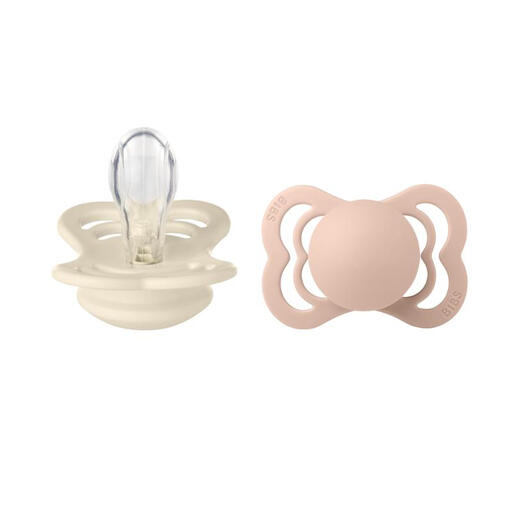
Why This Fits Their Persona: Suitable for parents who prefer a symmetrical silicone teat, a modern matt finish and generous shield ventilation for everyday use.
The product specifies food-grade silicone and a polypropylene shield, helping shoppers compare materials rather than relying only on appearance.
Symmetrical silicone teat; large ventilation holes; stated compliance with EN1400+A2.
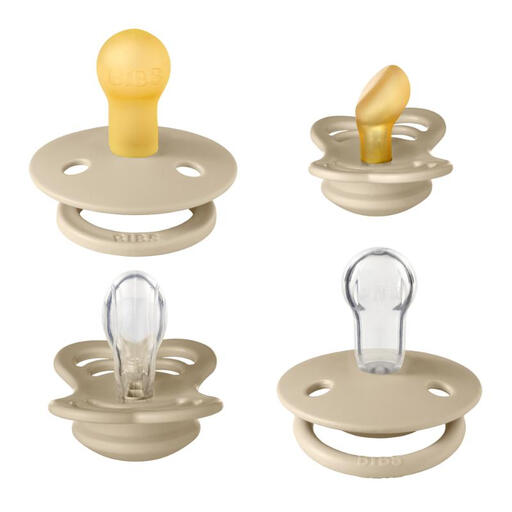
Why This Fits Their Persona: Useful for families who want to compare several options before committing, especially when buying newborn soothers for the first time.
Instead of buying several full packs that may be rejected, this set contains different teat shapes and both silicone and latex materials.
Four-piece discovery format; round, anatomical and symmetrical shapes; ventilation openings.
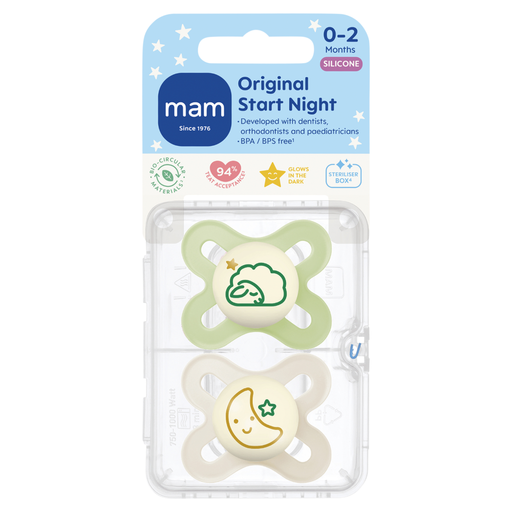
Why This Fits Their Persona: The extra-small shield, glow feature and included self-sterilising travel box suit parents managing frequent night-time soothing and travel.
The glow function is paired with clear sterilisation instructions, so convenience does not replace routine inspection and cleaning.
Designed for 0-2 months; glow-in-the-dark button; microwave sterilising case.
We have compiled a complete, real-time list of products that fully satisfy these strict selection criteria and UK safety regulations.
Before first use, sterilise each soother according to its material and the manufacturer’s instructions. For daily care, wash with warm soapy water, rinse thoroughly and allow it to air dry. Some silicone products are suitable for microwave sterilising, whereas natural rubber latex may require scalding only.
Inspect the teat before every use. Replace it at the first sign of weakness or damage, and follow the stated replacement guidance. Many products recommend replacement after four to six weeks, while some MAM products specify one to two months. A soother should never be used as a teether, toy or chewing object.
A two-pack is a practical starting point: one can remain at home while the other is kept in a changing bag. If your baby is undecided about shape or material, a four-piece soother trial set may reduce the risk of buying several rejected multipacks.
Silicone soothers generally offer more flexible sterilisation options, but you must still follow the individual instructions. Latex soothers need more careful handling because heat, sunlight and wear can affect the material. Families managing a known or suspected latex sensitivity should choose a clearly labelled silicone option and seek appropriate healthcare guidance if irritation appears.
Use a soother only as directed and under appropriate adult supervision. Never attach it with a cord or ribbon, and inspect it regularly. Follow current NHS advice on safer sleep and speak to your midwife or health visitor if you need personalised guidance.