
24/7 Customer Support

Free returns

Same-day & Next-day Delivery

Quality Guaranteed

Unlock Your Welcome Offers: FREE Delivery | Up to 80% OFF | Free 30-day JoyPlus trial
Download the APP
Choosing baby soothers 6+ months can seem straightforward until you compare teat shapes, materials, age ranges and cleaning instructions. A dummy that works well for one baby may be rejected by another, while an attractive design may not suit night-time use or sensitive skin.
This guide explains the features worth checking before buying, highlights common purchasing traps and matches several options to different family needs.
Age labels are useful, but they are not interchangeable across manufacturers. A size 2 soother may be intended for babies from six months, while a size 3 may be designed for toddlers aged 18 months and over. Using the wrong size can make the teat feel unfamiliar or uncomfortable.
Always check the manufacturer’s stated age range rather than relying only on the appearance of the dummy.
Natural rubber latex and silicone have different characteristics rather than one being universally preferable.
Marketing terms such as “skin-like” or “breast-like” describe design intent and feel; they do not guarantee that a baby will accept a particular dummy.
A glow-in-the-dark dummy can be useful during night feeds or resettling, but it normally needs exposure to a lamp or daylight first. It is not a substitute for keeping a clean spare nearby.
Likewise, a travel steriliser box is practical for some families, but it only helps if you are comfortable using a microwave and follow the stated water quantity, wattage and cooling instructions.
Round cherry-shaped teats, symmetrical teats and flat-drop teats each offer a different feel. A symmetrical or “any way up” design is easier to position, particularly when a baby replaces the dummy independently.
Some orthodontic soothers have a flattened or flexible teat intended to support a more natural mouth position. This is a design feature, not a medical guarantee. If you have concerns about teeth, jaw development or prolonged dummy use, ask your health visitor or dentist for individual advice.
Families combining breastfeeding and bottle-feeding may wish to compare a breastfeeding-friendly dummy with a round teat. However, acceptance varies from baby to baby, and introducing a soother should fit your feeding plan.
Look for a curved shield with generous ventilation holes. These features allow air to circulate around the mouth and reduce the amount of plastic resting against the skin.
For babies prone to redness or moisture around the mouth, consider soothers for sensitive skin with a lightweight shield, large air openings and minimal contact. No design can guarantee that irritation will not occur, so clean and dry the area regularly and stop using a product if your baby develops a reaction.
Look for clear material information, such as food-grade polypropylene, BPA-free silicone or natural rubber latex. Products sold in the UK should be supplied with appropriate safety information; many of the options below state compliance with EN 1400+A2 or EN 1400 requirements.
Before every use:
Many latex products recommend replacement every four to six weeks, while several silicone products advise replacement every one to two months. Always follow the instructions supplied with the specific product.
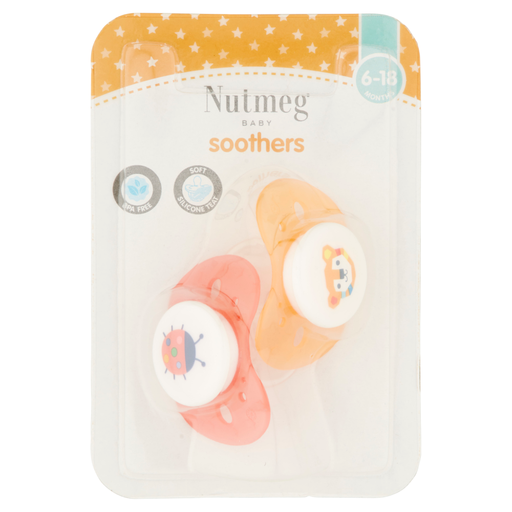
Why This Fits Their Persona: A practical two-pack for families wanting an everyday spare for the changing bag, nursery or home. The colours are assorted, so the exact shades may vary.
The stated 6–18-month range helps avoid buying an unsuitable toddler size, while the BPA-free silicone and EN 1400 compliance information provide clear selection points.
Two soothers per pack; top-rack dishwasher-safe and suitable for sterilisation according to the product instructions.
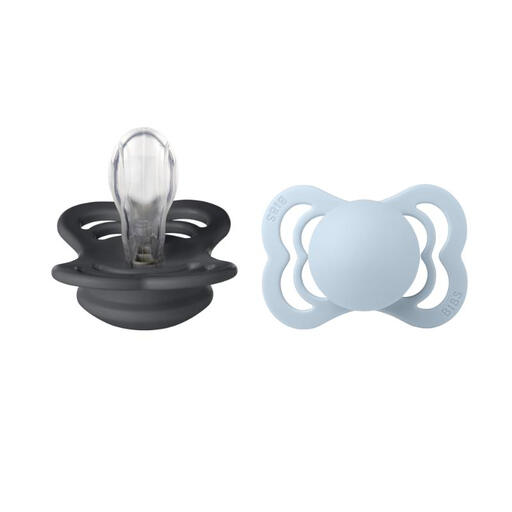
Why This Fits Their Persona: Suitable for parents who prefer a transparent, food-grade silicone teat with a minimalist shield and coordinated two-pack colours.
Its symmetrical flat-drop teat does not depend on one “correct” orientation, and the butterfly shield includes large ventilation openings.
Food-grade silicone teat; stated BPA-, PVC- and phthalate-free materials; made in Denmark.
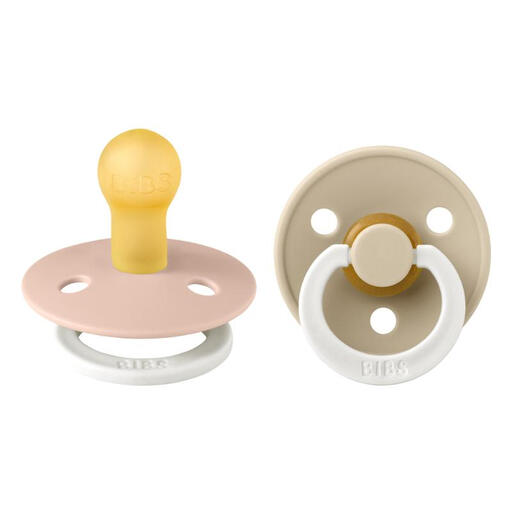
Why This Fits Their Persona: The round natural rubber latex teat is designed to provide a familiar breast-like shape, while the glow handle can help locate the dummy during night-time settling.
The handle should be exposed to light for several seconds before bedtime, making the night feature practical rather than relying on an uncharged glow.
Two-pack; curved shield with air holes; stated BPA-, PVC- and phthalate-free materials.
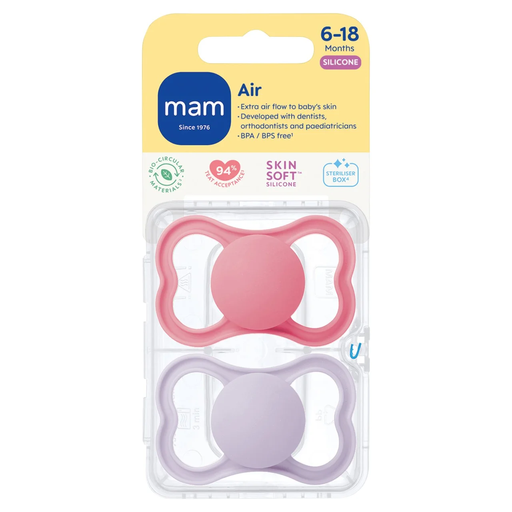
Why This Fits Their Persona: Designed for older infants with extra-large shield openings, making it a practical option where airflow and reduced skin contact are priorities.
The design addresses the common issue of a shield sitting closely against damp skin. The included box also supports regular cleaning when travelling.
Soft silicone teat; 6–18-month sizing; self-sterilising travel box using water and a microwave.
We have compiled a complete, real-time list of products that fully satisfy these strict selection criteria and UK safety regulations.
A 2-pack of baby dummies is a sensible starting point: one can stay at home while the other is kept in a changing bag or used as a clean spare. Families using a dummy overnight may prefer more spares, particularly during travel or nursery days.
Silicone is usually smooth and straightforward to wash, but the correct cleaning method depends on the product. Latex is softer but can deteriorate more quickly when exposed to heat, sunlight, oils or cleaning products. Follow the manufacturer’s care instructions rather than applying one method to every dummy.
A glow feature can make a dummy easier to locate, provided it is used as directed and inspected regularly. Charge the handle under a lamp or in daylight, and never attach cords or ribbons to make retrieval easier. The glow does not change the need for supervision, cleaning and regular replacement.