
24/7 Customer Support

Free returns

Same-day & Next-day Delivery

Quality Guaranteed

Unlock Your Welcome Offers: FREE Delivery | Up to 80% OFF | Free 30-day JoyPlus trial
Download the APP
Choosing baby soothers is rarely as simple as picking a colour. The right dummy or baby pacifier needs to suit your child’s age, mouth, skin and daily routine. A newborn soother may be too small for an older baby, while a toddler soother may be unsuitable for a young infant.
Marketing language can also make comparison difficult. Here are the practical details worth checking before you buy.
A stylish shield or appealing colour does not indicate whether a soother is suitable. Check the stated age range carefully, such as 0–2 months, 0–6 months, 6–18 months or 18–36 months. Teat size and shield proportions change as your child grows.
Silicone soothers are generally compatible with several cleaning methods, depending on the product instructions. Natural rubber latex soothers, however, can be affected by heat, sunlight, dishwashers and microwave sterilisation. For example, some latex dummies should be scalded with boiling water rather than placed in a microwave.
Ignoring these instructions can weaken or distort the teat, creating an avoidable replacement cost.
An orthodontic soother usually refers to a teat shape designed to support a more natural resting position in the mouth. It is not a guarantee of a particular dental outcome. Look for a symmetrical or flattened teat, clear age guidance and compliance with relevant safety requirements rather than relying on the label alone.
The age marking should be your first filter. Newborn soothers, such as the MAM Start Night and MAM Pure Start, use an extra-small, lightweight shield intended for young babies. Products for older infants and toddlers use larger teat and shield dimensions.
A symmetrical teat can be placed either way up, which is convenient during night-time use. Round cherry-shaped teats, found on several BIBS soothers, offer a different sucking shape and may appeal to babies familiar with breastfeeding. Neither style suits every child, so shape preference can involve some trial and error.
Common options include:
In the UK, look for clear safety information and, where stated, compliance with EN 1400 for soothers. This European standard covers design, mechanical and chemical safety requirements. It does not replace supervision or regular inspection.
Also check whether the pack includes a dedicated case. Soothers with steriliser cases can be useful for travel, but microwave instructions vary. Some cases require 25 ml of water and around three minutes at specified power settings. Always allow the case and soother to cool before handling.
A 2-pack baby soother set is practical because one can be in use while the other is being cleaned or kept in a changing bag.
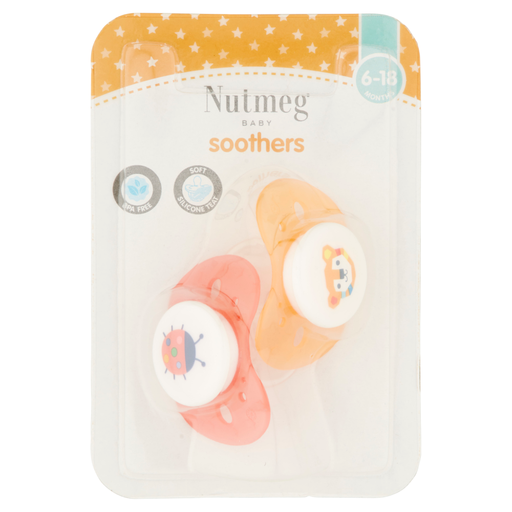
Why This Fits Their Persona: A straightforward twin pack for families wanting everyday baby pacifiers with simple cleaning and age-specific guidance.
The product states its 6–18-month range, BPA-free silicone construction and EN 1400 compliance, avoiding vague age and safety information.
Two soothers per pack; top-rack dishwasher safe and suitable for stated sterilisation methods.
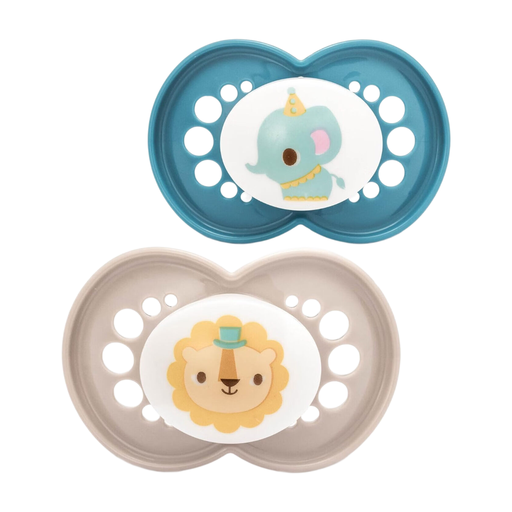
Why This Fits Their Persona: Suitable for parents prioritising a symmetrical silicone teat, ventilated shield and a reusable sterilising case for home and travel.
The product provides material details, a 6+ months age range and specific microwave-case instructions instead of relying only on broad comfort claims.
BPA- and BPS-free materials; case sterilises two soothers in a microwave using 25 ml of water.
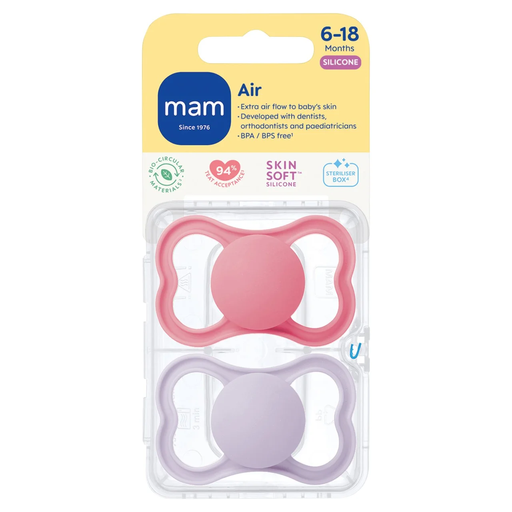
Why This Fits Their Persona: Designed for older infants who dribble frequently or need a soother for daytime, bedtime and journeys.
The extra-large air-hole shield addresses airflow requirements directly, while the age marking prevents buying an unsuitable newborn or toddler size.
SkinSoft silicone teat; included self-sterilising box and a twin pack for rotation.
We have compiled a complete, real-time list of products that fully satisfy these strict selection criteria and UK safety regulations.
Before first use, follow the manufacturer’s sterilisation instructions. Many silicone baby pacifiers can be boiled, steam sterilised or cleaned on the top rack of a dishwasher, but always confirm the product guidance.
Natural latex products commonly need scalding rather than microwave or dishwasher cleaning. Store clean soothers in a dry, covered container and avoid direct sunlight or heat.
Inspect the teat before every use by pulling it gently in all directions. Discard it immediately if it becomes sticky, cracked, stretched, discoloured or weak. Replacement guidance varies, but many silicone products advise replacement every one to two months, while latex soothers may need replacing every four to six weeks.
Never attach a dummy around a child’s neck. If using a soother clip, choose a dedicated holder tested to EN 12586 and follow its instructions. Do not dip the teat in honey, sugar, sweet foods or medicine, as this can contribute to tooth decay.
Use only products specifically marked for newborns or the relevant young age range. Check that the shield does not obstruct the nose and that the teat is intact. Always supervise use and follow the product instructions.
Replace a soother at the first sign of damage. As a general guide, silicone versions may be replaced every one to two months, while natural rubber latex versions may require replacement every four to six weeks. Frequent biting, sterilisation and exposure to heat can shorten this period.
They can be useful for locating a dummy during night-time soothing without turning on a bright light. Glow buttons usually need daylight to charge and may not charge under LED lighting. Treat the feature as a convenience, not a substitute for safe storage and regular inspection.