
24/7 Customer Support

Free returns

Same-day & Next-day Delivery

Quality Guaranteed

Unlock Your Welcome Offers: FREE Delivery | Up to 80% OFF | Free 30-day JoyPlus trial
Download the APP
Choosing baby soothers can seem straightforward until you compare teat shapes, materials, age ranges, sterilisation methods and night-time features. A low-priced pack may not suit your baby’s mouth, while a fashionable design may be inconvenient to clean or unsuitable for a latex-sensitive child.
This guide explains the practical details worth checking before buying baby dummies, with product suggestions for newborns, older babies and toddlers.
A soother marked for 0+ months is not automatically suitable for every newborn. Newborn soothers usually have a smaller, lighter shield and teat. As a child grows, their mouth, sucking habits and chewing behaviour change, so products for 6–18 months or 18–36 months are designed for a different stage.
Always check the manufacturer’s stated age range. Do not use a toddler soother for a newborn or continue using an early-stage model indefinitely.
Silicone soothers are generally compatible with several sterilisation methods, depending on the product instructions. Natural rubber latex requires more care. For example, some BIBS latex soothers should be scalded with boiling water and should not be placed in a microwave steriliser or dishwasher, as heat and repeated processing may weaken the teat.
A soother that is easy to clean is more useful in daily family life, particularly when travelling or managing several feeds and naps.
Orthodontic soothers usually have a symmetrical, flatter or thinner teat intended to sit evenly in the mouth. This describes the design; it is not a guarantee of a particular dental outcome. Fit, age suitability, correct use and regular replacement still matter.
Likewise, BPA-free soothers are a sensible material preference, but BPA-free status alone does not tell you whether the shape, shield or cleaning routine suits your child.
Baby preferences vary, so a discovery pack can be practical when you are unsure which style your child will accept.
Look for a shield that curves away from the nose and mouth, with ventilation holes. These features allow air movement around the lips and may help reduce moisture collecting against delicate skin. A lightweight shield can also be more comfortable for young babies.
Extra-large air holes, as found on some MAM Air models, may appeal to families managing dribble or frequent daytime use. However, any redness, swelling or irritation should be taken seriously and the soother removed.
For products sold in the UK, check the packaging and instructions for relevant safety information, including EN 1400 for soothers. If using a clip, select a dedicated holder tested to EN 12586. Never tie a ribbon, cord or chain around a child’s neck.
Before every use, pull the teat gently in all directions. Discard it immediately if it is cracked, sticky, enlarged, torn, weak or otherwise damaged. Replacement intervals vary by product, but many manufacturers recommend replacing soothers every four to eight weeks, or sooner if wear appears.
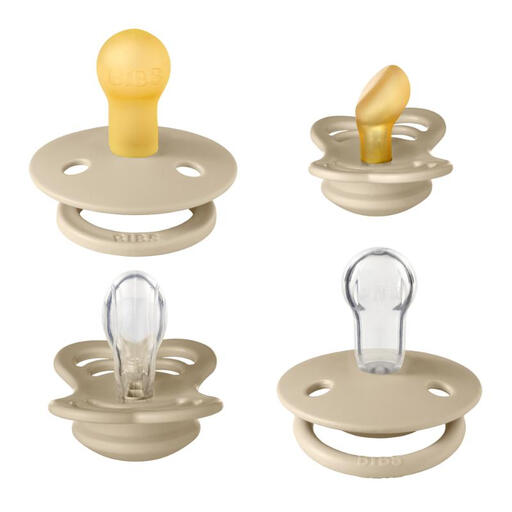
Why This Fits Their Persona: A discovery set helps new parents compare different teat shapes and materials before buying several identical packs. It is intended for babies aged 0–6 months.
It avoids committing to one shape too early and includes latex and silicone options, making material and preference comparison more practical.
Four styles, ventilation openings and a 0–6-month age guide provide useful flexibility.
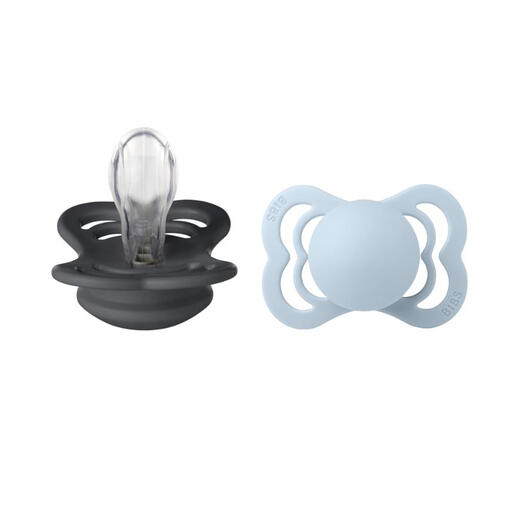
Why This Fits Their Persona: Suitable for families seeking a silicone teat, a modern symmetrical shape and a lightweight shield for babies from birth.
The silicone material removes the natural latex allergy consideration, while the symmetrical teat does not rely on one insertion direction.
Food-grade silicone, BPA-free materials and a shield with large ventilation holes.
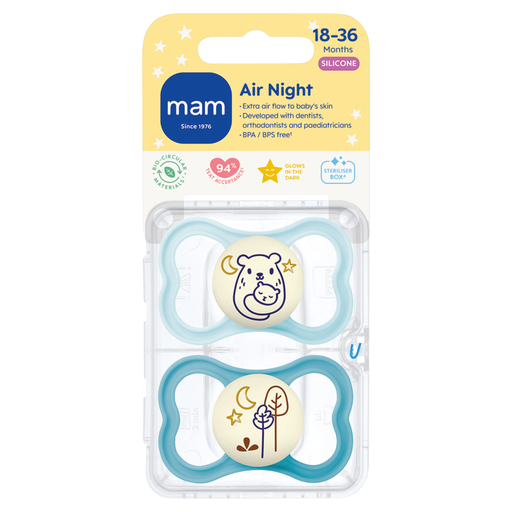
Why This Fits Their Persona: Designed for toddlers aged 18–36 months, it suits families wanting night-time visibility and an open shield for greater airflow.
The glow button must be charged in daylight, while the age-specific design avoids treating one soother as suitable throughout childhood.
Extra-large air holes, SkinSoft silicone and an included microwave sterilising case.
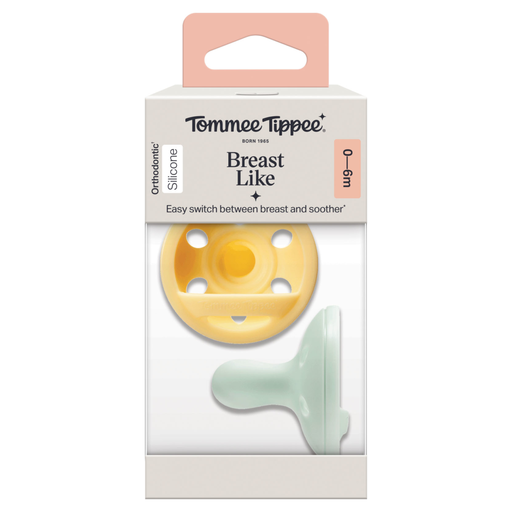
Why This Fits Their Persona: A practical option for families wanting a silicone soother that can be cleaned using several approved methods during frequent daily use.
The product instructions list warm soapy water, top-rack dishwasher cleaning and several sterilisation methods, subject to following the guidance.
Medical-grade silicone, a symmetrical teat and a shield shaped to allow airflow around the face.
We have compiled a complete, real-time list of products that fully satisfy these strict selection criteria and UK safety regulations.
Many products recommend replacement after four to eight weeks, while some MAM instructions suggest replacing silicone soothers every one to two months. These are general guidance periods. A damaged, sticky, enlarged or weakened teat should be discarded immediately, regardless of age.
Silicone soothers are often simpler for families using microwave, steam or dishwasher cleaning, where the instructions allow it. Natural rubber latex has a soft, flexible feel but needs more careful handling and may not suit children with latex sensitivity. Check the exact product directions before choosing a cleaning routine.
Glow-in-the-dark buttons can make a soother easier to locate during night-time settling, but they do not remove the need for supervision and regular inspection. Use only a suitable soother holder, never attach cords around the neck, and follow the manufacturer’s age and safety guidance.